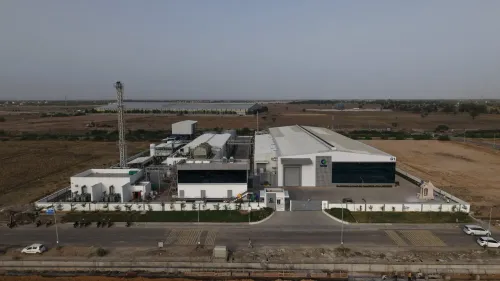
Goyal Highlights CG Semi OSAT Facility Powering India's Chip Dreams

Synopsis
Commerce Minister Piyush Goyal on 5 July 2026 spotlighted the CG Semi OSAT facility in Sanand, Gujarat, praising young tribal and women workers driving India's semiconductor assembly ecosystem under the Rs 76,000 crore India Semiconductor Mission.
Key Takeaways
Union Commerce Minister Piyush Goyal highlighted the CG Semi OSAT facility in Sanand, Gujarat on 5 July 2026 .
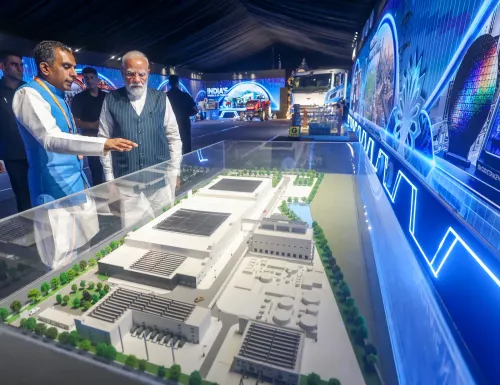
The facility focuses on semiconductor assembly and testing, a key downstream segment India is working to indigenise.
Goyal specifically praised young workers from tribal backgrounds and remote regions , many of them women, staffing the facility.
The project falls under the India Semiconductor Mission , approved in 2021 with a Rs 76,000 crore outlay.
Sanand, Gujarat has emerged as a preferred hub for electronics and semiconductor manufacturing investment.
The government frames OSAT units as entry points into the chip value chain under the Atmanirbhar Bharat strategy.
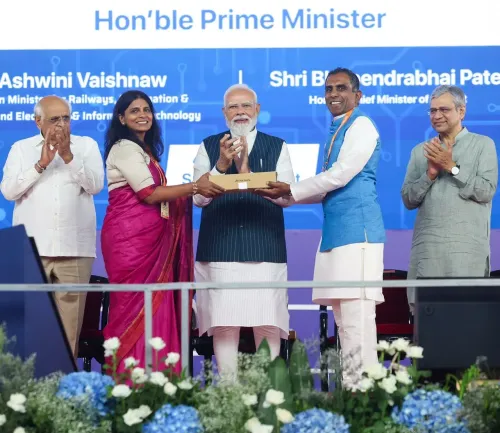
Union Commerce and Industry Minister Piyush Goyal on Sunday, 5 July 2026, spotlighted the CG Semi Outsourced Semiconductor Assembly and Test (OSAT) facility in Sanand, Gujarat, calling it a catalyst for India's ambitions to become a global semiconductor hub — and praising the young, often tribal and women workers from remote regions who are driving its operations.
Context
In his post, the Minister described India's young workforce — many of them women from tribal backgrounds and remote parts of the country — as the backbone of the emerging semiconductor ecosystem. 'India's Yuva Shakti, many of them women, from remote parts of the country and from tribal backgrounds, are strengthening our semiconductor ecosystem,' he wrote, framing the facility as a vehicle for social mobility alongside industrial ambition.
The CG Semi OSAT facility in Sanand focuses on the assembly and testing of semiconductor chips — a critical downstream segment of the chip supply chain that India has long sought to indigenise. Sanand, located in Gujarat, has emerged as a preferred destination for electronics and semiconductor manufacturing investment over the past several years.
Policy Backdrop
The facility sits within the broader architecture of the India Semiconductor Mission (ISM), approved by the central government in 2021 with a fiscal outlay of Rs 76,000 crore. The mission was designed to incentivise chip design, fabrication, and assembly units on Indian soil, reducing the country's dependence on East Asian supply chains that were exposed as fragile during the global chip shortage of 2020-22.
OSAT operations — covering the packaging and testing of chips after fabrication — are seen as an accessible entry point for India into the semiconductor value chain, requiring comparatively less capital than front-end fabrication. The government has positioned such facilities as stepping stones toward full-stack domestic chip manufacturing under the Atmanirbhar Bharat framework.
Gujarat has leveraged both central production-linked incentive schemes and state-level support to attract semiconductor and electronics investors, with Sanand in particular hosting multiple high-profile manufacturing projects across sectors.
Stakeholders and Impact
Minister Goyal's post places an explicit emphasis on workforce inclusion — specifically the participation of tribal youth and women from rural and remote regions in a high-technology sector that has historically been concentrated in urban, educated demographics. This framing aligns with the government's stated human-capital strategy, which ties semiconductor skilling programmes to broader social equity goals.
For semiconductor firms, the availability of a trainable, cost-competitive local workforce is a key factor in investment decisions. Highlighting inclusive hiring at the CG Semi facility signals to global chip companies that India's semiconductor workforce pipeline extends beyond metropolitan engineering colleges into the country's tribal belts and smaller towns.
Domestic electronics manufacturers and global original equipment manufacturers sourcing from India also stand to benefit from a growing local assembly and testing ecosystem, which can shorten supply chains and reduce logistics costs.
What's Next
Parliamentary scrutiny of the India Semiconductor Mission's fund utilisation and project timelines is expected to intensify as more facilities move from approval to operational stages. Progress on additional OSAT and chip assembly projects sanctioned under the mission will be closely watched by investors and industry bodies as a gauge of India's ability to execute its semiconductor ambitions at scale.
With global chip demand forecast to remain elevated through the decade, India's window to establish itself as a credible alternative assembly and testing destination remains open — but contingent on consistent policy execution, workforce development, and infrastructure delivery at sites like Sanand.
Point of View
Making industrial policy legible to a wider electorate. The spotlight on Sanand also reinforces Gujarat's identity as a model investment destination, a narrative with obvious political resonance for the ruling party. As the India Semiconductor Mission enters its execution phase, such ministerial visibility signals that the government is keen to show tangible human stories alongside project announcements.
NationPress
5 Oct 2026
Frequently Asked Questions
What is the CG Semi OSAT facility in Sanand?
The CG Semi OSAT (Outsourced Semiconductor Assembly and Test) facility in Sanand, Gujarat, is a plant focused on the assembly and testing of semiconductor chips — a critical part of the chip supply chain that India is working to build domestically.
What is the India Semiconductor Mission?
The India Semiconductor Mission is a central government programme approved in 2021 with an outlay of Rs 76,000 crore to incentivise semiconductor chip design, fabrication, and assembly manufacturing on Indian soil, reducing dependence on East Asian supply chains.
Why is Sanand, Gujarat significant for semiconductors?
Sanand has emerged as a key industrial hub in Gujarat, attracting multiple electronics and semiconductor manufacturing investments backed by both central production-linked incentives and state-level support.
What did Piyush Goyal say about the semiconductor facility?
Minister Goyal said India's 'Yuva Shakti,' including women from tribal backgrounds and remote regions, are strengthening the semiconductor ecosystem through the CG Semi facility, and described it as powering India's journey to becoming a global semiconductor hub.
How does India plan to become a global semiconductor hub?
India is pursuing semiconductor hub status through the Rs 76,000 crore India Semiconductor Mission, which funds chip assembly, testing, and fabrication units, combined with state incentives, workforce skilling programmes, and infrastructure development at sites like Sanand.