India's 7.7% GDP growth built on decade of reforms, says Piyush Goyal
Synopsis
Commerce Minister Piyush Goyal's BHAVYA portal launch was more than a scheme rollout — it was a headline claim: India's 7.7% GDP growth is no accident but the product of ten years of structural reform. With ₹33,660 crore committed to 100 industrial parks by 2032 and five FTAs sealed in six months, the government is stacking its economic narrative ahead of a shifting global trade order.
Key Takeaways
Commerce Minister Piyush Goyal credited 7.7% GDP growth to a decade of structural reforms on 8 June .
The BHAVYA portal was launched to develop 100 industrial parks over six years ( 2026-27 to 2031-32 ) with an outlay of ₹33,660 crore .
First phase: up to 50 parks selected competitively; 20 from applications by 31 July , 30 more in subsequent four months.
India finalised five FTAs in six months and attracted record FDI despite geopolitical headwinds, according to Goyal.
Over 250 million people have reportedly been lifted out of extreme poverty under the current government.
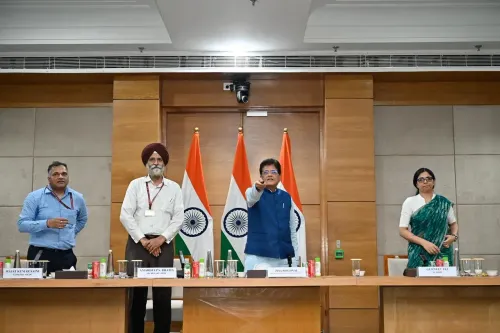
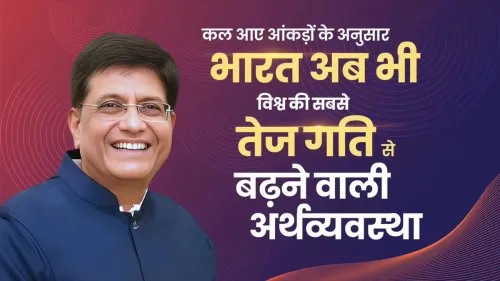
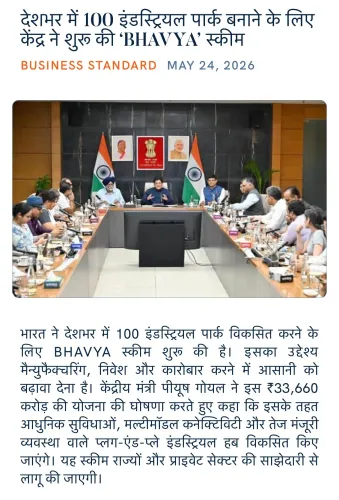
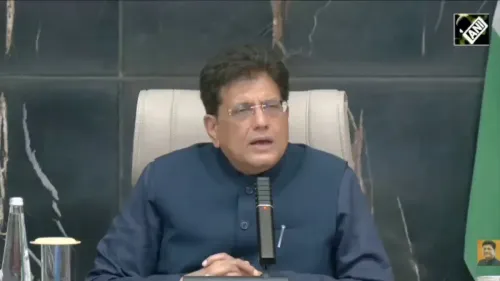
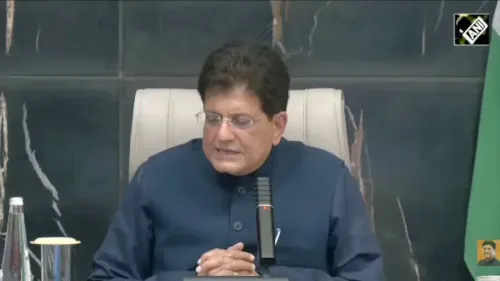
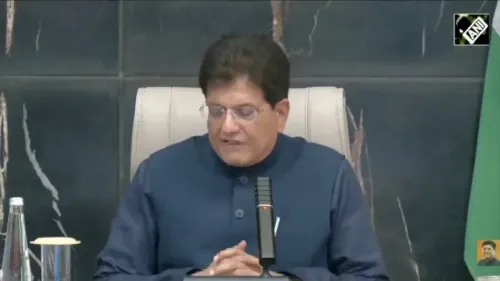
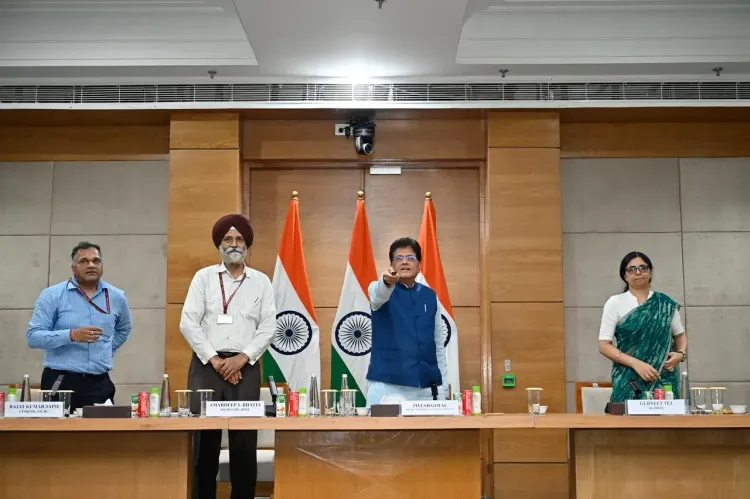
Commerce and Industry Minister Piyush Goyal on Monday, 8 June attributed India's 7.7 per cent GDP growth to a sustained decade of structural reforms, asserting that the country remains the world's fastest-growing major economy. Speaking at the launch of the BHAVYA portal in New Delhi, Goyal said the outcome was the product of deliberate policy — not circumstance.
'I don't think any of you would have imagined that last year would close with a GDP growth of 7.7 per cent. This is not an accident, it is a decade of structural reforms,' he said.
BHAVYA Scheme: 100 Industrial Parks in Six Years
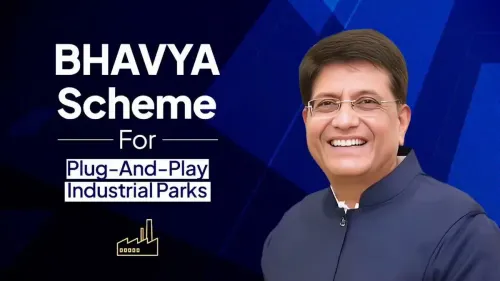
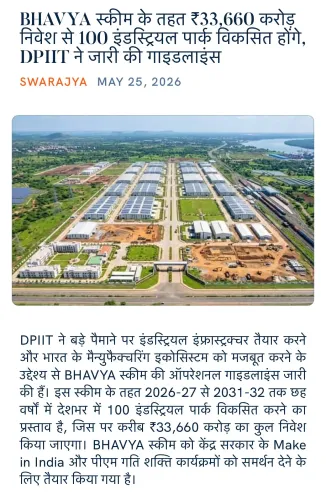
The minister launched the BHAVYA portal to fast-track the development of 100 investment-ready industrial parks across India. The scheme — formally titled the Bharat Audyogik Vikas Yojna (BHAVYA) — was operationalised by the Department for Promotion of Industry and Internal Trade (DPIIT) on 23 May, with a total financial outlay of approximately ₹33,660 crore spread over six years from 2026-27 to 2031-32.
In the first phase, up to 50 industrial parks will be selected through a challenge-based competitive process. Up to 20 parks will be chosen from applications received by 31 July, with 30 more to follow from submissions in the subsequent four months.
Key Economic Milestones Cited
Goyal pointed to several indicators as evidence of policy effectiveness. He said India's exports grew last year despite 50 per cent US tariffs and active conflict in Ukraine and West Asia. The country also reportedly attracted record foreign direct investment (FDI) amid elevated geopolitical tensions.
The government has finalised five Free Trade Agreements (FTAs) within a span of six months, according to Goyal, positioning India as a trusted global trade partner. He also noted that more than 250 million people have been lifted out of extreme poverty, and that numerous obsolete laws have been repealed.
What the Government Said
'The world is looking up to India as a trusted partner, and all see India as an investment destination, not only for the large-scale demand it generates but also for its young talent and youthful energy,' Goyal said. He added that India's appeal stems from both its consumer base and its demographic dividend.
The minister framed the occasion — marking 12 years of the current government — as a moment of rededication: 'It is an opportunity of a lifetime, and as we conclude 12 years today, we rededicate ourselves to do much more in the future, prepare the nation for the challenges ahead, and continue to work for the people of India.'
Broader Context and What's Next
The BHAVYA scheme arrives as India seeks to raise its manufacturing share of GDP, which has remained stubbornly below targets despite successive industrial programmes. The challenge-based selection model for industrial parks is designed to introduce competitive accountability — a structural feature notably absent from earlier land-bank-driven approaches. With the 31 July application deadline approaching for the first tranche of parks, state governments and private developers are expected to move quickly to secure allocations.
Point of View
And the BHAVYA scheme's challenge-based model — while structurally sounder than past land-bank schemes — will be tested by state capacity and private appetite. The five FTAs-in-six-months claim is notable, but trade agreements are only as valuable as their utilisation rates, which have historically been low for Indian exporters. The 250-million-out-of-poverty figure, frequently cited, draws on multidimensional poverty indices that use different baselines across studies — the government would strengthen its case by anchoring the claim to a single, independently verified dataset.
NationPress
19 Sept 2026
Frequently Asked Questions
What is the BHAVYA scheme and portal launched by Piyush Goyal?
The BHAVYA scheme — Bharat Audyogik Vikas Yojna — is a government programme to develop 100 investment-ready industrial parks across India over six years from 2026-27 to 2031-32, with a total outlay of approximately ₹33,660 crore. The BHAVYA portal, launched on 8 June, is the digital platform to accelerate and manage this development.
Why did India's GDP grow at 7.7 per cent according to the government?
Commerce Minister Piyush Goyal attributed the 7.7 per cent GDP growth to a decade of sustained structural reforms, ease-of-doing-business initiatives, record FDI inflows, and export resilience despite global headwinds including US tariffs and geopolitical conflicts.
How will the 100 industrial parks under BHAVYA be selected?
Selection will be challenge-based and competitive. In the first phase, up to 50 parks will be shortlisted: 20 from applications received by 31 July and 30 more from applications in the subsequent four months.
How many Free Trade Agreements has India signed recently?
According to Commerce Minister Goyal, India has finalised five Free Trade Agreements within a span of six months, positioning the country as a trusted global trade and investment destination.
How many people has India lifted out of extreme poverty?
Minister Goyal stated that more than 250 million people have come out of extreme poverty under the current government's decade in office, citing it as a key indicator of improved quality of life.