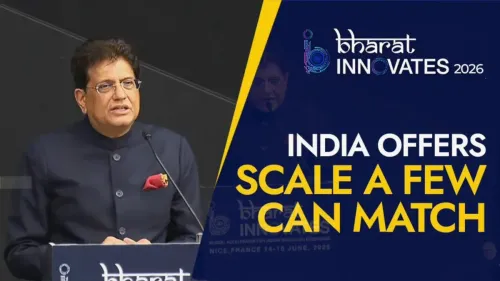
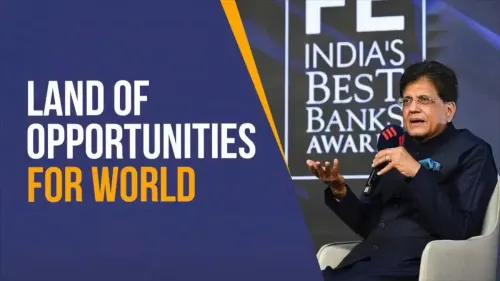
Goyal pitches India as top global investment destination
Synopsis
Commerce Minister Piyush Goyal on 22 June 2026 declared India offers 'unique and unparalleled economic opportunities' to the world, reinforcing New Delhi's decade-long push to attract global capital through Make in India, PLI schemes, and progressive FDI liberalisation.
Key Takeaways
Commerce Minister Piyush Goyal publicly asserted on 22 June 2026 that India offers 'unique and unparalleled economic opportunities' to the world.
The statement builds on the Make in India programme launched in 2014 and PLI schemes rolled out across 14 sectors from 2020 .
India has signed major trade pacts including the Australia-India ECTA (2022) and the India-UAE CEPA (2023) to expand market access.
Progressive FDI liberalisation in defence, insurance, and retail has accompanied domestic manufacturing incentives over the past decade.
Key indicators to watch include fresh FDI policy circulars , EU and UK FTA progress, and manufacturing data around the next Union Budget .
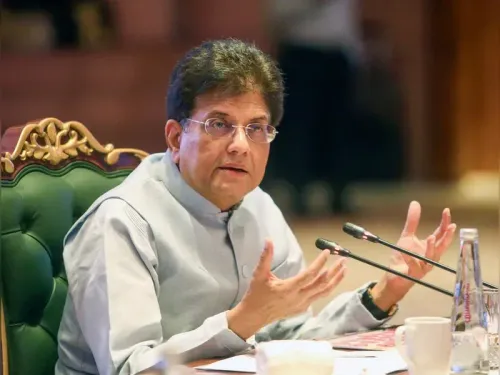
Union Commerce and Industry Minister Piyush Goyal on Monday, 22 June 2026 asserted that India offers 'unique and unparalleled economic opportunities to the world,' underlining New Delhi's sustained push to attract global capital and position the country as a preferred manufacturing and investment hub.
Context
The minister's statement reflects a broader diplomatic and economic messaging campaign that the government has maintained over the past decade. India has consistently used high-level ministerial platforms — from G20 summits to bilateral trade forums — to highlight its market size, demographic dividend, and improving ease-of-doing-business environment to foreign investors and trading partners.
Goyal, who also serves as Leader of the House in the Rajya Sabha, has been central to India's trade diplomacy, overseeing negotiations and investment-promotion outreach across multiple regions simultaneously.
Policy Backdrop
The assertion draws on a decade-long policy architecture. The Make in India programme, launched in 2014, was designed to position the country as a global manufacturing destination and draw foreign capital into sectors ranging from electronics to aerospace. It was followed in 2020 by the Atmanirbhar Bharat package, which combined fiscal stimulus with further liberalisation of Foreign Direct Investment norms.
The Production Linked Incentive (PLI) schemes, rolled out across 14 sectors from 2020 onward, added direct financial incentives for domestic manufacturing and export scale-up. On the trade-agreement front, India concluded the Australia-India Economic Cooperation and Trade Agreement (ECTA) in 2022 and the India-UAE Comprehensive Economic Partnership Agreement (CEPA) in 2023, signalling an appetite for calibrated market integration with key partners.
Progressive liberalisation of FDI caps in sectors such as defence, insurance, and retail has run in parallel, with the government arguing that policy stability and a large consumer base make India structurally attractive to long-term investors.
Stakeholders and Impact
The primary audience for this kind of ministerial signalling is global investors — multinational corporations scouting for supply-chain diversification away from concentrated manufacturing geographies. Rising FDI inflows into services, electronics, and renewable energy over the past decade suggest that the pitch has had measurable traction.
Manufacturing exporters and MSME suppliers stand to benefit directly if fresh foreign investment translates into joint ventures, technology transfers, and expanded order books. For domestic industry, the minister's outreach reinforces the government's intent to keep the investment climate competitive and predictable.
What's Next
Analysts and industry bodies will watch for concrete follow-through in the form of fresh FDI policy circulars, progress on ongoing free-trade agreement negotiations with the European Union and the United Kingdom, and manufacturing output data expected around the next Union Budget cycle. Any specific investment commitments or policy announcements that may have accompanied the minister's statement would provide sharper indication of the immediate policy direction.
As India positions itself to capture a larger share of globally diversifying supply chains, consistent ministerial messaging of this kind serves as a signal of intent — but the depth of investor response will ultimately depend on ground-level implementation of the policy framework already in place.
Point of View
High-growth destination at a time when global supply chains are being actively restructured. The timing, coming against the backdrop of ongoing FTA negotiations with the EU and UK, suggests an intent to keep India's value proposition top-of-mind for potential partners. What distinguishes this moment from earlier iterations of the pitch is the maturation of the PLI architecture and a track record of concluded trade agreements, giving the messaging more structural credibility. Whether this translates into accelerated deal flow will depend on how quickly the government resolves outstanding market-access and regulatory friction points that foreign investors consistently flag.
NationPress
22 Jun 2026
Frequently Asked Questions
What did Piyush Goyal say about India's economy on 22 June 2026?
Commerce Minister Piyush Goyal stated that India offers 'unique and unparalleled economic opportunities to the world,' reaffirming the government's push to attract global investment and position India as a premier manufacturing and trade hub.
What is the Make in India programme?
Make in India is a flagship government scheme launched in 2014 to transform India into a global manufacturing destination by improving ease of doing business, liberalising FDI norms, and building industrial infrastructure across key sectors.
What are PLI schemes and how many sectors do they cover?
Production Linked Incentive (PLI) schemes, introduced from 2020 , offer direct financial incentives to companies that scale up domestic manufacturing and exports. They currently span 14 sectors including electronics, pharmaceuticals, and automobiles.
What free trade agreements has India signed recently?
India signed the Australia-India Economic Cooperation and Trade Agreement (ECTA) in 2022 and the India-UAE Comprehensive Economic Partnership Agreement (CEPA) in 2023 . Talks with the EU and UK are ongoing.
Why is India considered an attractive destination for foreign investors?
India combines a large and growing consumer market, a young workforce, progressive FDI liberalisation in sectors such as defence and insurance, and domestic manufacturing incentives under PLI schemes — factors that collectively make it a competitive destination for long-term global capital.