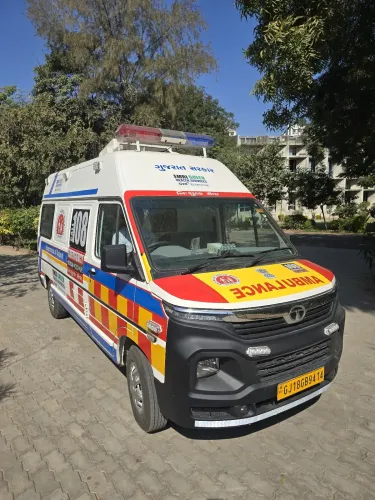
Gujarat air ambulance completes 98 missions since 2022, offers pan-India subsidised transfers
Synopsis
Gujarat's government air ambulance has quietly clocked 98 missions since 2022 — half of them racing organs to transplant teams across India. At ₹50,000 for Gujarat residents, it is one of the country's few subsidised air medical services open to all Indians, yet it remains largely under the radar.
Key Takeaways
Gujarat's air ambulance has completed 98 missions since its 2022 launch — 48 patient transfers and 50 organ transportation flights.
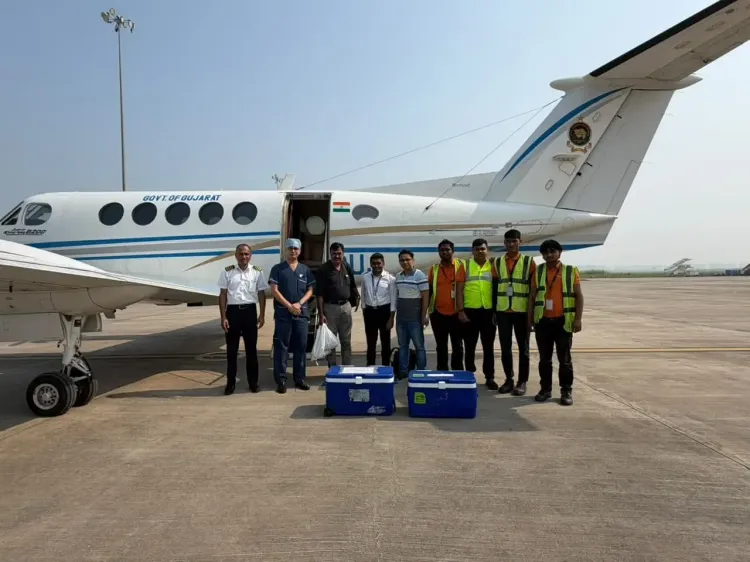
The service operates a Beechcraft King Air B200 (registered VT-GUJ ), available 24 hours a day.
Subsidised fares: ₹50,000 for Gujarat patients, ₹65,000 for out-of-state patients, and ₹55,000 when booked by a hospital.
The service is available to citizens across India , not just Gujarat residents.
Operated jointly by the Civil Aviation Department and GUJSAIL , coordinated with 108 Emergency Services , hospitals, and airport authorities.
Gujarat's government-operated air ambulance service has completed 98 missions since its launch in 2022, covering 48 patient transfers and 50 organ transportation flights, according to state officials. The round-the-clock service, run by the Civil Aviation Department and Gujarat State Aviation Infrastructure Company Limited (GUJSAIL), is available to citizens across India at subsidised rates.
Key Developments
Deputy Chief Minister Harsh Sanghavi, who also holds the Civil Aviation portfolio, said the initiative has become an important component of the state's emergency medical response infrastructure. 'The air ambulance service... provides air medical transportation at subsidised rates and is available to citizens across India,' Sanghavi said. The service was launched in 2022 under Chief Minister Bhupendra Patel and operates a dedicated Beechcraft King Air B200 aircraft registered as VT-GUJ.
Dual Role: Patients and Organs
Of the 98 missions completed to date, 48 involved transferring critically ill or specialised-care patients between medical facilities — supporting cases requiring advanced surgery, critical care, or specialist hospital services. The remaining 50 missions transported human organs for transplantation, where time is a critical factor. Given the narrow transplant window for viable organs, aviation support enables hospitals and transplant teams to move them across locations within the required timeframe.
How the Service Operates
The air ambulance functions through a coordinated network involving 108 Emergency Services, GUJSAIL's Flight Operations Department, medical teams, pilots, airport authorities, ground transportation teams, and receiving hospitals. The process can be initiated when 108 Emergency Services identifies a patient needing air transport and refers the case to GUJSAIL, or when hospitals directly approach the service for urgent inter-facility transfers. The aircraft can be equipped with doctors, medical personnel, equipment, and support facilities based on the patient's condition, urgency, and destination.
Notably, the aircraft can operate from a range of airports and suitable airstrips — including those without conventional air traffic control services — subject to applicable operational, weather, and safety requirements. This flexibility is particularly useful when patients are located far from major airports, reducing road travel time before boarding.
Subsidised Charges and Accessibility
The government has set the subsidised fare at ₹50,000 for patients from Gujarat and ₹65,000 for patients from outside the state. When a hospital books the service directly, the applicable charge is ₹55,000. The service is intended to complement, rather than replace, the existing road ambulance network, offering an alternative when distance, urgency, or geography makes air transport the more viable option.
What's Next
With 98 missions logged over roughly three years, the service's usage trajectory will be closely watched as Gujarat looks to strengthen its emergency medical infrastructure. Wider awareness among hospitals and emergency services across India could drive further utilisation of the subsidised platform.
Point of View
And the organ-transport split — 50 of 98 flights — reveals where the real demand lies: transplant logistics, not just patient evacuation. The subsidised fare structure is genuinely inclusive, but awareness beyond the hospital system appears limited, which likely constrains utilisation. The bigger question is whether other states are watching: Gujarat's GUJSAIL model — civil aviation infrastructure repurposed for public health — is replicable, yet India still has no federal framework for subsidised air ambulance access. This gap falls hardest on patients in geographically remote or underserved districts.
NationPress
22 Oct 2026
Frequently Asked Questions
What is Gujarat's air ambulance service and who can use it?
Gujarat's air ambulance is a government-operated service run by the Civil Aviation Department and GUJSAIL, available round the clock for medical patient transfers and organ transportation. It is open to citizens across India, not just Gujarat residents, at subsidised rates.
How many missions has the Gujarat air ambulance completed?
The service has completed 98 missions since its 2022 launch — 48 involving patient transfers and 50 involving the transportation of human organs for transplantation, according to state officials.
What are the charges for using the Gujarat air ambulance?
The subsidised fare is ₹50,000 for patients from Gujarat and ₹65,000 for patients from outside the state. When a hospital books the service directly, the charge is ₹55,000.
How does one access the Gujarat air ambulance service?
The service can be accessed when 108 Emergency Services identifies a patient needing air transport and refers the case to GUJSAIL's Flight Operations Department. Hospitals can also contact the service directly when a patient requires an urgent inter-facility transfer.
Which aircraft does the Gujarat air ambulance operate?
The service uses a dedicated Beechcraft King Air B200 aircraft registered as VT-GUJ. It can be configured with doctors, medical personnel, equipment, and support facilities based on the patient's condition and the urgency of the case.