Gujarat launches Atal Good Governance Awards for district, taluka officials
Synopsis
Gujarat has formalised an annual award scheme named after former PM Atal Bihari Vajpayee that hands cash prizes to top-performing district and taluka officials across seven departments — a rare attempt to tie formal recognition and monetary incentives directly to citizen-facing public service outcomes at the grassroots level.
Key Takeaways
The Gujarat government has introduced the Atal Good Governance Award scheme via a General Administration Department resolution, effective from FY 2025-26 .
Class-1 officers will receive ₹31,000 and Class-2 officers will receive ₹21,000 , along with a Certificate of Excellence .
The scheme covers officials from 7 departments : Health, Education, Roads and Buildings, Food and Civil Supplies, Sports, Panchayats, and Revenue.
Departmental committees headed by senior secretaries — and district-level committees headed by the District Collector — will rank officials from 1st to 3rd .
Evaluations must be completed by 30 November ; awards will be presented on 25 December (Good Governance Day) each year.
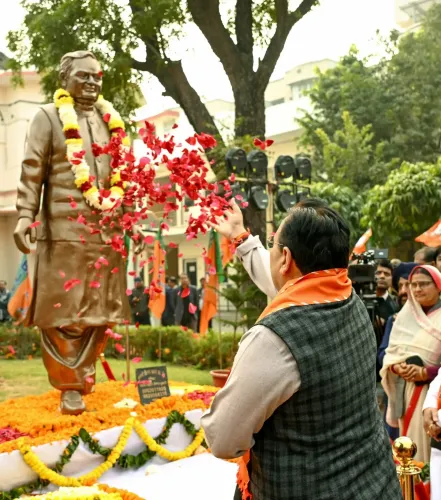
The scheme is part of year-long celebrations marking former PM Atal Bihari Vajpayee's 100th birth anniversary , which began on 25 December 2024 .
The Gujarat government has introduced the Atal Good Governance Award scheme to recognise outstanding performance by frontline officials at the district and taluka levels, with Class-1 officers eligible for a cash prize of ₹31,000 and Class-2 officers for ₹21,000. The scheme, formalised through a General Administration Department (GAD) resolution, takes effect from the 2025-26 financial year and will be held annually thereafter.
What the Scheme Covers
The award covers officials across seven departments directly involved in public service delivery. Eligible cadres include Chief District Health Officers from the Health and Family Welfare Department; District Education Officers and District Primary Education Officers from the Education Department; Executive Engineers from the Roads and Buildings Department; District Supply Officers from the Food, Civil Supplies and Consumer Affairs Department; District Sports Officers from the Sports, Youth and Cultural Activities Department; Taluka Development Officers (TDOs) from the Panchayats, Rural Housing and Rural Development Department; and Mamlatdars from the Revenue Department.
In addition to the cash award, selected officials will receive a Certificate of Excellence – Atal Good Governance Award acknowledging their contribution to citizen-centric administration. The annual performance assessment period runs from 1 April to 31 March.
How Winners Will Be Selected
Selection will be based on prescribed performance criteria and evaluation parameters — not routine performance assessments alone. For the first five categories of officials, separate departmental committees headed by the Secretary of the respective department will carry out the evaluation. These panels will also include the concerned Head of Department and a senior officer at the level of Additional Secretary, Joint Secretary, or Deputy Secretary.
For TDOs and Mamlatdars, district-level committees headed by the District Collector will also assess performance, with the District Development Officer, District Superintendent of Police, and Resident Deputy Collector as members. Departmental-level arrangements for these two cadres are separately prescribed — the Additional Chief Secretary or Principal Secretary of the Panchayat Department will oversee TDO assessments, while the corresponding senior official of the Revenue Department will head the Mamlatdar committee.
Officials will be ranked from first to third based on the prescribed parameters, with the top performers selected for the award.
Timeline and Award Presentation
Departments have been directed to complete evaluations by 30 November each year and submit the names of awardees, along with certificates and cheques, to the Vasutapar-2 branch of the GAD by 10 December. The awards will be formally presented on 25 December — the birth anniversary of former Prime Minister Atal Bihari Vajpayee — during the annual Good Governance Day programme.
The scheme forms part of a broader set of state initiatives being undertaken during year-long celebrations marking Vajpayee's 100th birth anniversary, which commenced on 25 December 2024. Expenditure for the awards will be met by the respective departments from budget provisions under '0500 – Awards'.
Significance for Grassroots Governance
The scheme institutionalises a formal recognition mechanism for officials working directly with citizens across health, education, infrastructure, food supply, sports, rural development, and revenue administration. This comes amid broader efforts by state governments across India to incentivise performance at the sub-district level, where governance outcomes have historically been difficult to measure and reward. By tying recognition to specific evaluation parameters rather than seniority or routine appraisals, the Gujarat model attempts to shift the incentive structure for frontline officials. Whether the scheme translates into measurable service improvements will depend on the rigour of the evaluation criteria to be prescribed by each department.
Point of View
Presented on his birth anniversary — is transparent enough that it should not distract from the administrative question it raises: does linking cash incentives to performance parameters actually improve service delivery at the taluka level? The answer hinges entirely on what those parameters are, and the resolution notably leaves that detail to individual departments. Gujarat has a credible track record of administrative reform, but previous incentive schemes elsewhere have been gamed by committee processes that favour well-connected officers over genuinely effective ones. The inclusion of the District Superintendent of Police on Mamlatdar evaluation panels is an interesting structural choice that broadens the assessment lens beyond departmental silos — and one worth watching.
NationPress
21 Sept 2026
Frequently Asked Questions
What is the Atal Good Governance Award scheme in Gujarat?
The Atal Good Governance Award is an annual scheme introduced by the Gujarat government to recognise top-performing officials in citizen-facing roles at the district and taluka levels. It offers cash prizes of ₹31,000 for Class-1 officers and ₹21,000 for Class-2 officers, along with a Certificate of Excellence, starting from the 2025-26 financial year.
Which government departments and officials are covered under the scheme?
Seven departments are covered: Health and Family Welfare (Chief District Health Officers), Education (District Education Officers and District Primary Education Officers), Roads and Buildings (Executive Engineers), Food and Civil Supplies (District Supply Officers), Sports (District Sports Officers), Panchayats and Rural Development (Taluka Development Officers), and Revenue (Mamlatdars).
How will winners of the Atal Good Governance Award be selected?
Selection is based on prescribed performance criteria, not routine appraisals. Departmental committees headed by the Secretary of the respective department will evaluate most categories. For Taluka Development Officers and Mamlatdars, district-level committees chaired by the District Collector will also assess performance. Officials are ranked first to third, with top performers selected.
When will the Atal Good Governance Awards be presented?
The awards will be presented on 25 December each year during the Good Governance Day programme, which coincides with the birth anniversary of former Prime Minister Atal Bihari Vajpayee. Departments must complete evaluations by 30 November and submit awardee details by 10 December.
Why is the scheme named after Atal Bihari Vajpayee?
The scheme is part of year-long state initiatives marking the 100th birth anniversary of former Prime Minister Atal Bihari Vajpayee, which began on 25 December 2024. The award presentation date of 25 December was chosen specifically to coincide with his birth anniversary and the national Good Governance Day.