NCB gets custody of Ahmedabad café owner who ran MD lab under his home
Synopsis
A café owner in Ahmedabad had been running a mephedrone lab hidden behind a false almirah and removable floor tiles in his own basement — and reportedly learned the entire manufacturing process from the internet. With 130 kg of chemicals, full lab equipment, and a prior criminal record spanning attempted murder charges, the case highlights how clandestine synthetic drug production has quietly moved into residential neighbourhoods across India.
Key Takeaways
Mudasar Ahmed Khan was remanded to NCB custody until 4 p.m. on 17 November by an Ahmedabad court.
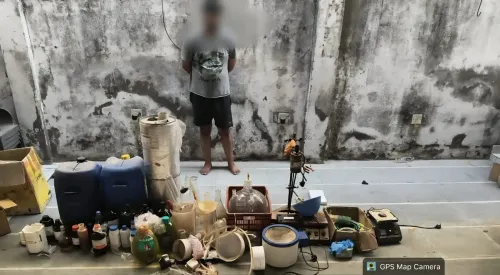
A clandestine mephedrone (MD) lab was found hidden in a basement in Ahmedabad's Sarkhej area during a raid on 15 November .
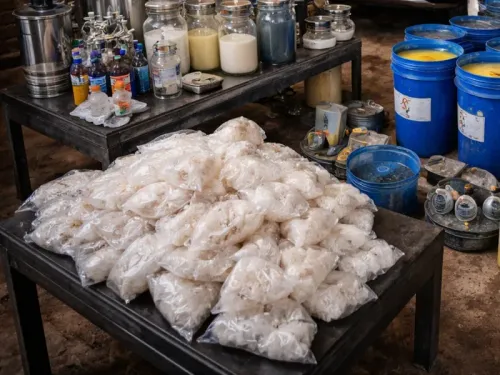
25 chemicals weighing 130.613 kg — including methylamine, bromine, and hydrobromic acid — were seized along with full lab equipment.
Khan allegedly learned mephedrone manufacturing through the internet and sourced materials via IndiaMART and suppliers in Mandsaur and Ahmedabad.
Four prior criminal cases were registered against Khan, including charges of attempted murder and mischief by fire.
The NCB has recorded similar residential lab busts in Greater Noida (October) and Jewar, Uttar Pradesh (August), indicating a national trend.
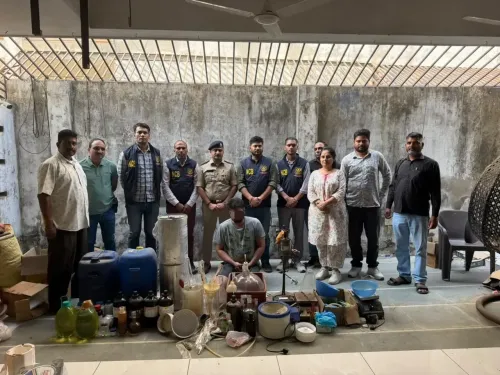
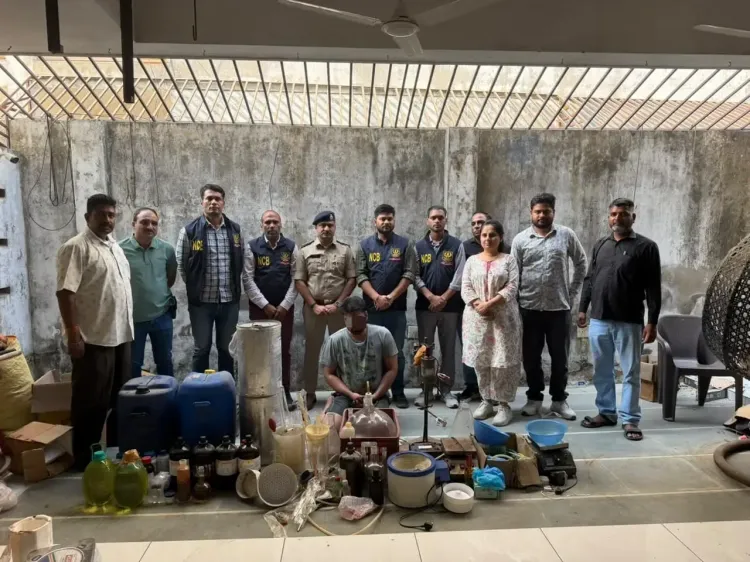
The Narcotics Control Bureau (NCB) on Monday, 16 November 2026 secured a one-day custody remand of Mudasar Ahmed Khan, alias Pathan, a café owner arrested after a clandestine mephedrone (MD) manufacturing laboratory was discovered in a concealed basement beneath his residential building in Ahmedabad's Sarkhej area. A local court remanded him to NCB custody until 4 p.m. on 17 November.
How the Hidden Lab Was Discovered
The NCB's Ahmedabad Zonal Unit, working in coordination with the Gujarat Police, conducted a search of the premises on 15 November and uncovered the illegal drug manufacturing facility. The laboratory was concealed in a basement room whose entrance was hidden behind what appeared to be an ordinary almirah and a removable section of tiled flooring — a design that investigators say was deliberately engineered to evade detection.
A forensic team from the National Forensic Sciences University (NFSU) also visited the concealed site as part of the ongoing investigation.
What Was Seized
Officials recovered 25 chemicals with a combined weight of 130.613 kg, including methylamine, bromine, and hydrobromic acid. Suspected mephedrone in both powder and liquid form was also seized. The laboratory was equipped with heating mantles, digital magnetic stirrers, temperature-measuring instruments, pipettes, round-bottom flasks, dropping funnels, separating funnels, and beakers.
Khan's Background and Alleged Method
According to the NCB, Khan, who was living at the premises with his family, admitted to having learnt the mephedrone manufacturing process through the internet. He allegedly procured chemicals and laboratory equipment from multiple sources in Mandsaur and Ahmedabad, as well as through the online marketplace IndiaMART, with the stated aim of producing what he described as 'good-quality mephedrone.'
Investigators found that four criminal cases had previously been registered against Khan on charges relating to rioting, criminal intimidation, mischief by fire, and attempted murder. His café, investigators suspect, was being used as a delivery point for the drug.
A Widening Pattern of Residential Drug Labs
The Ahmedabad case fits a broader pattern that the NCB has been tracking. The agency has stated that such laboratories have increasingly been found operating from residential buildings, industrial premises, farms, and remote locations. In October, two clandestine synthetic drug laboratories were dismantled in Greater Noida, yielding 379.74 kg of amphetamine-containing material and 10 kg of pseudoephedrine. In August, the Directorate of Revenue Intelligence uncovered another facility in Jewar, Uttar Pradesh, recovering around 30 kg of amphetamine and intermediary material, along with approximately 30 kg of precursor chemicals and manufacturing equipment.
Regulatory and Public Response
The NCB has also flagged attempts by drug manufacturers to circumvent restrictions on precursor chemicals. Acting on the agency's recommendation, the Department of Revenue notified 2-bromo-4-methylpropiophenone as a controlled substance under the NDPS Act on 11 March 2026. The agency has urged chemical and pharmaceutical manufacturers, importers, distributors, and traders to strengthen customer verification and monitor suspicious transactions. Members of the public can report suspected drug manufacturing or trafficking activities confidentially through MANAS, the National Narcotics Helpline at 1933.
As the investigation unfolds, authorities are expected to probe the full extent of Khan's distribution network and examine how long the concealed facility had been operational.
Point of View
With the internet serving as an open-source chemistry school. The fact that Khan reportedly sourced precursor chemicals through a mainstream B2B marketplace like IndiaMART exposes a critical gap in supply-chain monitoring that the NCB's existing advisories have not yet closed. The addition of 2-bromo-4-methylpropiophenone to the NDPS controlled-substance list in March 2026 is a step forward, but it also suggests that regulators are perpetually reacting to the last bust rather than anticipating the next synthesis route. As long as lab-grade equipment and precursor chemicals remain easily procurable online without robust end-user verification, residential MD labs will keep appearing — no matter how many almirahs investigators move aside.
NationPress
16 Nov 2026
Frequently Asked Questions
Who is Mudasar Ahmed Khan and why was he arrested?
Mudasar Ahmed Khan is a café owner from Ahmedabad's Sarkhej area who was arrested by the NCB's Ahmedabad Zonal Unit after a hidden mephedrone manufacturing laboratory was found in the basement of his residence on 15 November 2026. He was remanded to NCB custody until 4 p.m. on 17 November by a local court.
What is mephedrone (MD) and why is it illegal in India?
Mephedrone, commonly called MD or meow meow, is a synthetic stimulant drug classified as a controlled substance under the Narcotic Drugs and Psychotropic Substances (NDPS) Act in India. Its manufacture, sale, and possession without authorisation are criminal offences carrying severe penalties.
How was the hidden drug laboratory discovered in Ahmedabad?
The NCB's Ahmedabad Zonal Unit, acting in coordination with the Gujarat Police, raided the premises on 15 November 2026 and found the lab concealed in a basement room, with its entrance hidden behind an almirah and a removable section of tiled flooring. A forensic team from the National Forensic Sciences University (NFSU) also examined the site.
What chemicals and equipment were seized from the lab?
Investigators seized 25 chemicals weighing a total of 130.613 kg, including methylamine, bromine, and hydrobromic acid, along with suspected mephedrone in powder and liquid form. Lab equipment such as heating mantles, digital magnetic stirrers, pipettes, round-bottom flasks, and separating funnels was also recovered.
Is this the only such lab bust in India recently?
No. In October 2026, the NCB dismantled two clandestine synthetic drug laboratories in Greater Noida, seizing 379.74 kg of amphetamine-containing material. In August, the Directorate of Revenue Intelligence uncovered a similar facility in Jewar, Uttar Pradesh. The NCB has flagged a growing trend of such labs operating from residential and industrial premises across the country.