Gujarat extends farm scheme to Rabi season; 48,190 tribal farmers to benefit
Synopsis
For the first time since its 2012 launch, Gujarat's Agricultural Diversification Scheme now covers the Rabi season — bringing nearly 50,000 tribal farmers into a structured seed-and-fertiliser support programme across 14 districts. The move closes a year-round gap in tribal agricultural support and builds on a track record of reaching 15.70 lakh farmers since inception.
Key Takeaways
Gujarat has extended its Agricultural Diversification Scheme to the Rabi season for the first time in 2026-27 .
48,190 tribal farmers across 14 districts will receive seed and fertiliser kits under the Janjatiya Kalyan Yojana .
Farmers in north and central Gujarat districts get seeds for wheat, chickpea or maize ; south Gujarat districts receive vegetable seed packages.
All beneficiaries receive a fertiliser kit with PROM, ammonium sulphate and NPK consortia , covering one acre of cultivation.
Since its 2012 launch, the scheme has cumulatively supported around 15.70 lakh tribal farmers in Gujarat.
An online portal operational since 2022-23 streamlines applications and approvals across all tribal districts.
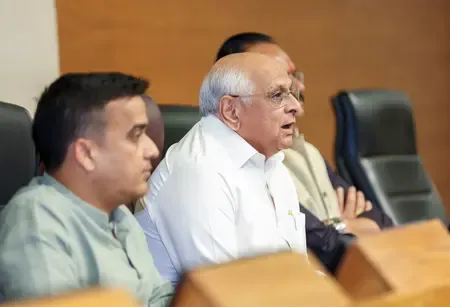
The Gujarat government has extended its Agricultural Diversification Scheme to the Rabi season for the first time, covering 48,190 tribal farmers across 14 districts under a seed and fertiliser assistance programme during the 2026-27 financial year. The move, initiated by Chief Minister Bhupendra Patel, builds on existing Kharif-season support under the Janjatiya Kalyan Yojana, with distribution of seed and fertiliser kits already under way in tribal areas.
What the Scheme Covers
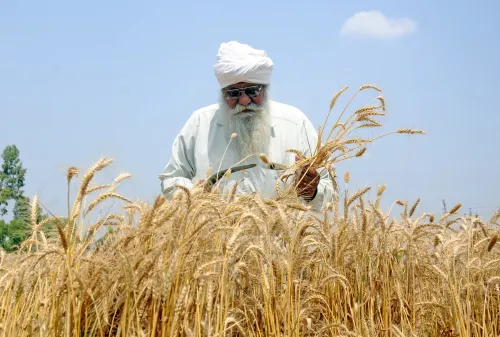
The assistance is structured according to the agro-climatic requirements of different districts. In Banaskantha, Sabarkantha, Aravalli, Mahisagar, Panchmahal, Dahod and Chhota Udepur, eligible farmers will receive seeds for any one of three main crops — wheat, chickpea or maize — along with seeds for tomato, okra and brinjal.
In Narmada, Bharuch, Surat, Navsari, Tapi, Valsad and Dang districts, the seed assistance will focus on vegetables including okra, tomato, bottle gourd, cucumber, brinjal and broccoli. Farmers across all 14 districts will receive a standardised fertiliser kit comprising one 50-kg bag each of phosphate-rich organic manure (PROM) and ammonium sulphate, along with one bottle of NPK consortia. Quantities are calibrated to cover cultivation on one acre of land.
Beyond Seeds: Training and Market Access
Beyond material inputs, the programme includes agricultural training, market linkage services, and ongoing guidance through telephone calls and messages from the implementing agency. The Tribal Development Department has also introduced an online portal — operational across all tribal districts since 2022-23 — allowing farmers to apply for assistance and obtain approvals digitally, removing the need for repeated visits to government offices.
Background and Track Record
Gujarat launched the Agricultural Diversification Scheme in 2012 to support tribal farmers and encourage alternative cropping patterns in tribal regions. Since inception, around 15.70 lakh tribal farmers have benefited from the programme. The Kharif component, operational since 2022-23, provides seeds for any one of 10 crops — including groundnut, soybean, sorghum, paddy, black gram, pigeon pea, ragi (finger millet), okra and pearl millet — to eligible beneficiaries.
Notably, the Rabi extension marks the first time year-round crop support has been offered under this framework, addressing a gap that left tribal farmers without institutional input support during the winter-sowing cycle.
Why It Matters
Agriculture remains the primary livelihood in large swathes of Gujarat's tribal belt, where low capital access and market isolation have historically constrained productivity. The scheme's objectives — reducing cultivation costs, improving yields, and promoting crop diversification — directly address structural vulnerabilities in these communities. This comes amid a broader national push to integrate tribal agricultural households into formal support systems. The Rabi extension, if implemented effectively, could strengthen food security and income stability for nearly 50,000 families ahead of the 2027 harvest cycle.
Point of View
And an input-support programme that covers only one season was always partial. The stronger test, however, is whether the seed and fertiliser kits translate into measurable yield and income gains: earlier Kharif rounds have reached large numbers, but independent outcome data on productivity improvements remains thin. With 15.70 lakh cumulative beneficiaries and no publicly reported yield-impact audit, the programme risks becoming a well-intentioned distribution exercise rather than a structural transformation of tribal agriculture. The online portal is a credible step toward transparency, but beneficiary selection criteria and post-harvest income tracking need to be part of the accountability architecture.
NationPress
18 Nov 2026
Frequently Asked Questions
What is Gujarat's Agricultural Diversification Scheme?
It is a Gujarat government programme launched in 2012 to support tribal farmers by providing seed and fertiliser assistance and encouraging crop diversification in tribal districts. Since inception, around 15.70 lakh tribal farmers have benefited from the scheme.
Why is the Rabi extension significant?
This is the first time the scheme has been extended to the Rabi (winter) season, closing a gap where tribal farmers previously received input support only during the Kharif (monsoon) season. The move brings 48,190 tribal farmers under year-round institutional support for the 2026-27 financial year.
Which districts and crops are covered under the Rabi scheme?
Farmers in Banaskantha, Sabarkantha, Aravalli, Mahisagar, Panchmahal, Dahod and Chhota Udepur receive seeds for wheat, chickpea or maize plus vegetable seeds. Farmers in Narmada, Bharuch, Surat, Navsari, Tapi, Valsad and Dang receive a vegetable-focused seed package including okra, tomato, bottle gourd, cucumber, brinjal and broccoli.
What fertiliser assistance do beneficiaries receive?
Every eligible farmer receives a kit comprising one 50-kg bag each of phosphate-rich organic manure (PROM) and ammonium sulphate , along with one bottle of NPK consortia . The quantity is designed to support cultivation on one acre of land.
How can tribal farmers apply for the scheme?
The Tribal Development Department operates an online portal, active across all tribal districts since 2022-23 , through which farmers can apply and receive approvals digitally without having to visit government offices in person.