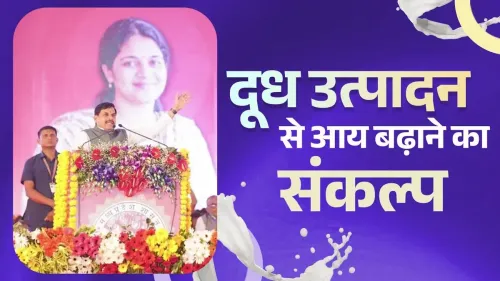
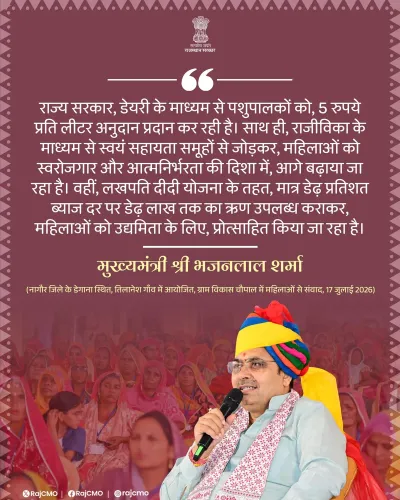
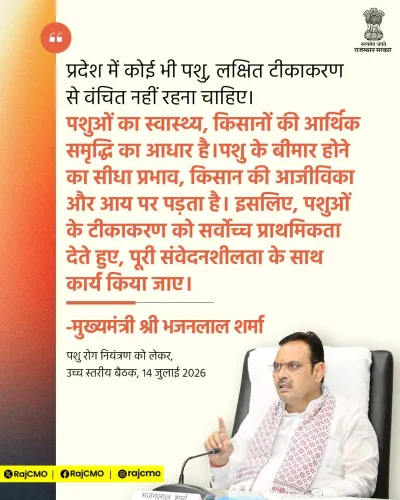
Haryana CMO highlights Mukhya Mantri Doodh Upahar Yojana for child and maternal nutrition
Synopsis
The Chief Minister's Office of Haryana on 17 October 2026 spotlighted the Mukhya Mantri Doodh Upahar Yojana (MMDUY), a state initiative to distribute milk and improve nutrition among children and mothers, leveraging Haryana's status as a top milk-producing state.
Key Takeaways
The Chief Minister's Office of Haryana promoted the Mukhya Mantri Doodh Upahar Yojana (MMDUY) on 17 October 2026 .
The scheme targets children and mothers with a focus on improved nutrition and health outcomes.
Haryana is one of India's leading milk-producing states , giving the dairy-based scheme a strong logistical foundation.
MMDUY aligns with broader national and state efforts to combat malnutrition through direct food provision to vulnerable groups.
Specific details including beneficiary numbers, coverage geography, and funding have not yet been officially published.
The #MMDUY hashtag signals an active government push to build public awareness of the scheme.
Haryana is doubling down on nutrition with its Mukhya Mantri Doodh Upahar Yojana (MMDUY) — a state-led initiative that puts milk directly into the hands of children and mothers who need it most. The Chief Minister's Office of Haryana spotlighted the scheme on Saturday, 17 October 2026, describing it as a significant step toward better nourishment and health for the state's youngest and most vulnerable.
The post, shared in Hindi, called MMDUY 'bechon aur maataon ke behtar poshan evam swasthya ki disha mein ek mahatvapurn pahal' — 'an important initiative in the direction of better nutrition and health for children and mothers.' The framing is deliberate: this is welfare anchored in outcomes, not just optics.
Why Haryana is the right state to run a milk scheme
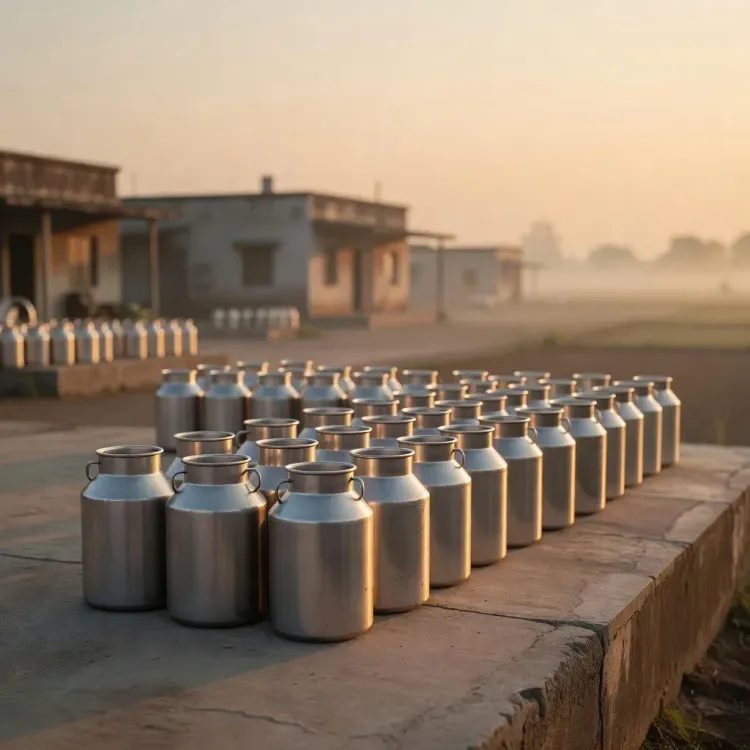
Haryana ranks among India's top milk-producing states, a distinction that makes a dairy-based nutrition programme both logistically credible and politically resonant. The state's dense network of cooperative dairies and cattle-rearing households gives MMDUY a supply-side backbone that many other states would struggle to replicate. Tapping that infrastructure to address child and maternal malnutrition is a natural policy fit — turning an agricultural strength into a social dividend.
Nutrition schemes targeting mothers and young children follow a well-established playbook in Indian public health: direct food provision to the most at-risk groups reduces stunting, anaemia, and low birth-weight outcomes far faster than income transfers alone. Milk, rich in protein and calcium, is a particularly high-value vehicle for that intervention.
Where MMDUY fits in Haryana's welfare architecture
Haryana has periodically layered nutrition-focused measures onto its welfare stack — from anganwadi meal programmes to mid-day meal enhancements. MMDUY appears designed to sit alongside, or complement, existing schemes rather than replace them, extending direct dairy provision to beneficiaries not fully covered by older frameworks. The hashtag #MMDUY signals an active communications push, suggesting the state is keen to drive awareness and uptake at the ground level.
Specific details on beneficiary numbers, scheme coverage geography, and funding allocation have not yet been made public. Those figures — when released — will determine whether MMDUY is a targeted pilot or a state-wide rollout. That is the number to watch.
For now, the signal from Chandigarh is unambiguous: Haryana is framing child and maternal nutrition as a governance priority, and it is using its dairy identity to make the case.
Point of View
The policy substance remains to be fully assessed.
NationPress
17 Oct 2026
Frequently Asked Questions
What is the Mukhya Mantri Doodh Upahar Yojana (MMDUY)?
MMDUY is a Haryana government scheme designed to distribute milk to children and mothers as a direct nutrition intervention, leveraging the state's dairy infrastructure to address malnutrition.
Who are the beneficiaries of the MMDUY scheme in Haryana?
The scheme primarily targets children and mothers, identified as vulnerable groups needing improved nutrition and health outcomes.
When was the Mukhya Mantri Doodh Upahar Yojana announced?
The Chief Minister's Office of Haryana highlighted the scheme on 17 October 2026 ; a verified original launch date has not been officially published yet.
Why is Haryana running a milk-based nutrition scheme?
Haryana is one of India's top milk-producing states, making a dairy-based welfare programme both operationally feasible and a natural extension of the state's agricultural strengths toward social outcomes.
How does MMDUY differ from other Haryana nutrition programmes?
MMDUY appears designed to complement existing schemes like anganwadi and mid-day meal programmes by extending direct milk provision to beneficiaries not fully covered under older frameworks, though full scheme details are awaited.