EU-India FTA 2025: Beyond tariffs to strategic trust and supply-chain resilience
Synopsis
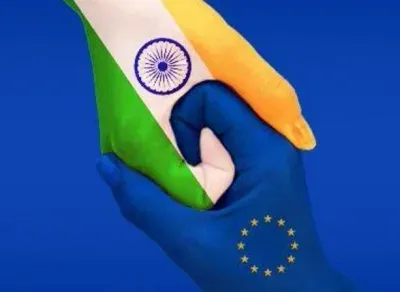
The EU-India Free Trade Agreement is being read not as a routine tariff deal but as a strategic realignment — 125 cooperation provisions, a CBAM engagement framework, and a path to Horizon Europe research access signal that both sides now see each other as indispensable partners, not just trading counterparts. The real test is in implementation, not the text.
Key Takeaways
India and the European Union have concluded a Free Trade Agreement spanning twenty chapters and containing 125 cooperation provisions .
The deal makes tariff commitments in pharmaceuticals and medical devices , but analysts note that regulatory harmonisation — not customs schedules — will determine actual market access.
India is not exempt from the EU's Carbon Border Adjustment Mechanism (CBAM) , with implications for Indian steel and aluminium exporters.
The agreement will be supplemented by a parallel investment protection pact and Indian participation in the EU's Horizon Europe research programmes.
The Modern Diplomacy article describes the deal as a 'belated recognition by the EU that India is its full equal.'
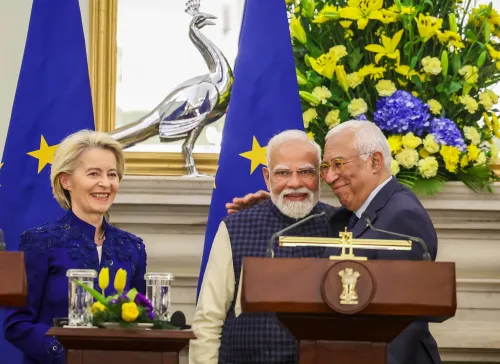
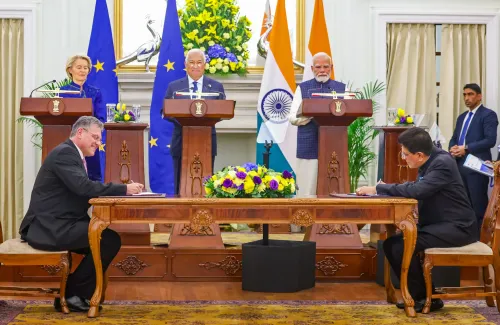
India and the European Union have concluded a landmark Free Trade Agreement (FTA), with analysts describing the deal as far more than a tariff-reduction exercise — it is, according to a detailed assessment in Modern Diplomacy, a framework for building strategic economic trust between two major powers navigating a fractured global order. The agreement arrives as both partners seek to diversify away from risky dependencies, particularly in the wake of renewed protectionist pressures following Donald Trump's return to the US presidency.
More Than Market Access
The Modern Diplomacy article argues that the most consequential trade agreements today are no longer defined by customs schedules alone. 'As countries seek to diversify away from risky dependencies without retreating from globalisation, trade agreements are increasingly becoming instruments of strategic trust as much as market access,' it noted. The EU-India FTA, spanning twenty chapters and containing as many as 125 cooperation provisions, reflects precisely that shift — embedding regulatory dialogue, institutional coordination, and transparency mechanisms across sectors.
Pharmaceuticals: Tariffs Are Only the Beginning
India supplies affordable medicines to more than 200 countries and remains the world's largest source of generic pharmaceuticals, yet the EU has absorbed only a modest share of that capacity. The FTA makes significant tariff commitments in pharmaceuticals and medical devices. However, as the article cautions, tariff elimination alone does not produce market access — regulators, not customs schedules, ultimately determine outcomes. Indian producers have long held the grievance of having to secure separate regulatory approvals in each EU member state. Through structured regulatory cooperation embedded in the agreement, there is potential for greater harmonisation of approval processes across the bloc over time, reinforcing the integrity of the single market while easing Indian exporters' path.
CBAM: From Confrontation to Engagement
The EU's Carbon Border Adjustment Mechanism (CBAM) became fully operational this year, and the FTA does not exempt India from it. This is consequential given the exposure of India's steel and aluminium exporters. Notably, India moved from a posture of threatening confrontation over the CBAM to negotiating the terms of engagement within it — a strategic recalibration the article describes as significant. Whether that engagement converts into tangible relief for Indian industry, however, 'remains open, a question the FTA's text alone cannot answer,' it cautioned. More broadly, the CBAM framework illustrates how modern trade agreements increasingly serve as vehicles for domestic reform on both sides: India may use the agreement to accelerate industrial decarbonisation, while the EU will need to simplify aspects of its own CBAM architecture for cooperation to function effectively.
What India Stands to Gain
For India, the gains extend well beyond export volumes. As the country builds out manufacturing capacity, innovation infrastructure, and its credentials as a trusted supply-chain partner, Europe offers capital, technology, and research collaboration that pure trade flows cannot capture. The agreement is to be supplemented in the coming months by a parallel investment protection agreement and Indian participation in the EU's Horizon Europe flagship research programmes. 'Cooperation is the throughline across sectors from medical technology to clean energy to digital services; competitiveness increasingly depends on the ability of two systems to work together, not on one converging toward the other,' the article stated. If utilised strategically, the deal could propel India's internal competitiveness and regulatory reform agenda.
EU's Strategic Recalibration on India
For the European Union, the agreement signals a fundamental reappraisal of how it views India — no longer simply an emerging market to be courted, or a counterweight to China, but a partner whose cooperation on carbon standards, supply-chain resilience, and regulatory frameworks Europe now actively needs. The article describes the deal as 'a belated recognition by the EU that India is its full equal.' This comes amid a broader global reconfiguration, with major economies reassessing supply-chain dependencies and seeking reliable long-term partners beyond the traditional US-China axis.
Point of View
Not numerical — 125 cooperation provisions are harder to deliver than a tariff schedule, and that is precisely where past Indian trade deals have stalled. The pharmaceuticals chapter is a case in point: Indian generics are globally competitive, yet fragmented EU member-state approvals have kept market penetration modest for years. The CBAM pivot from confrontation to negotiation is strategically sound but leaves Indian steel and aluminium exporters in an uncertain middle ground. And while Horizon Europe access is a genuine prize for India's research ecosystem, the investment protection agreement — still pending — is arguably the more consequential deliverable. The deal's ambition is real; the gap between ambition and implementation is where the story will actually be written.
NationPress
26 Jun 2026
Frequently Asked Questions
What is the EU-India Free Trade Agreement?
The EU-India Free Trade Agreement is a comprehensive trade and cooperation deal concluded between India and the European Union, spanning twenty chapters and containing 125 cooperation provisions. It goes beyond tariff reduction to cover regulatory cooperation, clean energy, digital services, pharmaceuticals, and supply-chain resilience.
Why does the EU-India FTA matter beyond tariffs?
According to an analysis in Modern Diplomacy, the agreement functions as a framework for strategic trust rather than a conventional tariff deal. It establishes institutional coordination and regulatory dialogue across sectors, reflecting how modern trade agreements increasingly serve as tools for building trusted economic partnerships amid geopolitical uncertainty.
How does the Carbon Border Adjustment Mechanism affect India under this FTA?
The EU's Carbon Border Adjustment Mechanism became fully operational this year, and the FTA does not exempt India from it. India moved from a confrontational stance on the CBAM to negotiating terms of engagement within it — significant given the exposure of Indian steel and aluminium exporters. Whether this translates into practical relief for Indian industry remains to be seen.
What are the key gains for India from the EU-India FTA?
India stands to gain improved access to European capital, technology, and research collaboration, including participation in the EU's Horizon Europe research programmes. The deal also creates a pathway for greater regulatory harmonisation in pharmaceuticals, potentially easing the requirement for separate approvals in each EU member state.
What additional agreements will supplement the EU-India FTA?
The FTA is expected to be supplemented in the coming months by a parallel investment protection agreement and Indian participation in the EU's Horizon Europe flagship research programmes, broadening the partnership beyond trade into innovation and capital flows.