India's first hydrogen train: 2,600 passengers, self-generated power on Jind-Sonipat route
Synopsis
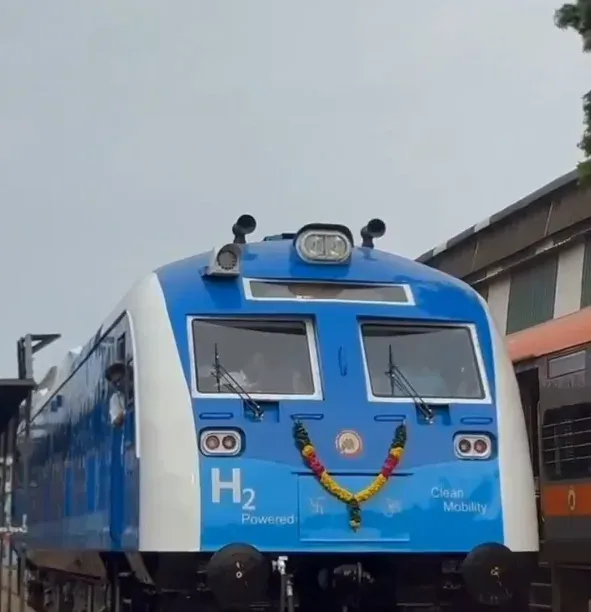
India's first hydrogen-powered trainset is not just a new locomotive — it is a self-contained green energy system. Carrying 2,600 passengers at 110 kmph with zero carbon emissions, and backed by the country's first integrated railway hydrogen ecosystem at Jind, this launch could redefine the future of rail on routes where overhead electrification is unviable.
Key Takeaways
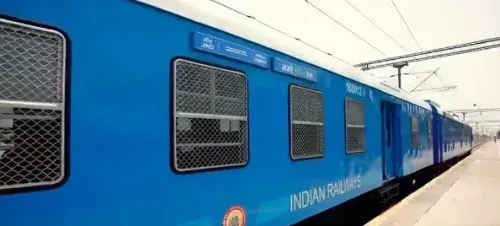
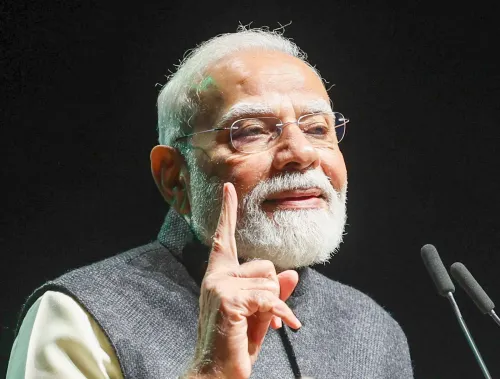
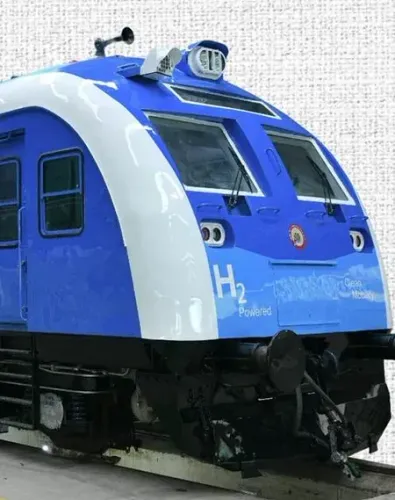
PM Narendra Modi is set to inaugurate India's first hydrogen fuel cell-powered trainset on 18 July 2025 .
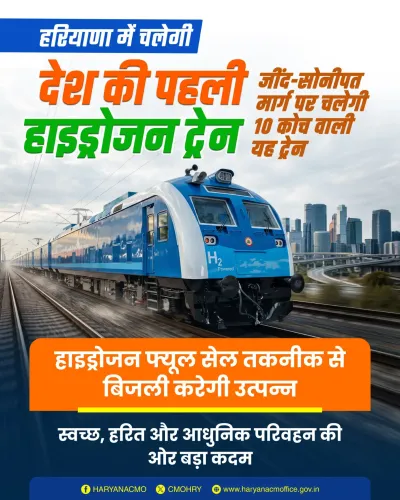
The 10-coach train will run on the 89-km Jind-Sonipat section of Northern Railway.
It uses a Proton Exchange Membrane (PEM) fuel cell , producing electricity onboard with only water vapour as a by-product.
The trainset carries approximately 2,600 passengers at a maximum speed of 110 kmph — among the largest hydrogen passenger trains globally.
India's first integrated railway hydrogen ecosystem, capable of storing 3,000 kg of hydrogen , has been established at Jind .
The project complies with PESO standards and supports India's National Green Hydrogen Mission .
Prime Minister Narendra Modi is set to inaugurate India's first hydrogen fuel cell-powered trainset on 18 July 2025, marking the country's entry into zero-emission rail technology. The 10-coach train will initially run on the 89-km Jind-Sonipat section of Northern Railway, according to the Ministry of Railways.
How the Hydrogen Train Generates Its Own Power
Unlike conventional electric trains that draw power from overhead wires, or diesel locomotives that burn fossil fuel, this trainset produces electricity entirely onboard. Hydrogen stored in onboard cylinders is combined with atmospheric oxygen inside a Proton Exchange Membrane (PEM) fuel cell, triggering an electrochemical reaction that generates electricity to drive the train's traction motors.
The only by-products of this process are water vapour and heat, making it a near-zero emission mode of transport, the ministry stated. The train is equipped with two Hydrogen Driving Power Cars and eight trailer coaches, with each power car delivering 1,200 kW (1,600 hp).
Scale and Speed: Among the Largest Globally
Designed to carry approximately 2,600 passengers, the trainset has a maximum operating speed of 110 kmph. The ministry noted this makes it one of the largest hydrogen-powered passenger trainsets developed anywhere in the world — a significant milestone for domestic rail engineering.
India's First Integrated Railway Hydrogen Ecosystem
To support operations, Indian Railways has established the country's first integrated railway hydrogen ecosystem at Jind. Hydrogen is produced on-site through electrolysis, compressed, and dispensed into the train via dedicated refuelling stations. The facility can store nearly 3,000 kg of hydrogen for regular operations.
Notably, this is not merely a train project — it is the creation of an end-to-end green hydrogen supply chain within a railway setting, a model that could be replicated on other routes.
Safety Systems and Regulatory Compliance
Given hydrogen's highly flammable nature, Indian Railways has incorporated multiple safety layers across both the train and the refuelling infrastructure. These include hydrogen leak detectors, flame, heat and smoke sensors, continuous ventilation systems, and automatic shutdown mechanisms that cut off hydrogen supply upon detecting any abnormality.
The project has undergone independent safety assessment and complies with international standards, as well as the statutory requirements of the Petroleum and Explosives Safety Organisation (PESO).
Broader Green Mission and What Comes Next
The hydrogen train represents the next phase of Indian Railways' green transition, which has already seen more than 99 per cent of the country's broad gauge network electrified. The project directly supports India's National Green Hydrogen Mission and the country's long-term net-zero goals.
The ministry indicated that hydrogen-powered trains are likely to be introduced on additional routes in the future, including heritage railways. With the Jind-Sonipat corridor serving as a live pilot, the pace of that expansion will depend heavily on how this first deployment performs operationally and economically.
Point of View
But the harder question is scalability. Green hydrogen produced via electrolysis is still significantly more expensive than diesel or grid electricity in India, and the Jind ecosystem's economics have not been disclosed. If the cost-per-kilometre is not competitive, this risks becoming a showcase project rather than a replicable model. The real test will come when Indian Railways publishes operational data from the Jind-Sonipat run — and whether that data informs a credible rollout plan, or quietly disappears into a ministry report.
NationPress
16 Jul 2026
Frequently Asked Questions
What is India's first hydrogen-powered train and where will it run?
India's first hydrogen fuel cell-powered trainset is a 10-coach train inaugurated by Prime Minister Narendra Modi. It will initially operate on the 89-km Jind-Sonipat section of Northern Railway, running at a maximum speed of 110 kmph.
How does the hydrogen train generate electricity?
The train uses a Proton Exchange Membrane (PEM) fuel cell, where hydrogen stored in onboard cylinders combines with atmospheric oxygen to produce electricity. This powers the traction motors, with water vapour and heat as the only by-products — making it a near-zero emission system.
How many passengers can the hydrogen train carry?
The trainset is designed to carry approximately 2,600 passengers. With two Hydrogen Driving Power Cars and eight trailer coaches, each power car produces 1,200 kW (1,600 hp), making it one of the largest hydrogen-powered passenger trainsets developed globally.
What safety systems are in place for the hydrogen train?
Indian Railways has incorporated hydrogen leak detectors, flame, heat and smoke sensors, continuous ventilation, and automatic shutdown systems that cut off hydrogen supply if any abnormality is detected. The project has also passed independent safety assessment and complies with PESO statutory requirements.
How does this train fit into India's green energy goals?
The hydrogen train is part of Indian Railways' broader green transition, which has already electrified over 99 per cent of the broad gauge network. It directly supports India's National Green Hydrogen Mission and net-zero targets, with hydrogen trains expected to be introduced on more routes, including heritage railways, in the future.