HP CM flags off new electric buses from Solan's Kyariaghat
Synopsis
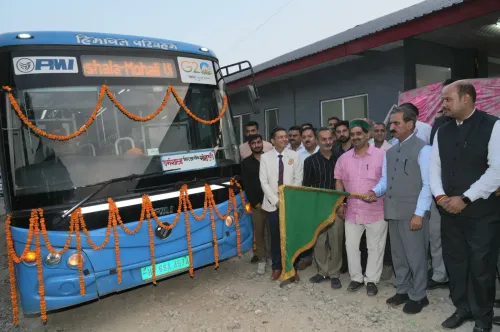
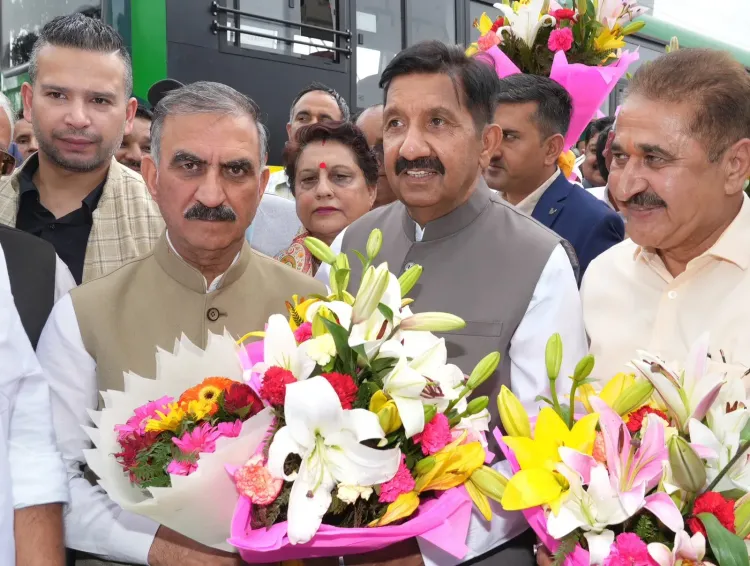
The Chief Minister's Office of Himachal Pradesh flagged off new HRTC electric buses from Kyariaghat in Solan district on 30 July 2026, marking continued fleet expansion under the Sukhu government to improve connectivity across the state's mountainous terrain.
Key Takeaways
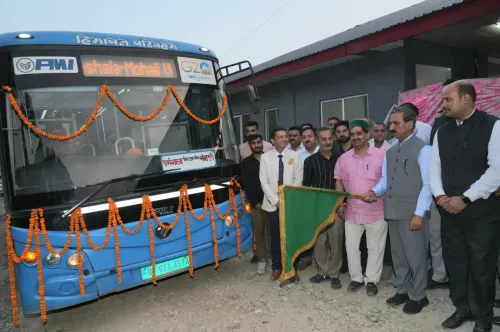
New HRTC electric buses were flagged off from Kyariaghat, Solan district on 30 July 2026 .
The Chief Minister's Office framed the launch as part of continuous HRTC fleet expansion since the Congress government took office in December 2022.
The initiative targets Himachal Pradesh's difficult hill terrain, where long distances and steep gradients make public transport both essential and expensive to operate.
HRTC serves one of India's most topographically challenging bus networks, often the only public transport option for remote valley communities.
The electric bus rollout aligns with a broader national push for public electric mobility while addressing state-specific operational cost pressures.
Further phases of electric bus induction in other districts remain to be announced.
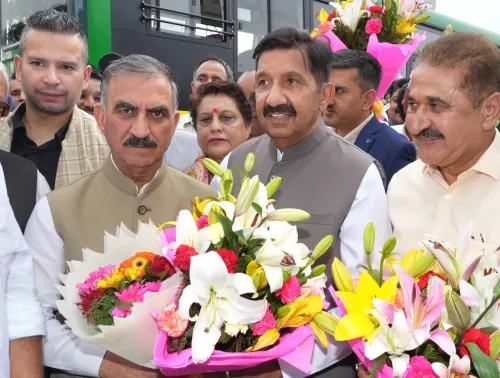
A fleet of new electric buses rolled out of Kyariaghat in Solan district on Thursday, 30 July 2026, as the Chief Minister's Office of Himachal Pradesh announced the flagging-off ceremony — another step in the state government's drive to modernise the Himachal Road Transport Corporation (HRTC) fleet since taking office in December 2022.
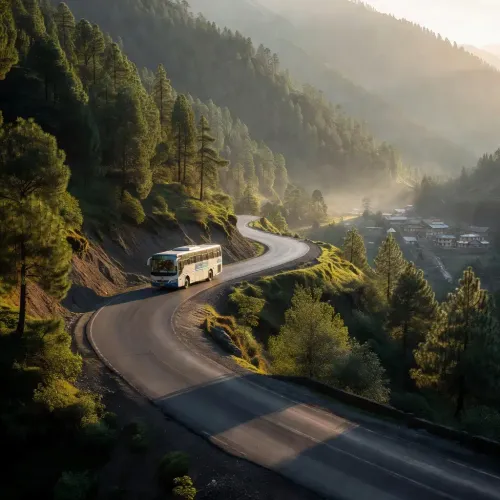
Solan's steep roads and the electric push
The Chief Minister's Office posted in Hindi: 'कठिन भौगोलिक परिस्थितियाँ दूरियाँ बढ़ा देती हैं, लेकिन HRTC अपनी विश्वसनीय सेवाओं के माध्यम से लोगों का विश्वास मजबूत कर रही है' — 'Difficult geographical conditions increase distances, but HRTC is strengthening people's trust through its reliable services.' The line captures exactly why electrification matters here: steep gradients and long inter-village hauls make fuel costs punishing, and diesel breakdowns in remote valleys leave commuters stranded for hours. Electric buses, with fewer moving parts and lower per-kilometre running costs, directly address both problems.
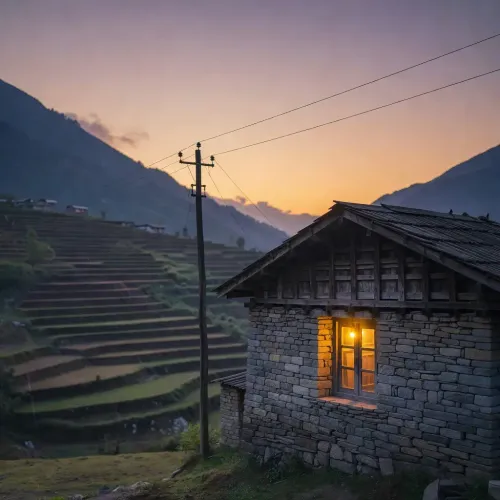
Solan, one of Himachal Pradesh's southern districts, sits at the junction of the state's more accessible lower hills and its rugged interior. It is a gateway corridor for goods and daily commuters alike, making reliable public transport a practical necessity rather than a luxury for thousands of residents.
HRTC's expanding fleet under the Sukhu government
Chief Minister Sukhvinder Singh Sukhu, who has led the Congress government since December 2022, has positioned HRTC modernisation as a signature connectivity commitment. The corporation serves one of India's most topographically demanding networks — winding mountain roads where private operators rarely venture and where a missed bus can mean a half-day wait. The state government's gradual induction of electric buses fits a pattern visible across several Indian hill states: swap out high-maintenance diesel fleets for cleaner, cheaper-to-run electric alternatives, and do it district by district.
Nationally, the push aligns with central government schemes promoting public electric mobility, though the specific financing mix for this Solan batch has not been confirmed. What is clear is the direction: the post explicitly frames today's flagging-off not as a standalone event but as part of a continuous fleet expansion since the government's formation — a deliberate signal of policy continuity heading into the second half of the term.
What rural commuters stand to gain
For hill residents, every new bus on an HRTC route is a concrete quality-of-life change — a hospital visit that doesn't require an overnight stay, a student who makes it to college without hitchhiking, a daily-wage worker who reaches the town market on time. The electric variant adds a quieter, smoother ride on switchback roads. The next test will be whether the rollout reaches the more remote northern and tribal districts, where the connectivity gap is sharpest and the fuel-cost argument for electrification is strongest.
Himachal Pradesh has set its sights on greener hills. The buses leaving Kyariaghat today are proof the journey has started — the question is how fast it scales.
Point of View
Two issues that resonate strongly with Himachal's electorate. The choice of Solan, a relatively accessible southern district, also suggests the government is building outward from easier terrain before tackling the more complex logistics of northern and tribal routes. Whether central scheme funding is leveraged for the next tranche will determine how quickly the fleet can scale without straining state finances.
NationPress
30 Jul 2026
Frequently Asked Questions
What is HRTC and why does it matter in Himachal Pradesh?
HRTC, the Himachal Road Transport Corporation, is the state-owned bus operator that provides public transport across Himachal Pradesh's mountainous districts. It is often the only affordable transport option for residents in remote valleys where private operators do not operate.
Where were the new HRTC electric buses flagged off?
The new electric buses were flagged off from Kyariaghat in Solan district, Himachal Pradesh, on 30 July 2026.
Who is the Chief Minister of Himachal Pradesh in 2026?
Sukhvinder Singh Sukhu has been the Chief Minister of Himachal Pradesh since December 2022, leading the Congress government that came to power after the 2022 assembly elections.
Why is Himachal Pradesh introducing electric buses in hilly areas?
Electric buses have lower per-kilometre running costs and fewer mechanical breakdowns than diesel vehicles, making them well-suited to Himachal Pradesh's steep gradients and long inter-village routes where fuel expenses are high and maintenance access is limited.
Will HRTC electric buses be introduced in other Himachal Pradesh districts?
The state government has indicated that HRTC fleet expansion is ongoing, but specific timelines and districts for future electric bus induction beyond Solan have not been officially confirmed.