HP CM Office on PARAM: India's Tech Denial Became Self-Reliance
Synopsis
The Himachal Pradesh CM Office recalled how a foreign denial of supercomputer access in the 1980s pushed India to build PARAM, its first indigenous supercomputer, through C-DAC — a decision that seeded the global rise of Indian tech talent.
Key Takeaways
The HP Chief Minister's Office posted on September 25, 2026 invoking India's PARAM supercomputer legacy as a symbol of technological self-reliance.
C-DAC was established in 1988 after US export controls blocked India from acquiring foreign high-performance computers.
PARAM 8000 , India's first indigenous parallel-processing supercomputer, was commissioned in 1991 .
The post draws a direct line from that founding decision to Indian professionals now leading at Google and other global tech firms.
India's National Supercomputing Mission continues the PARAM legacy, now targeting AI-era exascale computing.
When the world said no, India built its own. The Chief Minister's Office of Himachal Pradesh invoked a defining chapter of India's technology history on Friday, September 25, 2026 — the moment the country was denied access to advanced foreign supercomputers and chose to engineer its own answer from scratch.
The post, shared in Hindi, captures the arc succinctly: 'इनकार किया। इसके बाद भारत ने अपनी क्षमता पर भरोसा किया' — 'They refused. After that, India trusted its own capability' — and went on to build the indigenous supercomputer series PARAM. The closing line lands the broader point: 'Today, Indian talent leads at Google and the world's biggest tech companies. This is the strength of Hindustan.'
The refusal that sparked PARAM
The story begins in the late 1980s, when the United States imposed export controls on high-performance computing systems — including the Cray series — blocking India from acquiring the machines its scientists needed. Rather than accept the ceiling, the government set up the Centre for Development of Advanced Computing (C-DAC) in 1988, with a single mission: build what you cannot buy.
Three years later, in 1991, PARAM 8000 rolled out — India's first parallel-processing supercomputer, assembled entirely through indigenous effort. The name itself was a declaration: PARAM, meaning 'supreme'. It placed India in an exclusive club of nations capable of designing and operating supercomputers at that scale, and it did so in defiance of a technology denial regime.
From a lab in Pune to leadership in Silicon Valley
The downstream effect of that decision is where the CM Office's post locates its punch. The PARAM programme did not just produce machines — it produced engineers, researchers, and a generation of computing professionals who carried that rigour into global careers. Today, Indian-origin executives hold senior leadership positions at Google and across the world's most consequential technology companies.
India's pattern of responding to technology denial with accelerated indigenous development is not unique to computing. The same dynamic shaped its space programme and nuclear energy sector. Each time a door was closed, a domestic capability was built behind it — and that capability, over time, became an export in human form.
The National Supercomputing Mission carries the baton
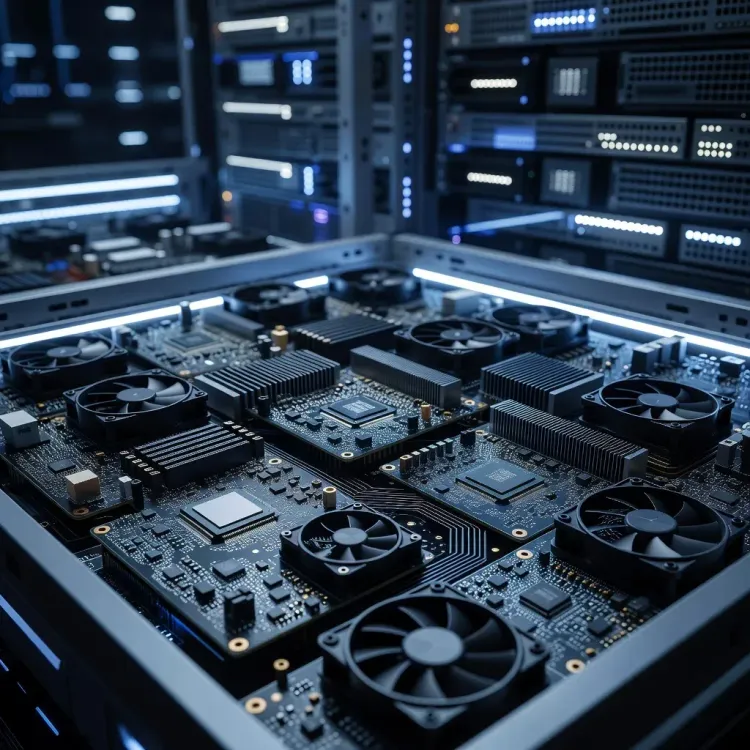
The PARAM legacy is now being extended under India's National Supercomputing Mission, which aims to build a grid of high-performance computing infrastructure across research institutions nationwide. As AI-intensive workloads redefine what 'compute power' means, the question of indigenous exascale and AI-focused systems has moved back to the centre of strategic planning — making the CM Office's historical callback more than nostalgia. It is a framing device for the present.
India once turned a refusal into a revolution in computing. The country is now being asked whether it can do it again — this time, at the frontier of artificial intelligence.
Point of View
The post frames self-reliance not as a reactive policy but as a generational inheritance. It also arrives at a moment when debates around AI compute sovereignty are intensifying globally, lending the historical callback fresh urgency. The subtext is clear — if India solved supercomputing from scratch once, it can do so again at the AI frontier.
NationPress
25 Sept 2026
Frequently Asked Questions
What is India's PARAM supercomputer?
PARAM is India's first indigenous supercomputer series, developed by C-DAC. PARAM 8000, launched in 1991, was a parallel-processing machine built entirely through domestic effort after India was denied access to foreign high-performance computers in the late 1980s.
Why did India build its own supercomputer?
The United States imposed export controls on advanced computing systems including the Cray series in the 1980s, blocking India from buying them. In response, India set up C-DAC in 1988 and developed the PARAM series domestically.
What is C-DAC and what does it do?
C-DAC, the Centre for Development of Advanced Computing, was established in 1988 to build high-performance computing capabilities within India. It created the PARAM supercomputer series and continues to drive India's advanced computing research.
What is India's National Supercomputing Mission?
The National Supercomputing Mission is a government programme aimed at building a nationwide grid of high-performance computing infrastructure across research institutions, extending the legacy of the PARAM initiative into the AI era.
Why is the HP CM Office talking about PARAM?
The Himachal Pradesh Chief Minister's Office shared a post on September 25, 2026 citing PARAM as an example of India's technological self-reliance, connecting the 1980s origin story to India's present-day global tech leadership.