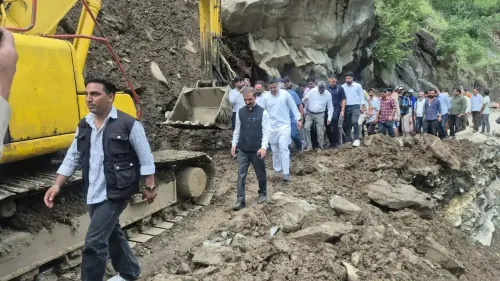
HP CM Sukhu directs PWD to expand into dam construction
Synopsis
Chief Minister Sukhvinder Singh Sukhu has directed Himachal Pradesh's Public Works Department to move beyond roads and bridges into dam construction, leveraging disaster-response expertise to strengthen flood resilience and hydroelectric capacity across the Himalayan state.
Key Takeaways
CM Sukhu praised the PWD's role during disasters as 'extremely important and commendable.' The department has been directed to explore new domains beyond its traditional road and building mandate.
Dam construction was specifically cited as a priority area for PWD's expanded role.
The directive draws on field experience accumulated by PWD engineers during natural disaster responses in Himachal Pradesh .
Himachal Pradesh holds significant untapped hydroelectric potential alongside chronic flood and landslide risk.
Formal budget allocations and policy notifications will determine whether the directive leads to structural departmental change.
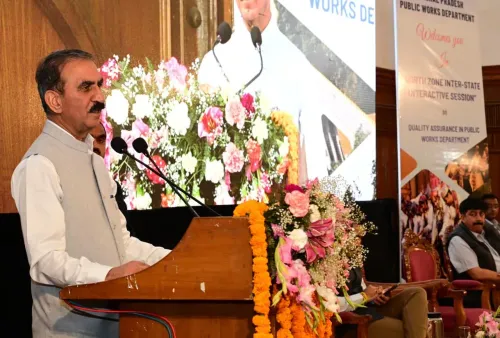
The Chief Minister's Office of Himachal Pradesh on Saturday, 20 June 2026 directed the state's Public Works Department (PWD) to move beyond its traditional mandate of roads and bridges and take a more active role in dam construction, citing lessons drawn from repeated natural disasters across the Himalayan state.
Context
The post, attributed to Chief Minister Sukhvinder Singh Sukhu, states that the PWD's role has been 'अत्यंत महत्वपूर्ण एवं सराहनीय' ('extremely important and commendable') and calls on the department to seek new opportunities beyond its conventional domain. Specifically, the Chief Minister urged the department to take a more proactive role in areas such as dam construction, leveraging the field experience accumulated during disaster response operations.
Himachal Pradesh is among India's most disaster-prone Himalayan states, regularly battered by cloudbursts, flash floods, and landslides that damage roads, bridges, and residential zones. The CM's directive frames this vulnerability as an opportunity — asking the PWD to convert crisis-management expertise into constructive infrastructure capacity.
Policy Backdrop
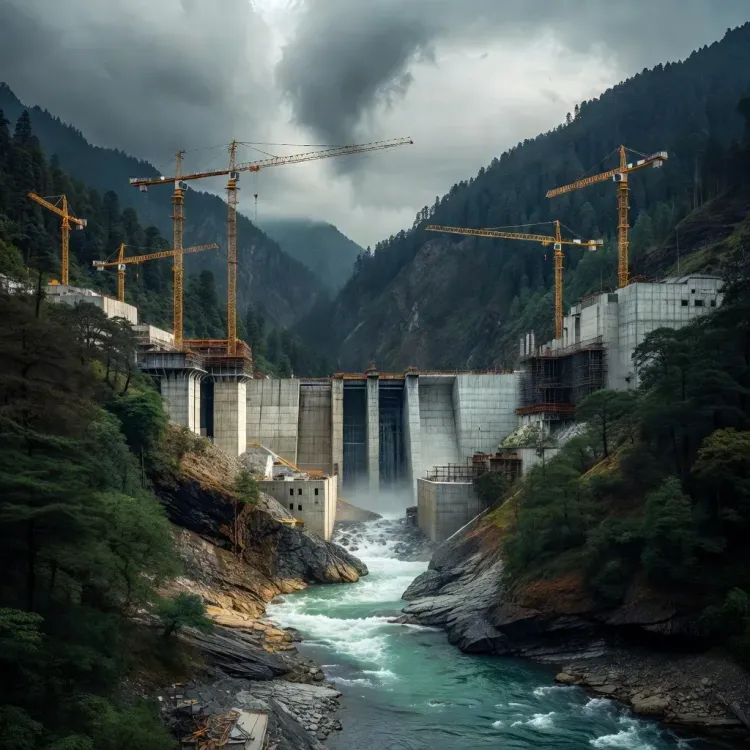
The PWD in Himachal Pradesh has historically focused on road connectivity and public buildings. However, the state also holds some of India's largest untapped hydroelectric potential, with numerous river valleys suitable for dam and reservoir projects. Channelling PWD engineering capacity into dam construction would allow the state to pursue both flood mitigation and power generation under a single departmental umbrella.
Across Himalayan states, there has been a growing administrative shift toward multi-hazard resilient planning. Public works agencies have been increasingly asked to diversify into water infrastructure in the wake of extreme weather events that have exposed gaps in traditional departmental structures. CM Sukhu, who has been in office since December 2022, has positioned disaster resilience as a central pillar of his government's infrastructure agenda.
Stakeholders and Impact
PWD engineers stand to receive expanded mandates and potentially new training requirements in hydraulic and dam engineering. Hydro project developers operating in the state may find a more capable state agency as a partner or counterpart in project execution and oversight.
For flood-prone communities in river valleys across Himachal Pradesh, dam infrastructure built with disaster-informed design could offer improved flood buffering. The directive also signals that the state government intends to monetise its hydroelectric geography more aggressively, which could have implications for future state revenue and power-sector policy.
What's Next
Observers will watch for formal policy notifications or budget reallocation orders that expand the PWD's jurisdictional mandate to include dam and water infrastructure works. The state legislature's next session and the upcoming state budget cycle will be key moments to assess whether this directive translates into concrete departmental restructuring or dedicated capital outlay.
If the PWD is formally empowered and resourced for dam construction, Himachal Pradesh could emerge as a model for other Himalayan states seeking to integrate disaster management experience into mainstream infrastructure planning.
Point of View
The government is betting on speed and cost efficiency over structural reform. The move also carries a political dividend: framing recurring flood crises as a springboard for development signals that the administration is not merely reactive. Whether the PWD has the specialised hydraulic engineering depth to execute dam projects at scale remains the critical question that budget allocations and project timelines will eventually answer.
NationPress
20 Jun 2026
Frequently Asked Questions
What has the Himachal Pradesh CM directed the PWD to do?
Chief Minister Sukhvinder Singh Sukhu has directed the Public Works Department to expand beyond roads and bridges into new areas, specifically calling for a more active role in dam construction based on experience gained during disaster response operations.
Why is the PWD being asked to build dams in Himachal Pradesh?
The rationale is that PWD engineers have accumulated significant field experience managing infrastructure during floods, landslides, and cloudbursts, and this expertise can be redirected toward dam construction for flood mitigation and hydroelectric power generation.
Who is the Chief Minister of Himachal Pradesh in 2026?
Sukhvinder Singh Sukhu is the Chief Minister of Himachal Pradesh, having taken office in December 2022.
Does Himachal Pradesh have hydroelectric potential?
Yes, Himachal Pradesh is one of India's most hydroelectrically rich states, with numerous Himalayan river valleys offering significant untapped capacity for dam and reservoir projects.
What disasters affect Himachal Pradesh that prompted this policy shift?
Himachal Pradesh regularly faces cloudbursts, flash floods, and landslides that damage roads and communities. The government has cited lessons from these recurring disasters as the basis for expanding the PWD's mandate into water and dam infrastructure.