India-Germany renewable energy ties to deepen, says German envoy Ackermann

Synopsis
Germany's envoy to India says the bilateral clean energy partnership is set to deepen — and Middle East tensions are making that push more urgent than ever. Ambassador Philipp Ackermann's warning about fossil fuel dependence, delivered as Gulf tensions flared, signals that the India-Germany green alliance is no longer just an environmental project — it's a strategic hedge.
Key Takeaways
German Ambassador Philipp Ackermann confirmed on 9 July that India and Germany are actively expanding clean energy collaboration.
Ackermann warned that both nations — with limited domestic natural resources — must reduce dependence on Middle East fossil fuels amid rising regional tensions.
The Ambassador stressed the importance of keeping the Strait of Hormuz open and called for urgent diplomatic resolution in the Gulf.
Ackermann called for greater inclusion of women in energy transition planning, saying the shift 'will not work without women.' Bilateral energy dialogue is expected to deepen, with structured deliberations on energy security frameworks planned going forward.
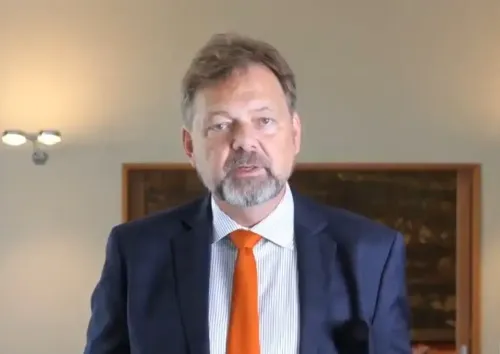
German Ambassador to India Philipp Ackermann said on 9 July that India and Germany are actively collaborating in the clean energy sector, with the bilateral relationship set to grow stronger in the years ahead. Speaking in an exclusive interview, Ackermann described the partnership as a framework where both nations pool expertise and knowledge toward a more sustainable future.
What the Partnership Covers
'It's a very, very good framework where India and Germany put together their thoughts, expertise, and knowledge in order to create a better and more sustainable general environment,' Ackermann said. 'This includes, of course, clean energy, and we are very actively working together with India in the clean energy field. In the years to come, we will increase and deepen this relationship between India and Germany.'
The envoy's remarks come as both countries deepen engagement under the Indo-German Green and Sustainable Development Partnership, which has positioned renewable energy as a central pillar of bilateral cooperation.
Middle East Tensions and Energy Security
Ackermann flagged the ongoing Middle East conflict as a critical prompt for both nations to reassess their energy import dependencies. 'We have seen some concerning developments in the Middle East over the last couple of hours. We hope that diplomacy will prevail,' he said, adding that the situation underscores the urgency of energy diversification.
The Ambassador specifically referenced the risk to the Strait of Hormuz, a chokepoint through which a significant share of global oil and gas transits, stressing that a quick return to diplomatic normalcy is essential to keeping it open. 'What happens in the Gulf now shows us that India and Germany, countries with little natural resources, must look into how you get your energy back home so that you are independent from foreign fossil fuels,' he said.
The Case for Women in Energy Transition
Ackermann also raised the issue of gender inclusion in the energy sector, arguing it is essential to the success of the clean energy transition. 'I think we should perhaps include more thoughts in our deliberations on bringing women more to the forefront because, you know, the energy transition will not work without women,' he said.
This is a point gaining traction in international energy policy circles, where studies have increasingly linked gender-diverse leadership in energy institutions to more resilient and inclusive transition outcomes.
What Comes Next
Both governments are expected to continue structured dialogue on clean energy cooperation, with Ackermann indicating that deliberations will expand to cover energy security frameworks suited to countries with limited domestic fossil fuel reserves. The trajectory of Middle East geopolitics is likely to add urgency to those conversations in the near term.
Point of View
Not merely a climate gesture. The timing matters — with Middle East tensions flaring, both nations face structural exposure to fossil fuel supply disruption. India imports over 85% of its crude oil, much of it routed through the Strait of Hormuz; Germany has spent three years rebuilding energy security after the Russia shock. The shared vulnerability is real, and it gives the India-Germany clean energy axis a geopolitical weight that bilateral green partnerships rarely carry. Whether that urgency translates into faster project execution — rather than more framework agreements — is the question that will define this partnership's actual value.
NationPress
8 Oct 2026
Frequently Asked Questions
What did German Ambassador Philipp Ackermann say about India-Germany energy ties?
Ambassador Ackermann said India and Germany are actively working together in the clean energy sector and that the relationship will deepen in the years ahead. He described the partnership as a framework for pooling expertise and knowledge to build a more sustainable environment.
Why did Ackermann raise the Middle East conflict in the context of energy?
Ackermann cited ongoing Middle East tensions as a warning sign for countries heavily dependent on the region for fossil fuel imports. He stressed that both India and Germany, as nations with limited domestic natural resources, must prioritise energy security and diversification.
What is the significance of the Strait of Hormuz in this context?
The Strait of Hormuz is a critical global oil and gas transit route, and Ackermann emphasised the need for it to remain open through diplomatic resolution of Gulf tensions. He warned that excessive dependence on Middle East energy sources poses a strategic risk for both India and Germany.
What did the German envoy say about women and the energy transition?
Ackermann argued that the global energy transition cannot succeed without greater participation of women, calling for more deliberate inclusion of women in energy sector planning and decision-making. He described the current moment as a good opportunity to reflect on and act on this gap.
What is the India-Germany clean energy partnership?
It is a bilateral framework under which India and Germany collaborate on clean energy, sustainability, and green technology, formalised in part through the Indo-German Green and Sustainable Development Partnership. The Ambassador indicated that structured dialogue on energy security will expand in the coming period.