Indian Grey Hornbill returns to Gir after 60 years, breeding confirmed
Synopsis
Absent from Gujarat's Gir forests since the 1950s, the Indian Grey Hornbill has not just returned — it is breeding. A peer-reviewed study confirms four nesting pairs in just two years, satellite tracking shows home ranges shrinking from 61 sq km to 5.7 sq km as birds settle, and the Chilotro is once again dispersing seeds across a forest it helped shape for centuries.
Key Takeaways
The Indian Grey Hornbill (Chilotro) has returned to Gir forests, Gujarat after an absence of nearly 60 years , with breeding now confirmed.
A total of 40 birds were released in two phases — 28 in 2021–22 and 12 in 2023 — translocated from the Aravalli forests .
1 breeding pair nested in year one; 3 additional pairs established nests in year two.
Satellite tracking of 11 male birds showed home ranges shrinking from ~61 sq km to ~5.7 sq km as birds settled.
Findings published in peer-reviewed journal 'Birds' confirm the programme has met its primary conservation objective.
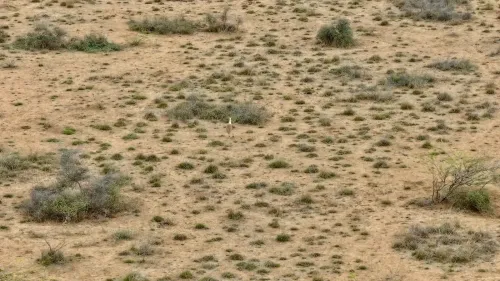
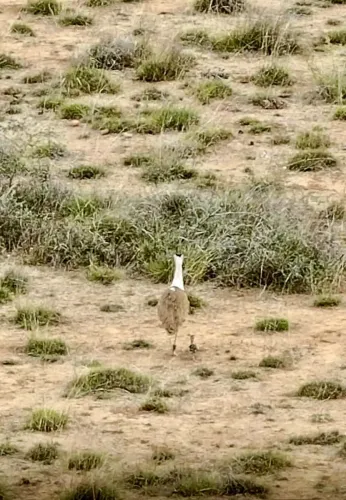
The milestone follows another Gujarat conservation success — a Great Indian Bustard chick surviving past the critical 40-day mark.
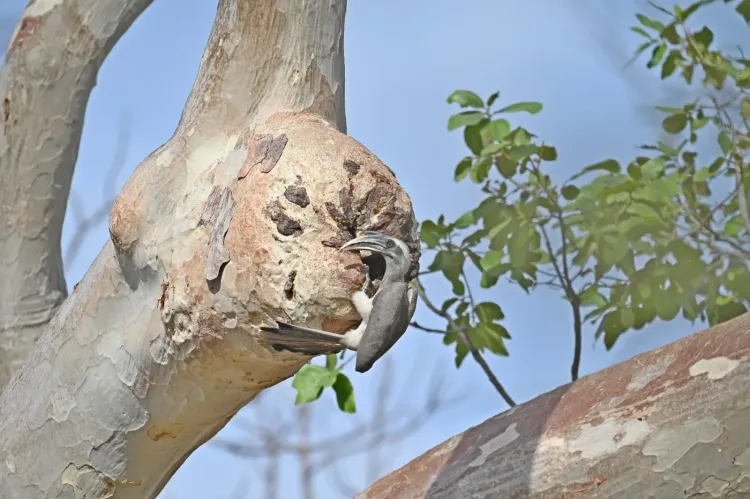
The Indian Grey Hornbill — locally called the Chilotro — has successfully re-established itself in Gujarat's Gir forests after an absence of nearly six decades, with a peer-reviewed study now confirming that reintroduced birds have settled, nested, and begun breeding in the wild. The findings mark a landmark outcome for the Gujarat Forest Department's reintroduction programme, launched in 2021.
The study, published in the international journal 'Birds' under the title 'Reintroduction of Indian Grey Hornbills in Gir, India: Insights into Ranging, Habitat Use, Nesting and Behavioural Patterns', provides the first comprehensive scientific assessment of the programme — undertaken with partner institutions — to restore the species after it vanished from Gir in the 1950s and 1960s.
How the Reintroduction Unfolded
The project began when birds were translocated from the Aravalli forests to Gir after scientific assessments confirmed that habitat conditions had again become suitable. A total of 40 hornbills were released in two phases: 28 birds in 2021 and 2022, followed by 12 more in 2023.
To monitor their movements and behaviour, satellite transmitters were fitted to 11 male birds, enabling long-term tracking of ranging patterns, habitat use, and breeding activity. According to the study, one breeding pair successfully nested during the first year after release, while three additional breeding pairs established nests in the second year — a trajectory researchers say confirms the programme has achieved its primary conservation objective.
What the Tracking Data Revealed
Satellite data showed that the released hornbills initially explored large, unfamiliar stretches of the forest before gradually settling into smaller home ranges. In the first few months, the birds used an average area of around 61 sq km, which later contracted to approximately 5.7 sq km after establishment. Their average daily movement also fell from 4.3 km during the exploratory phase to 1.4 km after settlement — clear indicators of successful ecosystem adaptation.
What Officials Said
Forest and Environment Minister Arjun Modhwadia described the outcome as a landmark achievement. 'The Chilotro was reintroduced into the Gir forests in 2021. Five years have now passed since then. The birds have settled into their new habitat and have also started breeding, demonstrating the success of the project. The successful reintroduction of the Chilotro, which disappeared from the Gir forests during the 1950s and 1960s, is a landmark achievement,' he said.
Principal Secretary of Forest and Environment Department Vinod Rao highlighted the species' ecological significance beyond its conservation value. 'The species plays a vital ecological role by dispersing tree seeds over long distances. This behaviour is ecologically significant because it helps in the natural regeneration of forests by dispersing the seeds of fruit-bearing trees,' he said.
Principal Chief Conservator of Forests (Wildlife) and Chief Wildlife Warden Dr Jaipal Singh attributed the species' successful return partly to decades of habitat protection. He noted that improvements following the declaration of the Gir Wildlife Sanctuary in 1965 and Gir National Park in 1975 had created the favourable conditions necessary for the hornbill's comeback.
Broader Conservation Context
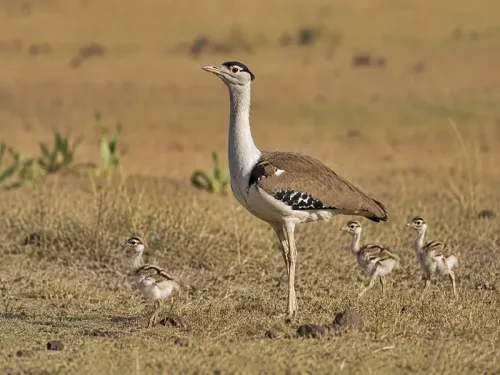
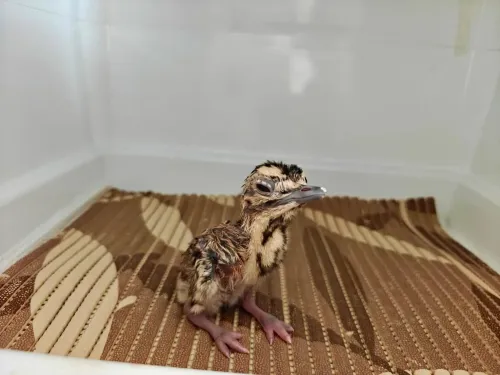
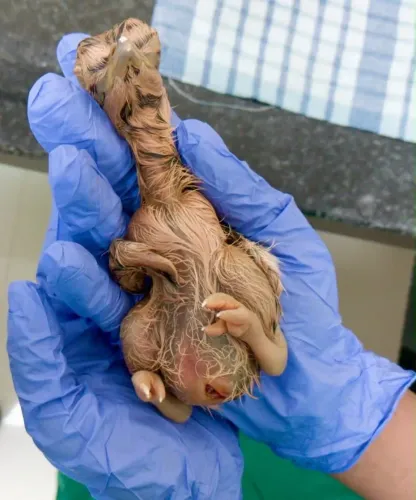
The hornbill milestone comes days after the state Forest Department reported another conservation success — the second Great Indian Bustard chick produced through the 'jump-start' technique surviving beyond the critical 40-day period after hatching. Together, the two developments position Gujarat as an emerging model for species recovery in India.
Mohan Ram, Conservator of Forests, Junagadh Forest Circle, and co-author of the study, confirmed that the translocation source — the Aravalli forests — was selected only after studies validated Gir's habitat suitability. The state government has indicated that the Chilotro reintroduction forms part of a broader national effort to scientifically restore locally extinct species to suitable habitats under monitored conditions.
With breeding now confirmed across four pairs and home ranges stabilising, conservationists will be watching whether the population expands organically in the seasons ahead — the true measure of long-term reintroduction success.
Point of View
But the harder test begins now. Four breeding pairs in two years is promising; sustaining population growth without further translocations will reveal whether Gir's carrying capacity truly supports a self-sustaining hornbill population. The seed-dispersal role the species plays also means its recovery has cascading benefits for forest regeneration — an ecological dividend that Gujarat's conservation model has so far undersold. Whether this becomes a replicable template or a one-off success will depend on how rigorously the monitoring continues beyond the study period.
NationPress
14 Jul 2026
Frequently Asked Questions
Why did the Indian Grey Hornbill disappear from Gir forests?
The Indian Grey Hornbill vanished from Gir during the 1950s and 1960s, primarily due to habitat degradation. Subsequent protection measures — including the declaration of the Gir Wildlife Sanctuary in 1965 and Gir National Park in 1975 — gradually restored the habitat to a condition suitable for the species' return.
How many hornbills were released under the reintroduction programme?
A total of 40 Indian Grey Hornbills were released in two phases: 28 birds in 2021 and 2022, and 12 more in 2023. All were translocated from the Aravalli forests after scientific assessments confirmed Gir's habitat suitability.
Has the reintroduced hornbill population started breeding in Gir?
Yes. According to the peer-reviewed study published in the journal 'Birds', one breeding pair nested successfully in the first year after release, and three additional breeding pairs established nests in the second year — confirming that the reintroduction has achieved its primary conservation objective.
What is the ecological significance of the Indian Grey Hornbill?
The Indian Grey Hornbill plays a vital role as a long-distance seed disperser, helping regenerate forests by spreading seeds of fruit-bearing trees across large areas. Its return to Gir is therefore significant not just for biodiversity but for the broader health and natural regeneration of the forest ecosystem.
How were the reintroduced hornbills monitored?
Satellite transmitters were fitted to 11 male birds to track their movements, habitat use, and breeding behaviour over time. Data showed that the birds initially ranged across an average of about 61 sq km before settling into home ranges of approximately 5.7 sq km, with daily movement declining from 4.3 km to 1.4 km — indicating successful adaptation.