Indian Railways approves Kavach 4.0 on 607 km UP section for ₹252 crore
Synopsis
Indian Railways has sanctioned ₹252 crore to deploy Kavach 4.0 across 607.7 km of the Lucknow Division — and a separate ₹209 crore for Electronic Interlocking at seven Solapur Division stations. Together, the ₹461 crore package marks one of the single-day's largest railway safety investments, pushing the indigenously developed collision-avoidance system deeper into two of the network's busiest corridors.
Key Takeaways
Indian Railways approved Kavach Version 4.0 deployment on 607.7 route kilometres of the Lucknow Division , Northeastern Railway , at a cost of ₹252 crore .
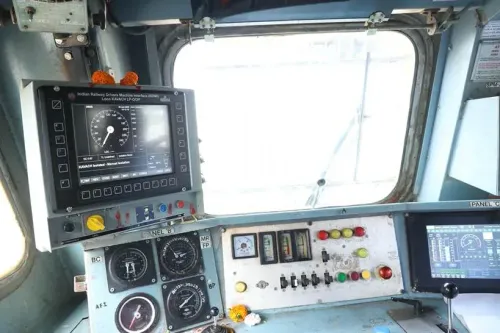
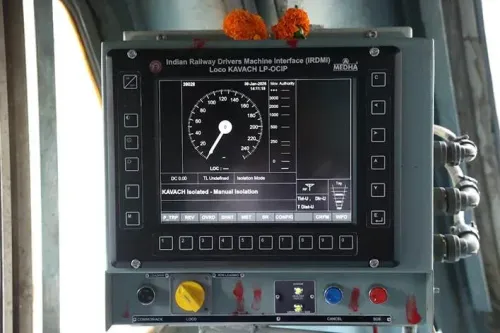
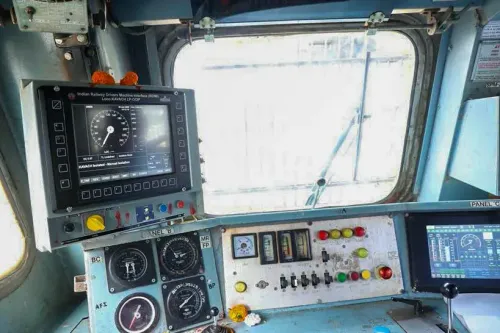
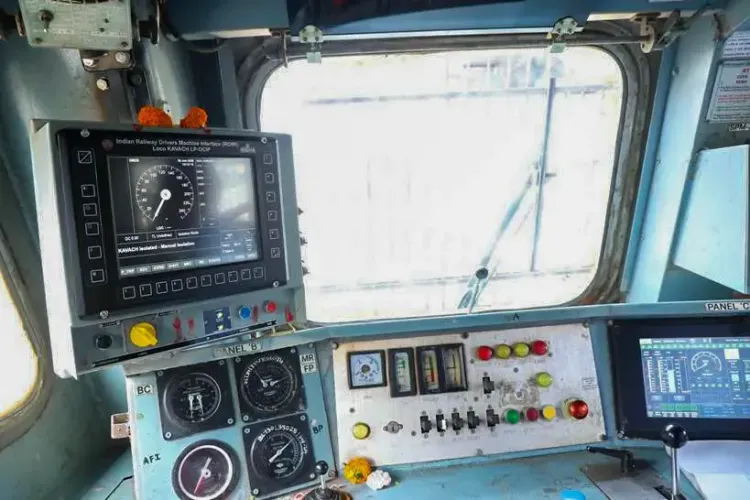
Kavach is an indigenous Automatic Train Protection (ATP) system that prevents Signal Passing at Danger (SPAD) and auto-applies brakes.
Electronic Interlocking approved at 7 stations of Solapur Division , Central Railway , for ₹209 crore .
Stations covered include Solapur , Hotgi Junction , Wadi Junction , and four others on the HDN 7 route.
Combined outlay for both projects is ₹461 crore , part of Indian Railways' ongoing network-wide safety modernisation drive.
Indian Railways on Saturday, 19 September 2026, approved the deployment of Kavach Version 4.0 across 607.7 route kilometres of the Lucknow Division of Northeastern Railway at a total outlay of ₹252 crore. The move extends automatic train protection coverage to the remaining balance sections of the division, reinforcing safety infrastructure on one of the country's busiest rail corridors.
What Kavach 4.0 Does
Kavach is an indigenously developed Automatic Train Protection (ATP) system engineered to prevent collisions and reduce human error. It guards against Signal Passing at Danger (SPAD) — one of the leading causes of rail accidents — by automatically applying brakes when a train approaches a red signal without slowing down. The system also continuously monitors train operations to support safer movement across the network.
Version 4.0 represents the latest iteration of the technology, with enhanced reliability and integration capabilities compared to earlier deployments. Indian Railways has been progressively rolling out Kavach across its vast network as the centrepiece of its modernisation-through-indigenous-technology strategy.
Electronic Interlocking Approved for Solapur Division
In a parallel decision, Indian Railways also approved the provision of Electronic Interlocking (EI) at seven stations of the Solapur Division of Central Railway, at a cost of ₹209 crore. The stations covered are Mohol, Mundhewadi, Bale, Solapur, Hotgi Junction-Hotgi A Cabin, Shahabad, and Wadi Junction — all on the High Density Network (HDN) 7 route.
Electronic Interlocking replaces older relay-based systems with a computer-controlled signalling architecture that offers faster fault detection, easier maintenance, and more efficient train operations. Critically, EI is a prerequisite for layering Kavach, Automatic Block Signalling (ABS), and Centralised Traffic Control (CTC) — all of which have already been sanctioned for this route.
Why These Approvals Matter
Both decisions are part of Indian Railways' broader, multi-year programme to modernise signalling infrastructure across high-density corridors. The Lucknow Division handles significant passenger and freight traffic on the Northeastern Railway network, making the Kavach rollout there operationally consequential. The combined outlay for both projects stands at ₹461 crore.
Notably, momentum behind Kavach deployment accelerated following high-profile rail accidents that prompted public and parliamentary scrutiny of train protection systems. The government has since fast-tracked approvals, with Saturday's sanctions reflecting that continuing push.
Outlook
With these approvals, Indian Railways inches closer to its stated objective of blanketing the entire network with Kavach coverage. Implementation timelines and tendering processes for both projects are expected to be detailed in subsequent official communications.
Point of View
Yet actual commissioning has consistently lagged announced targets. The Lucknow Division rollout and Solapur EI upgrade together represent ₹461 crore in capital commitment, but hardware procurement, civil work, and staff training are where past programmes have slowed. Until the Railways publishes verifiable commissioning milestones — not just sanction orders — each approval risks being celebrated as progress while the underlying safety gap on uncovered routes persists.
NationPress
19 Sept 2026
Frequently Asked Questions
What is Kavach 4.0 and how does it work?
Kavach 4.0 is the latest version of Indian Railways' indigenously developed Automatic Train Protection (ATP) system. It prevents collisions by automatically applying brakes when a train approaches a danger signal without slowing, and continuously monitors train movement to avert Signal Passing at Danger (SPAD) incidents.
Which section has been approved for Kavach 4.0 deployment?
Kavach 4.0 will be deployed across 607.7 route kilometres of the Lucknow Division of Northeastern Railway, covering the balance sections of the division at a total cost of ₹252 crore.
What is Electronic Interlocking and why is it being installed at Solapur Division?
Electronic Interlocking is a computer-based signalling system that replaces older relay-based setups, offering faster fault detection and more reliable control of signals and points. It is being installed at seven stations in Solapur Division of Central Railway for ₹209 crore, primarily to enable subsequent Kavach, ABS, and CTC deployment on the HDN 7 route.
Which stations will get Electronic Interlocking in the Solapur Division?
The seven stations are Mohol, Mundhewadi, Bale, Solapur, Hotgi Junction-Hotgi A Cabin, Shahabad, and Wadi Junction — all located on the High Density Network 7 route.
What is the total investment approved by Indian Railways in these two projects?
The combined outlay is ₹461 crore — ₹252 crore for Kavach 4.0 on the Lucknow Division and ₹209 crore for Electronic Interlocking at seven Solapur Division stations.