India's first hydrogen train launched in Jind; Modi flags ₹14,700 crore Haryana push
Synopsis
India entered the hydrogen rail era on 17 July when PM Modi flagged off the NaMo Green Rail in Jind — a 10-coach, indigenously built train he called the world's longest and strongest of its kind. The launch, bundled with ₹14,700 crore in Haryana projects, was also the backdrop for a pointed political argument: that India's shift away from diesel has made Railways immune to the kind of Gulf-crisis disruption that would have 'paralysed' it before 2014.
Key Takeaways
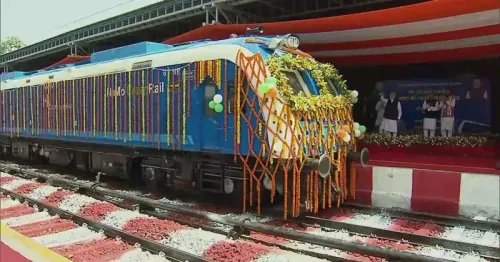
PM Modi flagged off the NaMo Green Rail — India's first hydrogen-powered train — from Jind, Haryana on 17 July .
The 10-coach, zero-emission train will cover 89 km between Jind and Sonipat in two hours with 12 halting stations .
Modi called it 'the strongest and longest hydrogen-powered train in the world,' with only 3-4 countries capable of operating such trains.
Development projects worth ₹14,700 crore were dedicated, anchored by a 157.92-km expressway segment costing ₹9,680 crore that will cut Delhi-Katra travel from 14 hours to 6 hours .
Three medical colleges and hospitals were dedicated in Bhiwani and Narnaul , and a Sikh Museum foundation stone was laid in Kurukshetra .
Testing of the hydrogen train beyond Sonipat is ongoing; the route is expected to extend to Delhi .
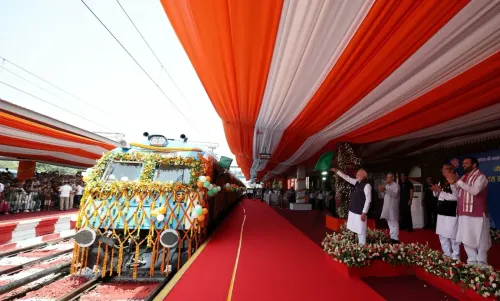
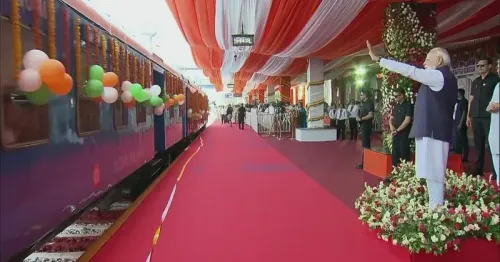
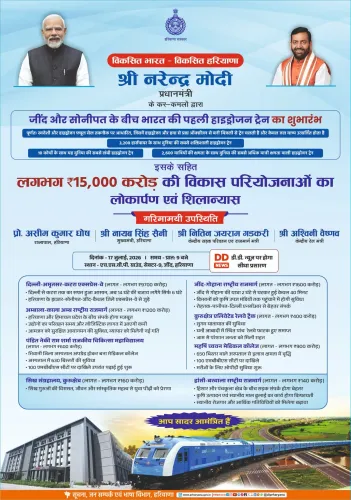
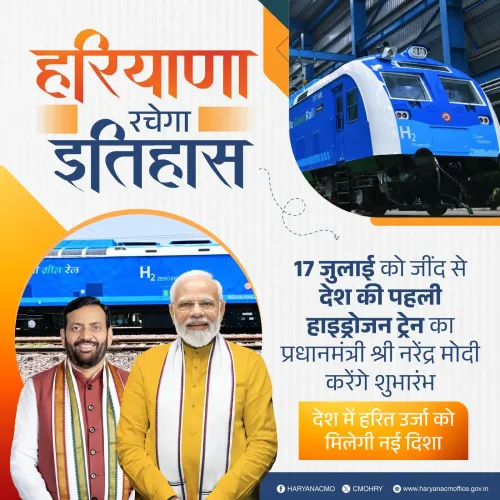
Prime Minister Narendra Modi on Friday, 17 July flagged off India's first hydrogen-powered train — the NaMo Green Rail — from Jind railway station in Haryana, marking the country's entry into an exclusive club of nations operating hydrogen-powered rail services. Alongside the train launch, Modi dedicated and laid the foundation stone for development projects worth ₹14,700 crore spanning road connectivity, healthcare, and cultural infrastructure across the state.
India's First Hydrogen Train: Key Details
The NaMo Green Rail is a 10-coach, zero-emission train that will initially operate between Jind and Sonipat — a distance of 89 kilometres — in approximately two hours, with 12 halting stations along the route. Modi described it as 'the strongest as well as the longest hydrogen-powered train anywhere in the world,' adding that 'only three to four countries around the world have the capacity to operate a hydrogen-powered train.'
The train was designed and built entirely in India, making it a flagship demonstration of the Make in India initiative. Testing is currently underway beyond Sonipat, and the train is expected to eventually extend its run from Jind to Delhi, according to Railway Minister Ashwini Vaishnaw.
Modi's Gulf War Remark: Railways and Diesel Dependency
Addressing the gathering, Modi drew a pointed contrast between India's current energy resilience and its pre-2014 vulnerability. Referring to the ongoing conflict in the Gulf region and tensions around the Strait of Hormuz — a critical chokepoint for global oil shipments — he claimed, 'Had this situation arisen before 2014, our railways would have been completely paralysed,' citing the fact that a large part of the Indian Railways fleet then ran on diesel.
The remark underscores the government's broader narrative around energy diversification, with the hydrogen train launch serving as a tangible symbol of reduced fossil-fuel dependence in rail transport. This comes amid heightened global concern over oil supply disruptions tied to Gulf instability.
Major Infrastructure Projects Dedicated
Beyond the train, Modi laid the foundation stone and dedicated several large-scale projects. The centrepiece is the 157.92-km four-lane Delhi-Amritsar-Katra Expressway segment, built at approximately ₹9,680 crore, which forms part of the larger 667-km Delhi-Amritsar-Katra Expressway. The corridor is projected to cut travel time between Delhi and Katra from roughly 14 hours to six hours, and between Delhi and Amritsar from about eight hours to four hours.
Other road projects included the 33.81-km Ambala-Kala Amb Highway on NH-7 and NH-344, strengthening links between Haryana and Himachal Pradesh, and the 40.60-km Jind-Gohana Greenfield Highway on NH-352A, which will slash travel time between Jind and Gohana from roughly two hours to 40 minutes. The foundation stone for the 24.27-km Hansi-Barwala Brownfield Highway was also laid.
An Elevated Railway Track in Kurukshetra was dedicated to eliminate long-standing traffic congestion at railway crossings in the city.
Healthcare and Cultural Additions
Modi dedicated three medical institutions to the nation: Pandit Neki Ram Sharma Government Medical College in Bhiwani, Maharishi Chyawan Medical College, and Rao Tula Ram Hospital in Koriawas, Narnaul. These are expected to expand MBBS seats and improve specialist healthcare access across Haryana.
He also laid the foundation stone for a Sikh Museum in Kurukshetra, designed to chronicle the history of Sikhism, the teachings of the Sikh Gurus, and the community's contributions to Indian civilisation, using modern display technology.
Political Context and What Comes Next
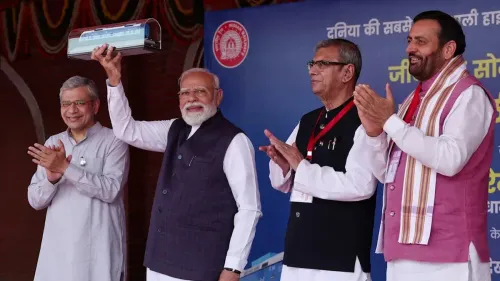
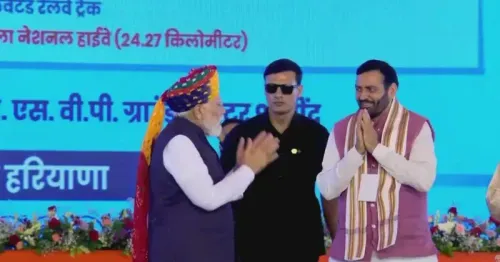
Railway Minister Ashwini Vaishnaw, Haryana Governor Ashim Kumar Ghosh, and Chief Minister Nayab Singh Saini were present at the ceremony. Vaishnaw called the day 'historic,' crediting the country's leadership and engineering talent for the hydrogen rail breakthrough.
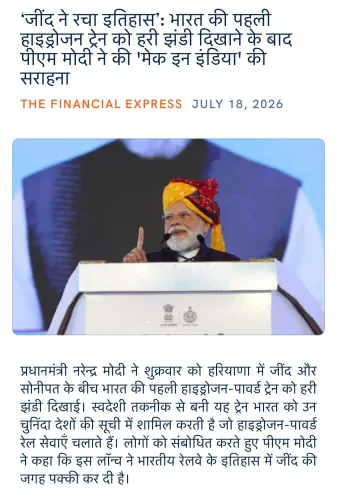
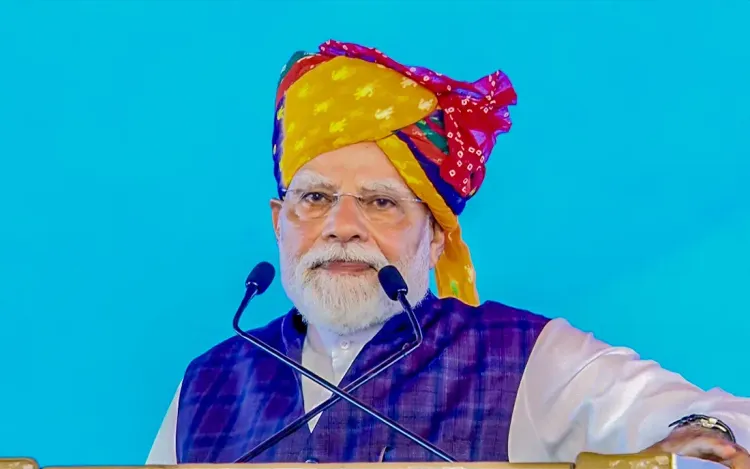
Modi, who was sporting a Haryanvi turban, described Jind as a reflection of the BJP-NDA 'double-engine government' model of good governance — a framing that carries clear electoral resonance in a state where the party holds power at both the Centre and in Haryana. With the NaMo Green Rail's extension to Delhi on the horizon and expressway construction gathering pace, the full impact of Friday's announcements will unfold over the coming months.
Point of View
Zero-emission, and among the first of its kind globally — but the political packaging around it deserves scrutiny. Modi's claim that pre-2014 Railways would have been 'paralysed' by a Gulf conflict is an assertion, not a verified counterfactual; diesel dependency was a structural reality across successive governments, not a policy choice unique to any one era. More substantively, a single hydrogen train on an 89-km pilot route does not yet constitute a systemic shift in Railways' energy mix — the overwhelming bulk of the network remains diesel or electric. The real test will be whether the hydrogen programme scales beyond a flagship showcase, and whether the ₹14,700 crore in projects, particularly the expressway corridor, delivers on its connectivity and economic development promises in measurable timeframes.
NationPress
15 Oct 2026
Frequently Asked Questions
What is the NaMo Green Rail and where does it run?
The NaMo Green Rail is India's first hydrogen-powered train — a 10-coach, zero-emission service launched on 17 July from Jind, Haryana. It initially operates between Jind and Sonipat, covering 89 km in two hours with 12 halting stations, and is expected to eventually extend to Delhi.
Why did PM Modi say Indian Railways would have been paralysed before 2014?
Modi was referring to the ongoing Gulf conflict and Strait of Hormuz tensions, which threaten global oil supplies. He argued that because a large part of the Railways fleet previously ran on diesel, a similar crisis before 2014 would have severely disrupted train operations — implying that energy diversification since then has reduced that vulnerability.
What major infrastructure projects were launched in Haryana on 17 July?
Projects worth ₹14,700 crore were dedicated or inaugurated, including a 157.92-km segment of the Delhi-Amritsar-Katra Expressway (₹9,680 crore), the 33.81-km Ambala-Kala Amb Highway, the 40.60-km Jind-Gohana Greenfield Highway, an Elevated Railway Track in Kurukshetra, three medical institutions, and the foundation stone of a Sikh Museum in Kurukshetra.
How will the Delhi-Amritsar-Katra Expressway benefit travellers?
The 667-km expressway, of which the 157.92-km Haryana segment was dedicated on 17 July, will reduce Delhi-Katra travel time from roughly 14 hours to about 6 hours, and Delhi-Amritsar from around 8 hours to 4 hours. It is also expected to boost pilgrim traffic to Shri Mata Vaishno Devi and ease logistics along the corridor.
Is India the first country to operate a hydrogen-powered train?
No. Modi noted that 'only three to four countries around the world' currently have the capacity to operate hydrogen-powered trains, and India has now joined that group with the NaMo Green Rail. Germany launched the world's first commercial hydrogen train service in 2022.