Can any country dictate how India manages its international relations? EAM Jaishankar
Synopsis
Discover how India's recent diplomatic strategies, underscored by EAM Jaishankar's insights following Putin's visit, reflect a commitment to strategic autonomy amidst external pressures. This article delves into the complexities of India's foreign relations and its unwavering stance on maintaining independent partnerships.
Key Takeaways
India's strategic autonomy is a core tenet of its foreign policy.
The recent summit with Putin resulted in significant agreements.
India values diverse international partnerships.
Jaishankar emphasized that no nation can impose a veto on India's relations.
India's relationships grow unevenly, adapting to global dynamics.
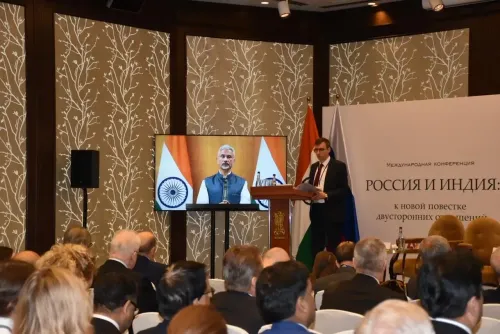
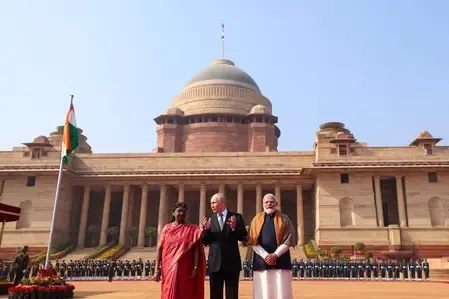
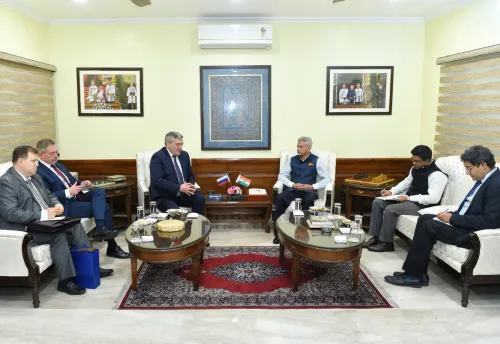
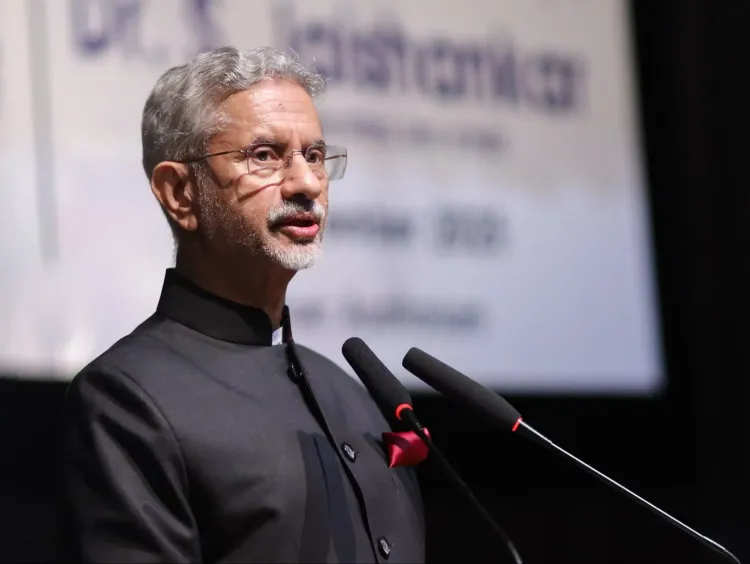
New Delhi, Dec 6 (NationPress) The recent visit of Russian President Vladimir Putin to India for a bilateral summit highlighted New Delhi's dedication to strategic autonomy and its right to choose its foreign relations, stated External Affairs Minister (EAM) S. Jaishankar on Saturday. His comments were made against the backdrop of pressure from the US urging India to limit its purchases of Russian oil and defense equipment.
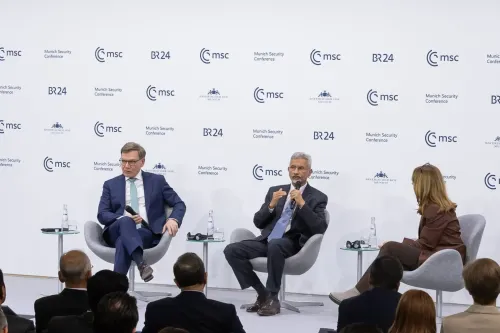
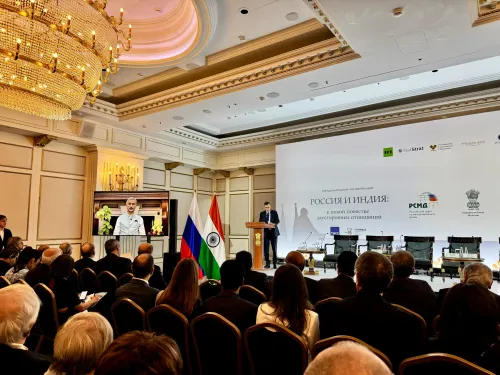
While addressing attendees at the Hindustan Times Leadership Summit in New Delhi, EAM Jaishankar emphasized the importance of maintaining India’s vital partnerships as the nation continues to ascend on the global stage.
When asked about Putin’s visit and the future of Indo-Russian relations, he elaborated that India's foreign policy is centered on broad collaboration with various partners, ensuring adaptability and independence in its international dealings.
“For a nation like ours — large, emerging, and anticipated to play a more significant role — it is crucial that our core relationships are maintained positively. We foster good cooperation with as many stakeholders as possible, and that encapsulates what foreign policy entails,” he asserted.
Jaishankar underscored tangible results from Putin’s visit, such as a mobility agreement, a joint venture in fertilizers, and renewed efforts to enhance bilateral cooperation. He indicated that these initiatives signify steps toward expanding connections beyond conventional domains.
In response to whether closer ties with Moscow could jeopardize India’s ongoing trade discussions with Washington, Jaishankar refuted the notion.
“I disagree. It is well-known that India maintains relations with all major nations globally. For any country to assume it can veto or influence how we develop our international relations is unreasonable,” he stated, reinforcing that India values diverse partnerships and maintains the freedom to pursue them.
Discussing the evolution of India’s alliances, Jaishankar pointed out that relationships often develop unevenly. With the United States, economic ties flourished in the 1980s and 1990s, while defense collaboration advanced only after the civil nuclear agreement. In Europe, India has substantial economic and political relations, though these do not always extend into defense and security.
On Russia, he noted that both nations historically viewed the West and China as primary economic partners, which shaped their interaction trajectory. Nevertheless, he proposed that the current moment offers opportunities to recalibrate and expand cooperation. By framing Putin’s visit within India’s broader diplomatic context, Jaishankar portrayed New Delhi’s foreign policy as pragmatic, multi-aligned, and firmly rooted in strategic autonomy.
Point of View
It's crucial to recognize India's steadfast approach to maintaining its sovereignty in foreign policy. EAM Jaishankar's remarks emphasize a balanced strategy that seeks cooperation without compromising independence. This stance reflects not just national interests but also a broader commitment to a multipolar world.
NationPress
23 Sept 2026
Frequently Asked Questions
What did EAM Jaishankar say about India's foreign relations?
EAM Jaishankar emphasized that no country can dictate how India manages its international relations, highlighting India's commitment to strategic autonomy.
What were the outcomes of Putin's visit to India?
Key outcomes included a mobility agreement, a joint venture in fertilizers, and renewed bilateral cooperation efforts.
How does India view its relationships with major countries?
India values relationships with all major countries and aims to maintain good cooperation with various partners.
What is India's stance on US pressure regarding Russian dealings?
Jaishankar dismissed concerns that closer ties with Russia would complicate trade negotiations with Washington, affirming India's right to pursue diverse relations.
How does India approach its foreign policy?
India's foreign policy focuses on broad cooperation with multiple partners, ensuring flexibility and independence.