Jaishankar at Raisina Middle East: IMEC Is Shaping Connectivity Thinking
Synopsis
At the Raisina Dialogue Middle East, EAM Dr. S. Jaishankar said competition over global corridors has intensified, new chokepoints have emerged, and IMEC is already shaping regional connectivity thinking. India, he stressed, is building its own strengths and trusted partnerships as the global landscape evolves.
Key Takeaways
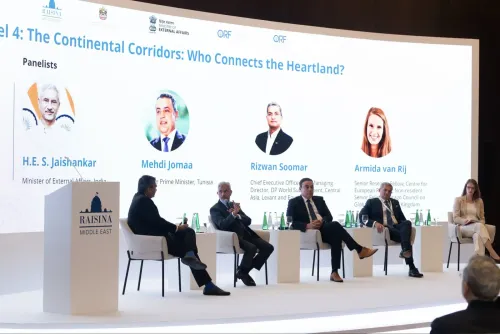
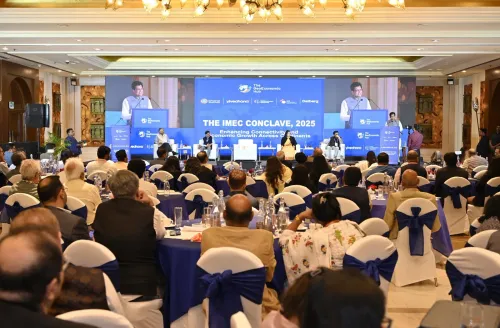
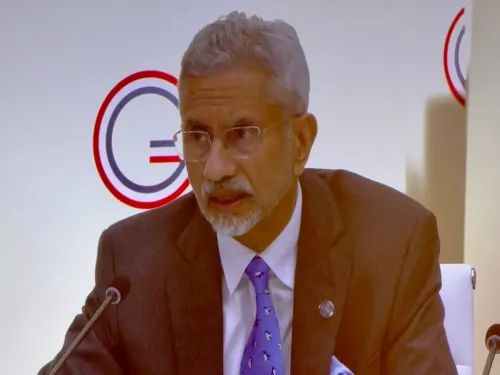
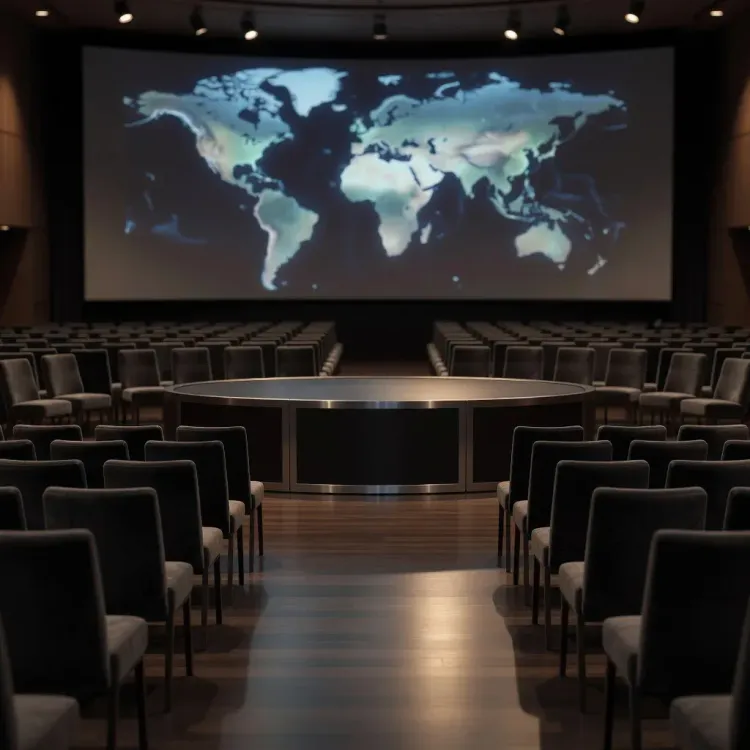
Jaishankar spoke at the Raisina Dialogue Middle East on October 15, 2026 on the panel 'The Continental Corridors: Who Connects the Heartland?' He stated that global corridor competition has intensified, new chokepoints have emerged, and major powers are more willing to leverage connectivity advantages.
IMEC — the India-Middle East-Europe Economic Corridor launched at the G20 New Delhi Summit in September 2023 — is already shaping regional thinking on connectivity.
Jaishankar argued globalisation cannot be reversed but must be navigated with greater resilience — a direct response to supply-chain vulnerabilities exposed by recent global shocks.
India is pursuing a multi-corridor approach, including IMEC and the International North-South Transport Corridor (INSTC) , to avoid being a passive node in rival-led networks.
The minister emphasised building 'trusted partnerships' — language that implicitly distinguishes India's connectivity framework from competing models on transparency and governance standards.
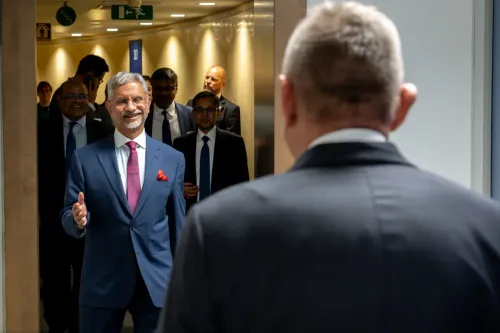
Corridors are the new battlegrounds of global power — and Union External Affairs Minister Dr. S. Jaishankar walked into that fight squarely at the Raisina Dialogue Middle East on Thursday, October 15, laying out India's strategic read on the contest to connect the world's heartland.
The session: 'Who Connects the Heartland?'
Speaking on the panel titled 'The Continental Corridors: Who Connects the Heartland?', Jaishankar framed the moment with blunt precision: competition over connectivity has intensified, new chokepoints have emerged, and major players are increasingly willing to weaponise the advantages they hold over critical routes. That is not a forecast — it is the present reality that governments and supply-chain planners are already navigating.
His second point carried an implicit rebuke to any retreat-from-globalisation instinct. Globalisation, he argued, cannot be reversed. But it must be navigated with far greater resilience — a phrase that has quietly become a cornerstone of India's foreign-economic posture since the twin shocks of the COVID-19 pandemic and the Russia-Ukraine war exposed the fragility of single-point supply chains.
IMEC moves from launch to regional reference point
Perhaps the sharpest signal in Jaishankar's remarks was the status claim on the India-Middle East-Europe Economic Corridor (IMEC): it is 'already shaping regional thinking on connectivity.' That is a significant assertion for a project that was only formally announced at the G20 New Delhi Summit in September 2023 — just three years ago — with partners including the United States, the European Union, the UAE and Saudi Arabia.
IMEC was conceived as a multi-modal spine — ports, rail links, digital cables and energy pipelines — running from India through the Gulf and onward to Europe. From its inception, analysts read it partly as a credible alternative architecture to China's Belt and Road Initiative, even if Indian officials have typically framed it in positive connectivity terms rather than as a direct counter. That Jaishankar is now citing its influence on 'regional thinking' at a Middle East edition of Raisina suggests it is gaining genuine traction in Gulf policy circles, not just on paper.
India's corridor strategy: building strength, choosing partners
The fourth point Jaishankar made was the most strategic. As the global landscape evolves, he said, India is building its own strengths and 'establishing trusted partnerships.' The word 'trusted' is doing significant work here — it signals a preference for partners who meet standards of transparency, financing terms and governance that India considers reliable, a criterion that implicitly distinguishes IMEC's consortium from rival frameworks.
India has long pursued connectivity ambitions beyond IMEC. The International North-South Transport Corridor (INSTC), linking India to Russia and Europe via Iran, has been in development since the early 2000s and represents a separate but complementary vector of India's multi-corridor approach. Together, these initiatives reflect a deliberate strategy: India does not want to be a passive node in someone else's network.
The Raisina Dialogue Middle East edition — an offshoot of India's flagship annual geopolitics conference hosted by the Ministry of External Affairs — is itself a signal. Taking the conversation to the Gulf is a reminder that the region sits at the geographic hinge of every major corridor under discussion, from IMEC to BRI offshoots to the older Suez-anchored shipping lanes whose chokepoint vulnerabilities have been repeatedly exposed in recent years.
What the corridor contest looks like from New Delhi
The broader pattern Jaishankar is navigating is one where infrastructure is inseparable from influence. Who builds a port, who finances a rail link, who sets the digital standards along a corridor — these are not technical questions. They are questions about whose rules govern the next generation of global trade. India's answer, as articulated today, is to build enough of its own capacity and forge enough of its own coalitions that it is never simply a price-taker in that negotiation.
Watch the next inflection points: financing commitments and construction timelines on IMEC's Gulf rail segments, the depth of EU engagement on the European leg, and whether Gulf partners accelerate infrastructure decisions in the wake of sessions like today's.
The corridors are being drawn. India intends to hold the pen.
Point of View
Allowing India to sharpen its differentiator with partners in the Gulf and Europe without triggering an open confrontation with Beijing. The broader message is that New Delhi views corridor diplomacy as an extension of statecraft, not merely infrastructure policy.
NationPress
15 Oct 2026
Frequently Asked Questions
What is IMEC and why is it significant?
IMEC, or the India-Middle East-Europe Economic Corridor, is a multi-modal connectivity project — covering ports, rail, digital and energy links — launched at the G20 New Delhi Summit in September 2023. It links India through the Gulf states to Europe and is seen as a major alternative to China's Belt and Road Initiative in Eurasian connectivity discussions.
What did Jaishankar say at the Raisina Dialogue Middle East?
Jaishankar made four points: corridor competition has intensified with new chokepoints and greater willingness to leverage advantages; globalisation cannot be reversed but needs more resilience; IMEC is already shaping regional connectivity thinking; and India is building its own strengths and trusted partnerships as the global order evolves.
What is the Raisina Dialogue Middle East?
The Raisina Dialogue Middle East is a regional edition of India's flagship annual geopolitics and foreign-policy conference, originally hosted in New Delhi by the Ministry of External Affairs. Taking the event to the Gulf reflects the region's centrality to India's connectivity and strategic agenda.
How does IMEC compare to China's Belt and Road Initiative?
IMEC and China's BRI are both large-scale connectivity frameworks competing to shape Eurasian trade routes, but they differ in financing models, governance standards, and the coalitions behind them. IMEC is backed by the US, EU, India, UAE and Saudi Arabia, while BRI is a Chinese state-led initiative. Indian officials typically frame IMEC in positive terms rather than as a direct BRI counter, though analysts read the rivalry as central to both projects.
What is India's International North-South Transport Corridor?
The International North-South Transport Corridor, or INSTC, is a multi-modal route linking India to Russia and Europe via Iran. It has been in development since the early 2000s and represents a separate vector of India's multi-corridor connectivity strategy alongside IMEC.