Jaishankar Calls on Kuwait PM, Backs Stronger Bilateral Ties
Synopsis
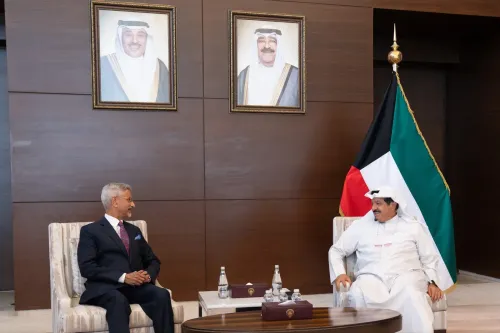
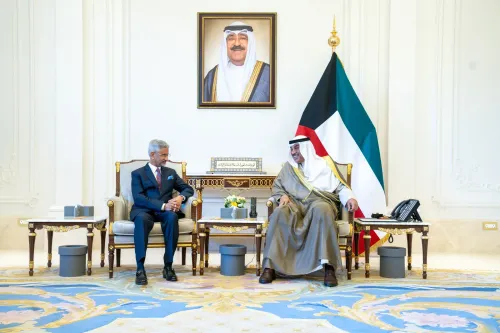
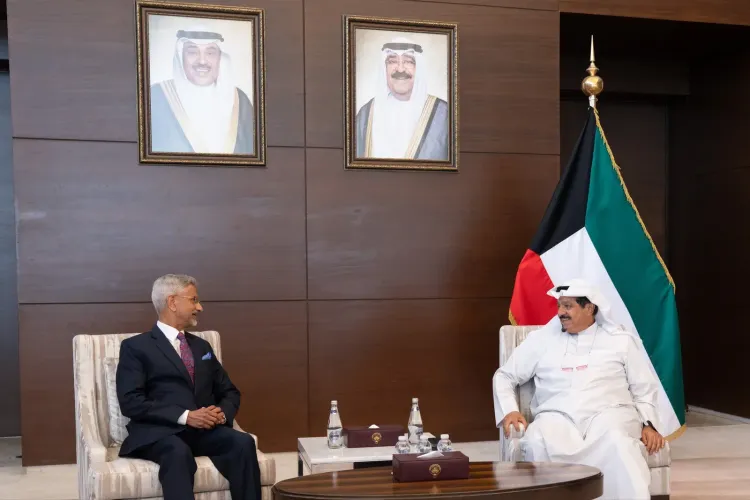
External Affairs Minister Dr. S. Jaishankar called on Kuwait's Prime Minister HH Sheikh Ahmad Abdullah Al-Ahmad Al-Sabah on 8 July 2026, thanking him for support to Indians in Kuwait and welcoming a shared vision for stronger India-Kuwait cooperation.
Key Takeaways
Jaishankar met Kuwait Prime Minister HH Sheikh Ahmad Abdullah Al-Ahmad Al-Sabah on 8 July 2026 .
Jaishankar thanked the Kuwaiti PM for support extended to the Indian community's welfare and well-being in Kuwait.
The Minister welcomed Kuwait's vision for 'stronger and mutually beneficial India-Kuwait cooperation .' India and Kuwait have maintained diplomatic relations since 1961 , with ties spanning energy, trade and diaspora welfare.
Kuwait is a GCC member state and a significant crude oil supplier to India.
Follow-up outcomes such as labour agreements or joint statements are expected to be watched closely.
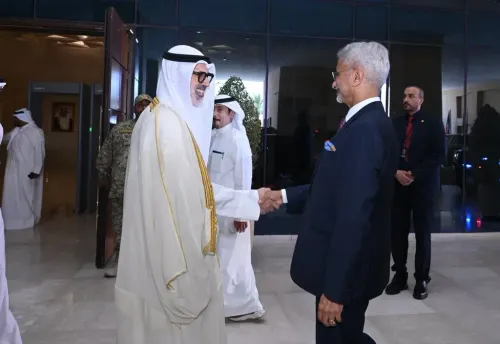
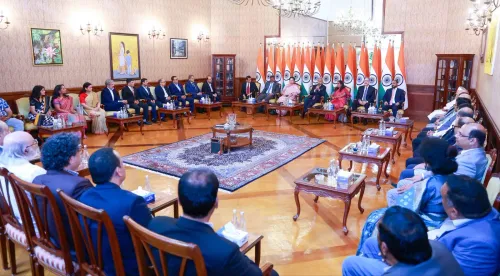
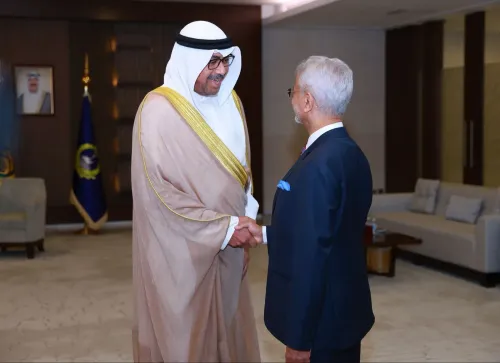
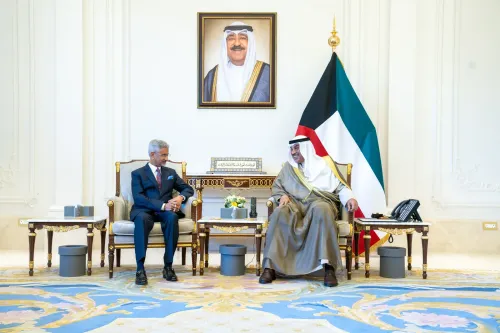
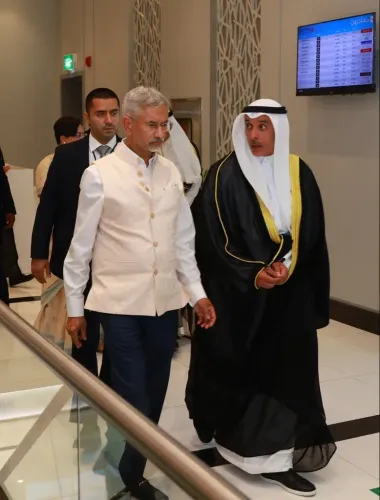
Union External Affairs Minister Dr. S. Jaishankar called on Prime Minister HH Sheikh Ahmad Abdullah Al-Ahmad Al-Sabah of Kuwait on 8 July 2026, reaffirming India's commitment to deepening bilateral cooperation and expressing gratitude for Kuwait's support to the Indian community residing in the Gulf nation.
Context
Dr. Jaishankar thanked the Kuwaiti Prime Minister for the support extended to the welfare and well-being of the Indian community in Kuwait, one of the largest expatriate groups in the Gulf. He also welcomed the Kuwaiti leader's vision for 'stronger and mutually beneficial India-Kuwait cooperation,' signalling alignment on the direction of the bilateral relationship.
India and Kuwait have maintained diplomatic relations since 1961, building a partnership anchored in energy trade, labour mobility and people-to-people ties. Kuwait is a member of the Gulf Cooperation Council (GCC) and a significant supplier of crude oil to India.
Policy Backdrop
India's engagement with West Asian partners has consistently placed diaspora welfare at the centre of high-level diplomatic exchanges. Hundreds of thousands of Indian nationals live and work in Kuwait, making their welfare a standing agenda item in bilateral meetings at every level.
Beyond community issues, India-Kuwait ties encompass energy security, investment flows and trade diversification — priorities that have driven a steady cadence of ministerial-level contacts between the two countries under successive Indian governments. Dr. Jaishankar's outreach to Gulf capitals fits a broader pattern of proactive diplomacy with GCC member states that New Delhi has pursued in recent years.
Stakeholders and Impact
The most immediate stakeholders are the Indian expatriates in Kuwait, whose livelihoods, legal protections and community infrastructure depend in large part on the goodwill and policy commitments of the Kuwaiti government. Acknowledgement of Kuwait's support at the level of a bilateral ministerial call lends diplomatic weight to ongoing efforts to safeguard their interests.
Energy and trade partners on both sides also stand to benefit from any momentum generated by the meeting. Kuwait's crude exports to India and Indian companies' participation in Kuwaiti infrastructure projects are key commercial threads that high-level political engagement helps sustain and expand.
What's Next
Diplomatic observers will watch for follow-up outcomes from Dr. Jaishankar's visit, including possible labour agreements, joint statements or memoranda of understanding that could formalise the commitments exchanged during the call. India's participation in upcoming GCC-related multilateral forums may also reflect the momentum built through such bilateral engagements.
With both sides expressing openness to stronger ties, the meeting sets the stage for a more structured roadmap of India-Kuwait cooperation — spanning energy, diaspora welfare and economic partnership — in the months ahead.
Frequently Asked Questions
Why did Jaishankar visit Kuwait in July 2026?
Dr. S. Jaishankar called on Kuwait's Prime Minister HH Sheikh Ahmad Abdullah Al-Ahmad Al-Sabah to reaffirm bilateral ties, thank Kuwait for its support to the Indian community, and discuss stronger India-Kuwait cooperation.
How many Indians live in Kuwait?
Kuwait hosts one of the largest Indian expatriate communities in the Gulf, with hundreds of thousands of Indian nationals employed across various sectors; their welfare is a standing priority in India-Kuwait diplomatic exchanges.
What are the main areas of India-Kuwait cooperation?
India-Kuwait ties cover energy trade (Kuwait is a significant crude oil supplier to India), labour and diaspora welfare, investment, and broader economic cooperation under the framework of India's engagement with GCC member states.
When did India and Kuwait establish diplomatic relations?
India and Kuwait established formal diplomatic relations in 1961 , building a partnership that has grown to encompass energy, trade and people-to-people ties over more than six decades.
What could follow from Jaishankar's meeting with the Kuwait PM?
Diplomatic observers are watching for possible labour agreements, joint statements or memoranda of understanding as follow-up outcomes, as well as any broader India-GCC multilateral engagement that may build on the bilateral momentum.