Jal Shakti Minister Paatil: 2 Lakh Villages Now Har Ghar Jal Certified
Synopsis
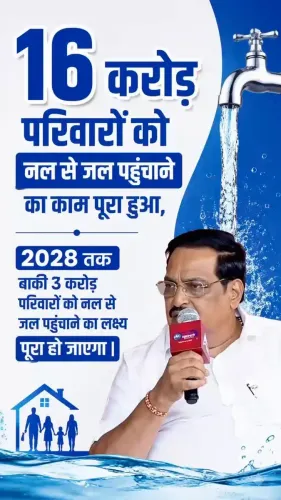
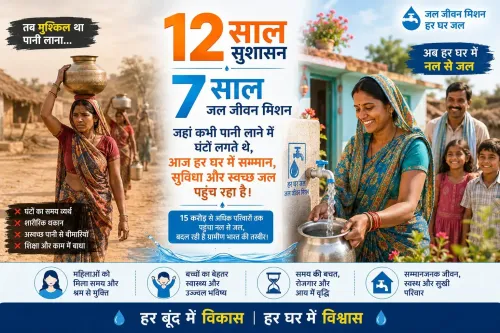
Union Jal Shakti Minister C. R. Paatil announced on Independence Day eve that over 2 lakh Indian villages are now 'Har Ghar Jal' certified by their own Gram Sabhas, with rural tap water coverage climbing from 16.72% in 2019 to over 82% under the Jal Jeevan Mission.
Key Takeaways
More than 2 lakh villages have been certified 'Har Ghar Jal', meaning Gram Sabhas have verified every household receives tap water.
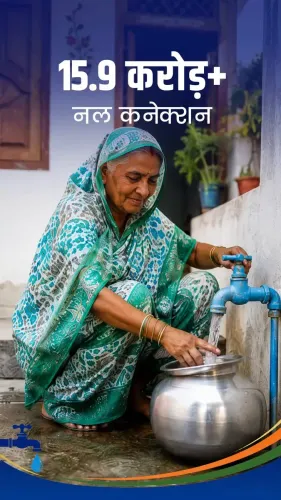
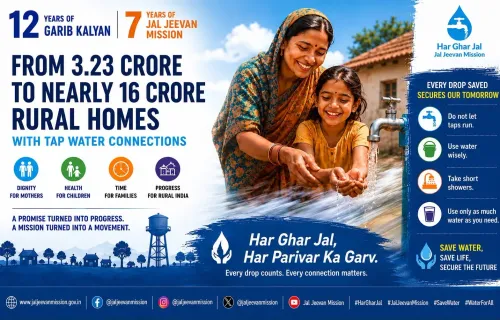
Rural tap water coverage has risen from 16.72% in 2019 to over 82% under the Jal Jeevan Mission.
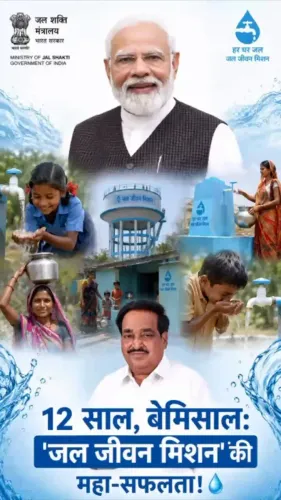
The Jal Jeevan Mission was launched on 15 August 2019 as a replacement for the National Rural Drinking Water Programme.
Certification is community-led: Gram Sabhas — not the government — formally verify and declare 'Har Ghar Jal' status.
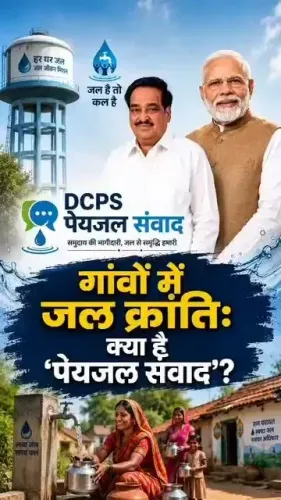
The mission operates as a shared-cost model between the Centre, state governments, and Gram Panchayats .
The announcement was made on 14 August 2026 , the eve of India's Independence Day, echoing JJM's own Independence Day launch.
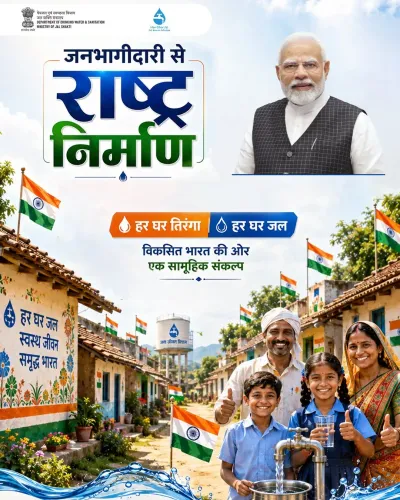
Six years after Prime Minister Narendra Modi promised tap water to every rural home, a number has arrived that reframes the scale of that bet: more than 2 lakh villages across India have now been certified 'Har Ghar Jal' — meaning their own Gram Sabhas have verified that every household in the village receives piped drinking water. Union Jal Shakti Minister C. R. Paatil announced the milestone on Friday, 14 August 2026, the eve of Independence Day.
From 16% to 82%: What Six Years of Pipe-laying Looks Like
The numbers tell the story bluntly. In 2019, only 16.72% of rural households had a functional tap connection. That figure has now crossed 82% — a near-fivefold jump driven by the Jal Jeevan Mission (JJM), the central scheme launched on 15 August 2019 to replace the older National Rural Drinking Water Programme. Paatil credited the gains to 'joint efforts of the central and state governments and the active participation of Gram Panchayats and rural communities.'
The certification mechanism is what gives this milestone its teeth. It is not a government declaration — it is a community one. Gram Sabhas, the village-level assemblies, formally verify and certify that every rural family in their jurisdiction is actually receiving water through a tap before the village earns the 'Har Ghar Jal' tag. That outcome-based verification layer was built into JJM's design from the start, and it is what separates a connection-on-paper from water-in-a-glass.
JJM's Architecture: Centre, States, and the Last Mile
Announced in the 2019 Union Budget and formally launched on Independence Day 2019, the Jal Jeevan Mission was structured as a shared-cost programme — the Centre funds the bulk, states execute, and Gram Panchayats own the last mile. C. R. Paatil, who oversees the mission as Jal Shakti Minister, has consistently framed the push as a convergence model rather than a top-down delivery exercise. The 2-lakh-village certification mark reflects that architecture working at scale across India's vast and varied rural geography.
The target remains every village, every household. As Paatil put it, the goal is 'regular, adequate and quality drinking water for every rural family' — with quality testing now the frontier challenge in villages already certified, and sustainability of supply the question that will define the mission's long-term legacy.
Independence Day Eve, and the Symbolism Is Deliberate
Announcing this on 14 August — the night before Independence Day — is not accidental. JJM was itself launched on 15 August 2019 from the Red Fort. Paatil's post, carrying the hashtags #JalJeevanMission, #HarGharJal, and #JJM, lands the milestone squarely in the BJP government's Independence Day narrative, tying a social-infrastructure achievement to the patriotic register of the occasion.
The road from 16.72% to universal coverage was always going to be measured in villages certified, pipes laid, and Gram Sabhas convened — and today, more than two lakh of those assemblies have raised their hand and said: water has arrived.
Point of View
And Paatil's framing — emphasising Gram Sabha-led verification rather than central diktat — is a deliberate effort to give the milestone democratic legitimacy. The jump from 16.72% to 82% coverage in six years is structurally significant regardless of politics, reflecting a genuine shift in rural infrastructure investment. However, the harder governance test now shifts from connection creation to supply sustainability and water quality in already-certified villages — a challenge that outcome metrics do not yet fully capture. How the mission handles that next phase will determine whether the 'Har Ghar Jal' tag becomes a durable achievement or a headline that ages poorly.
NationPress
14 Aug 2026
Frequently Asked Questions
What does 'Har Ghar Jal' certified village mean?
A 'Har Ghar Jal' certified village is one where the local Gram Sabha has formally verified that every household in the village is receiving tap water through a functional piped connection, confirming actual delivery rather than just infrastructure installation.
How many villages are Har Ghar Jal certified in India in 2026?
As of 14 August 2026, more than 2 lakh (200,000) villages across India have been certified 'Har Ghar Jal', according to Union Jal Shakti Minister C. R. Paatil.
What is the Jal Jeevan Mission and when was it launched?
The Jal Jeevan Mission is a central government scheme launched on 15 August 2019 to provide functional household tap connections to every rural home in India. It replaced the earlier National Rural Drinking Water Programme and operates through shared funding between the Centre, state governments, and Gram Panchayats.
What was rural tap water coverage in India before Jal Jeevan Mission?
In 2019, only 16.72% of rural households in India had access to tap water. Under the Jal Jeevan Mission, that coverage has risen to over 82%, according to the Jal Shakti Ministry.
Who is C. R. Paatil and what is his role in Jal Jeevan Mission?
C. R. Paatil is India's Union Minister of Jal Shakti and a senior BJP leader who previously served as BJP Gujarat state president. As Jal Shakti Minister, he oversees the implementation of the Jal Jeevan Mission and the broader 'Har Ghar Jal' programme.