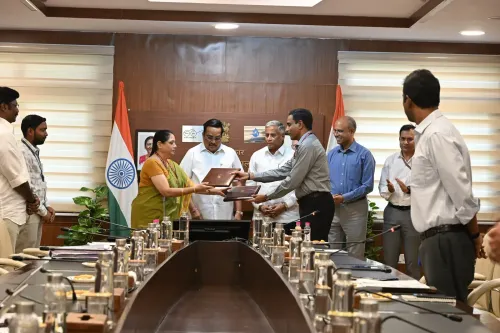
Jal Shakti Minister Paatil at JJM 2.0 Launch in Tiruchirappalli
Synopsis
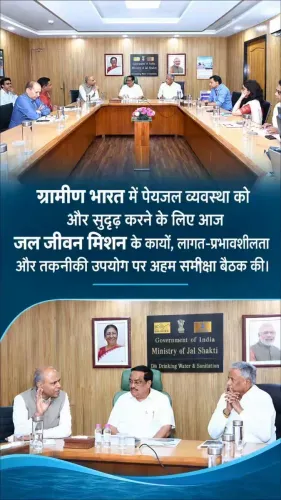
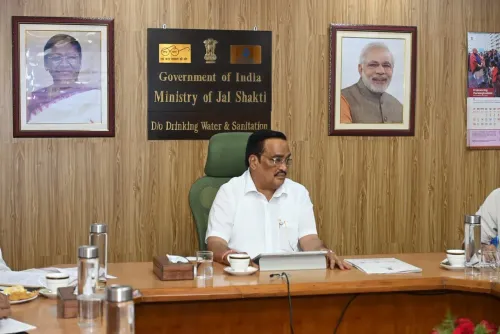
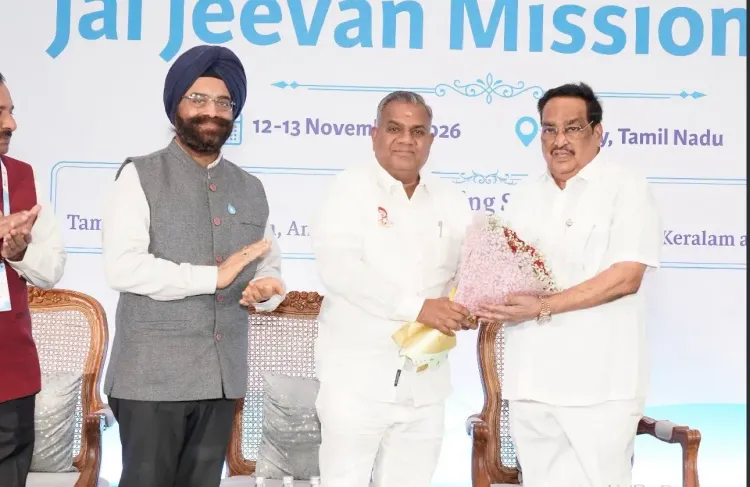
Union Jal Shakti Minister C. R. Paatil attended the first Jal Jeevan Mission 2.0 regional conference in Tiruchirappalli on 12 November 2026, shifting the programme's focus from connection coverage to regular, clean, and reliable rural water supply through source protection, maintenance, and gram panchayat ownership.
Key Takeaways
JJM 2.0's first regional conference was held in Tiruchirappalli, Tamil Nadu on 12 November 2026 , attended by Union Minister C.
The new phase moves beyond 'a tap in every home' to guaranteeing regular, adequate, and clean water in every rural household.
Three focus areas were highlighted: source protection , operation and maintenance , and active gram panchayat participation .
Tamil Nadu state minister Thiru N.
Anand and senior central and state officials attended, underlining Centre-state coordination.
The conference draws on guidance from a recent Prime Minister Modi-chaired water-sector review meeting .
The initiative is framed as a core pillar of the Viksit Bharat 2047 national development vision.
From taps to trust — that is the ambition now driving India's most ambitious rural water programme. Union Jal Shakti Minister C. R. Paatil attended the first regional conference of Jal Jeevan Mission 2.0 in Tiruchirappalli, Tamil Nadu on Thursday, 12 November 2026, marking a deliberate pivot from simply counting connections to guaranteeing what flows through them.
From 'every tap' to 'every tap, every day'
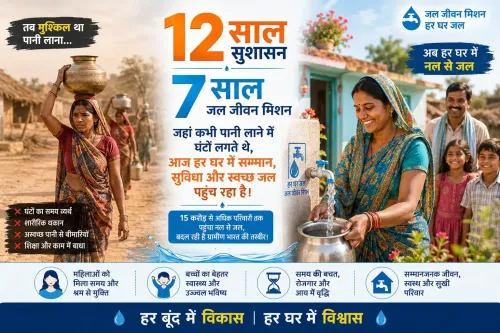
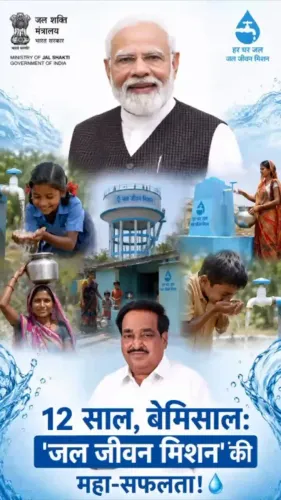
When Prime Minister Narendra Modi launched Jal Jeevan Mission (JJM) in 2019, the target was blunt and urgent: a functional household tap connection for every rural family in India. The programme delivered a transformational expansion of piped drinking water infrastructure across rural India over six years. But coverage, as planners quickly discovered, is not the same as reliability.
JJM 2.0 — hashtagged #JJM2_0 — sets a sharper standard. As Minister Paatil framed it in his post, the goal is no longer just 'har ghar nal' (a tap in every home) but 'har ghar niyamit, paryapt aur swachh jal seva' (regular, adequate, and clean water service in every home). The difference is seismic for the 170 million-plus rural households who depend on these systems.
Three pillars Paatil flagged at the Tiruchirappalli conference
The minister outlined the operational architecture the new phase will rest on: source protection to safeguard aquifers and reservoirs feeding the network; better operation and maintenance so infrastructure does not decay after commissioning; and active participation of gram panchayats, pushing delivery responsibility down to the village level. Each pillar is a direct response to on-ground failures in JJM's first phase, where connections were laid but systems fell silent within months in several districts.
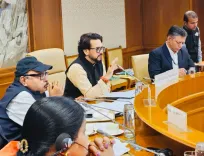
The conference, Minister Paatil noted, carried forward guidance from a recent water-sector review meeting chaired by Prime Minister Modi. Tamil Nadu state minister Thiru N. Anand attended alongside senior officials from both the central and state governments, signalling the Centre-state coordination that JJM 2.0 will require to work.
Viksit Bharat 2047 and the water-security link
Paatil anchored the conference explicitly within the government's #ViksitBharat2047 framework — the national vision for a developed India by the centenary of independence. His framing was direct: water-secure villages are the foundation, not an add-on. 'Jal surakshit hoga, toh gaon sashakt hoga' — 'When water is secure, the village is empowered' — served as the conference's guiding logic.
Tiruchirappalli as the venue for the first regional conference is itself a signal. Tamil Nadu has historically been a high-performing state on rural water metrics, and opening JJM 2.0's regional dialogue here sets a benchmark others will be measured against. Subsequent conferences are expected to roll out across other regions as the operational guidelines for the new phase are formalised.
The agenda has moved from installation to endurance — and India's villages are waiting to feel the difference.
Point of View
The Centre is pushing accountability down the federal ladder — a move that will test whether local bodies have the capacity and funding to sustain what Delhi built. Embedding this shift within the Viksit Bharat 2047 narrative also gives the water ministry political cover to pursue slower, harder institutional work over headline-grabbing connection tallies. The real verdict will come not from conference proceedings but from the operational guidelines that follow — and whether states like Tamil Nadu, with strong baseline infrastructure, can model a replicable maintenance framework for the rest of India.
NationPress
12 Nov 2026
Frequently Asked Questions
What is Jal Jeevan Mission 2.0?
Jal Jeevan Mission 2.0 (JJM 2.0) is the next phase of India's flagship rural drinking water programme, shifting focus from providing tap connections to ensuring regular, adequate, and clean water supply through source protection, better maintenance, and gram panchayat involvement.
Where was the first JJM 2.0 regional conference held?
The first regional conference of Jal Jeevan Mission 2.0 was held in Tiruchirappalli, Tamil Nadu on 12 November 2026.
Who attended the JJM 2.0 conference in Tiruchirappalli?
Union Jal Shakti Minister C. R. Paatil and Tamil Nadu state minister Thiru N. Anand attended, along with senior officials from both the central and state governments.
What is the difference between JJM and JJM 2.0?
The original Jal Jeevan Mission, launched in 2019, focused on providing functional tap connections to rural households. JJM 2.0 goes further, aiming to guarantee that every connected home receives regular, sufficient, and clean water — not just a physical connection.
What is Viksit Bharat 2047 and how does it relate to water?
Viksit Bharat 2047 is the Indian government's vision for a fully developed nation by 2047, the centenary of independence. Water security for rural villages is positioned as a foundational pillar of that vision, with JJM 2.0 acting as the delivery mechanism.