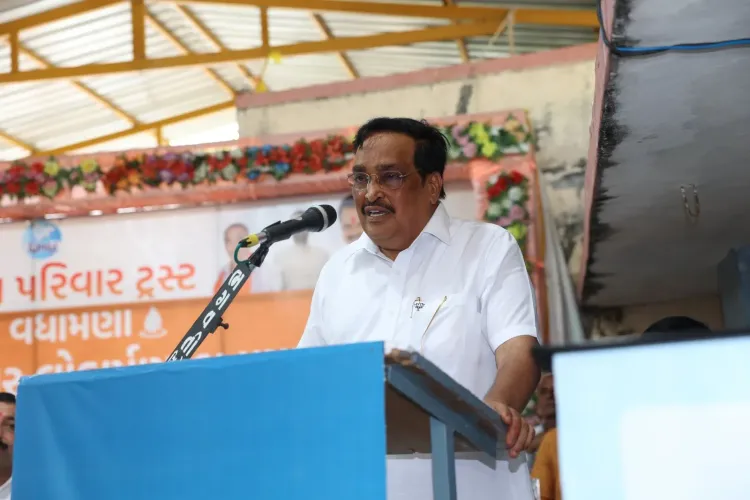
Jal Shakti Minister Paatil joins Manjula Sarovar inauguration
Synopsis
Union Jal Shakti Minister C. R. Paatil joined the Manjula Sarovar inauguration and water-augmentation programme hosted by Girganga Parivar Trust on 17 July 2026, also participating in a tree-plantation drive and invoking PM Modi's 'Ek Ped Maa Ke Naam' campaign.
Key Takeaways
Union Jal Shakti Minister C.
Paatil attended the Manjula Sarovar inauguration and water-augmentation programme on 17 July 2026 .
The event was organised by the Girganga Parivar Trust and included a tree-plantation drive alongside the sarovar inauguration.
Minister Paatil invoked PM Modi's 'Ek Ped Maa Ke Naam' campaign and described water and environment conservation as a jan andolan (people's movement).
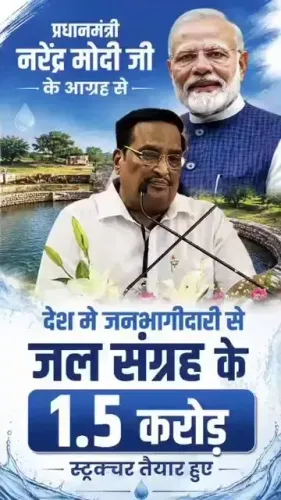
The event aligns with the central government's Amrit Sarovar initiative, which targets rejuvenation of at least 75 water bodies per district nationwide.
The Jal Shakti Abhiyan (2019) and Jal Jeevan Mission (2019) form the broader policy framework within which sarovar programmes like this are positioned.
Rural communities and farmers in semi-arid regions are the primary beneficiaries of such water-body rejuvenation and recharge programmes.
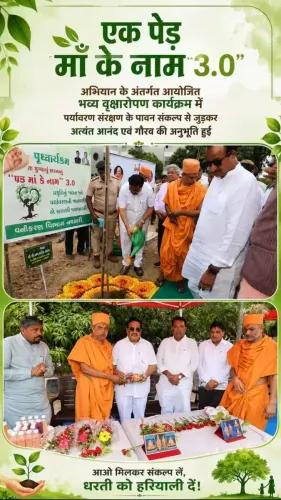
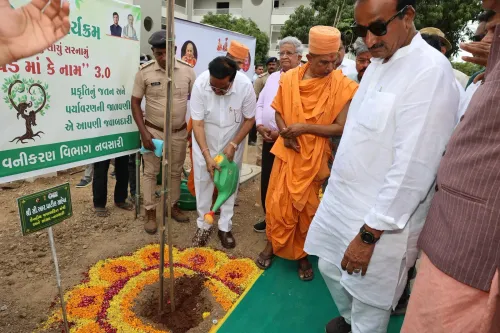
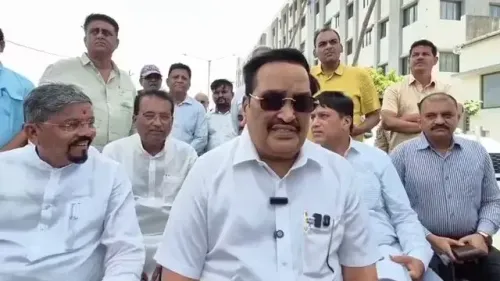
Union Jal Shakti Minister C. R. Paatil participated in the 'Manjula Sarovar Lokarpan evam Jalvardhan Karyakram' — the inauguration and water-augmentation programme for Manjula Sarovar — organised by the Girganga Parivar Trust on Friday, 17 July 2026. The minister also joined a tree-plantation drive at the venue, reaffirming his ministry's commitment to nature conservation.
Context
Posting on X, Minister Paatil wrote that under the leadership of Prime Minister Narendra Modi, water conservation and environmental protection have taken the form of a jan andolan (people's movement). He described his participation in the event as an extension of that resolve, noting that the tree-plantation drive further strengthened the pledge to protect nature. He specifically cited the 'Ek Ped Maa Ke Naam' campaign — 'One Tree in Mother's Name' — as an inspiring example of the government's broader green push.
The Girganga Parivar Trust is a community-level organisation that convened the sarovar inauguration. Water-body inaugurations of this kind are increasingly common during the monsoon season, when recharge potential is highest and community participation in water harvesting is easiest to mobilise.
Policy Backdrop
The event sits within a layered architecture of central government water and environment schemes. The Jal Shakti Abhiyan, launched in 2019, set the template for intensive, time-bound water-conservation campaigns combining rainwater harvesting, groundwater recharge and watershed management. The Jal Jeevan Mission, also launched in 2019, extended the ambition further by targeting functional tap-water connections for every rural household.
The Amrit Sarovar initiative, announced in 2022, added a specific mandate: construct or rejuvenate at least 75 water bodies per district across the country as part of the Azadi Ka Amrit Mahotsav commemorations. The Manjula Sarovar programme aligns with that district-level push. The 'Ek Ped Maa Ke Naam' campaign, publicly launched by Prime Minister Modi in 2024, has since been positioned as the afforestation complement to the water-conservation drive, linking tree cover to groundwater retention.
Stakeholders and Impact
The primary beneficiaries of sarovar rejuvenation and water-augmentation programmes are rural communities and farmers, particularly in semi-arid regions where surface water availability is seasonal and groundwater tables are under stress. Community-managed water harvesting structures reduce dependence on erratic monsoon patterns and support rabi (winter) crop irrigation.
Events such as the Manjula Sarovar inauguration serve a dual purpose: they deliver on-ground infrastructure while also functioning as visible demonstrations of the convergence between national schemes and local civic action. The involvement of a trust like Girganga Parivar underscores the government's stated model of public-private-community partnerships in environmental governance, which feeds into the broader Viksit Bharat 2047 development vision.
What's Next
With the 2026 monsoon season now active, the Jal Shakti Ministry is expected to oversee a fresh round of district-level sarovar and check-dam inaugurations. The ministry has been tracking progress on the Amrit Sarovar initiative and is likely to release updated completion figures as states report monsoon-season activity.
Any new central guidelines on community-managed water harvesting structures — particularly around maintenance funding and grievance redress — will determine whether inaugurated water bodies remain functional beyond the first season. The trajectory of the 'Ek Ped Maa Ke Naam' campaign's plantation targets for 2026 will also be a metric to watch as the ministry ties afforestation outcomes to groundwater recharge goals.
Point of View
The ministry is reinforcing a narrative that links afforestation directly to water security — a framing that strengthens the political case for both schemes simultaneously. The reference to a 'jan andolan' (people's movement) echoes the government's broader effort to present top-down policy as citizen-driven action, which is central to the Viksit Bharat 2047 communication architecture. How effectively these community events translate into sustained, measurable improvements in local water tables and green cover will ultimately determine the long-term credibility of that narrative.
NationPress
17 Jul 2026
Frequently Asked Questions
What is the Manjula Sarovar inauguration event?
The Manjula Sarovar Lokarpan evam Jalvardhan Karyakram is an inauguration and water-augmentation programme for a water body called Manjula Sarovar, organised by the Girganga Parivar Trust. Union Jal Shakti Minister C. R. Paatil attended the event on 17 July 2026.
What is the 'Ek Ped Maa Ke Naam' campaign?
'Ek Ped Maa Ke Naam' — meaning 'One Tree in Mother's Name' — is a nationwide tree-plantation campaign publicly launched by Prime Minister Narendra Modi in 2024 to scale up afforestation by linking it to maternal sentiment. The campaign is frequently cited alongside water-conservation efforts.
What is the Amrit Sarovar initiative?
The Amrit Sarovar initiative, announced in 2022, mandates the construction or rejuvenation of at least 75 water bodies per district across India as part of the Azadi Ka Amrit Mahotsav commemorations. It is a key plank of the central government's water conservation policy.
What is the Jal Shakti Abhiyan?
The Jal Shakti Abhiyan is a central government campaign launched in 2019 for intensive water conservation, focusing on rainwater harvesting, groundwater recharge and watershed management. It is overseen by the Union Ministry of Jal Shakti.
Who is C. R. Paatil?
C. R. Paatil is the Union Minister of Jal Shakti and a senior BJP leader. He previously served as the BJP Gujarat state president and is a prominent figure in the party's organisational structure.