Jal Shakti Minister Paatil Reviews JJM Progress in Delhi
Synopsis
Union Jal Shakti Minister C. R. Paatil chaired a Jal Jeevan Mission review in New Delhi on 14 July 2026, ordering officials to accelerate incomplete works and ensure clean tap water reaches every rural household with no compromise on quality.
Key Takeaways
Union Jal Shakti Minister C.
Paatil held a Jal Jeevan Mission progress review in New Delhi on 14 July 2026 .
Officials were directed to speed up pending works and maintain quality standards across all rural water supply projects.
The mission, launched on 15 August 2019 , aims to deliver functional household tap connections to every rural family in India.
The Ministry of Jal Shakti continues high-level oversight beyond the mission's original 2024 completion deadline.
State PHED departments are the primary implementing agencies responsible for on-ground execution of connections.
Outcomes will be tracked via the JJM national dashboard , with potential budget implications in the upcoming winter session of Parliament.
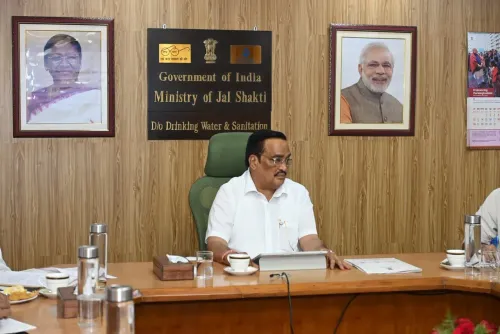
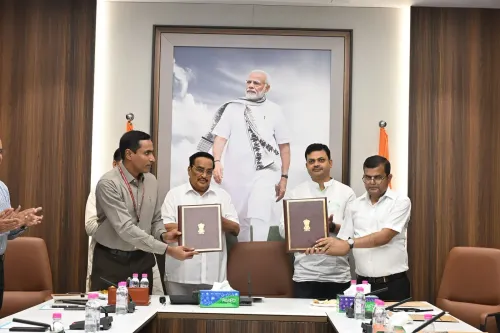
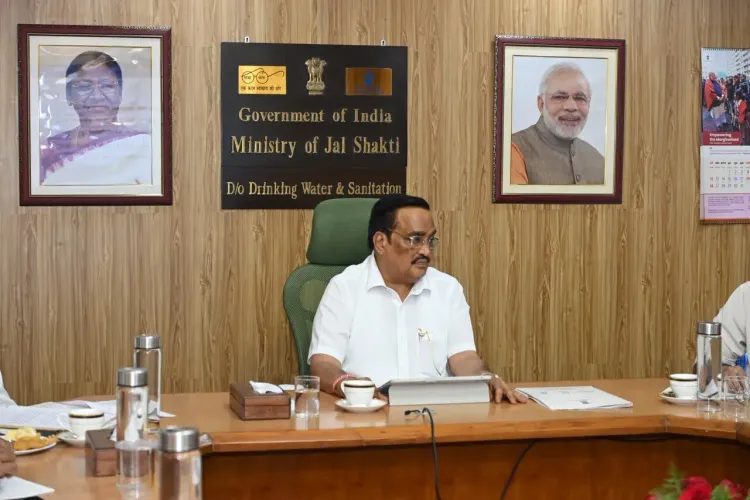
Union Jal Shakti Minister C. R. Paatil chaired a progress review meeting of the Jal Jeevan Mission (JJM) in New Delhi on Tuesday, 14 July 2026, directing officials to accelerate pending works and ensure timely delivery of clean, regular tap water to every rural household.
Context
Posting on X in Hindi, Minister Paatil wrote: 'आज नई दिल्ली में जल जीवन मिशन की प्रगति की समीक्षा की' ('Today I reviewed the progress of Jal Jeevan Mission in New Delhi'). He stated that officials were directed to speed up incomplete works, deliver tap water connections with quality, and ensure no rural family is left without clean water supply.
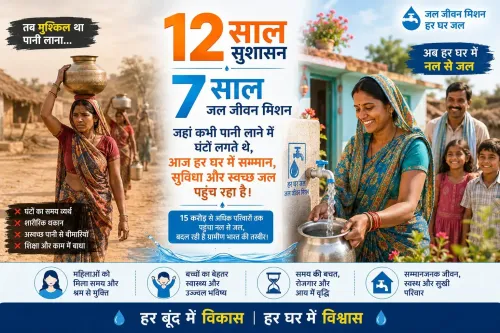
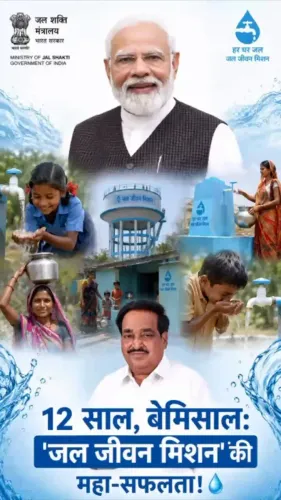
The minister credited Prime Minister Narendra Modi's leadership for what he described as a 'big change' in rural India's quality of life through the mission. The post was accompanied by three images from the review meeting.
Policy Backdrop
The Jal Jeevan Mission was announced in the 2019 Union Budget and formally launched on 15 August 2019 with the stated objective of providing a functional household tap connection (FHTC) delivering clean, potable water to every rural household in India. The scheme operates as a centrally sponsored programme administered by the Ministry of Jal Shakti, which was itself created in 2019 by merging the erstwhile ministries of Water Resources and Drinking Water and Sanitation.
State Public Health Engineering Departments (PHEDs) are the primary implementation arms, responsible for laying pipelines, constructing water supply infrastructure, and commissioning connections at the village level. The mission's original completion target was 2024, and the July 2026 review signals continued central oversight of states where work remains pending beyond that deadline.
Stakeholders and Impact
Rural households across India — particularly in states with lower coverage rates — stand to be the most direct beneficiaries of the push to complete pending connections. The minister's emphasis on quality alongside speed reflects concerns that connections commissioned on paper must translate into reliable, safe water supply in practice.
State PHED departments and district-level implementing agencies face tightened timelines following the New Delhi review. The ministry's oversight pattern mirrors similar review mechanisms applied to other flagship schemes such as Swachh Bharat Mission and PM Awas Yojana, where periodic high-level meetings are used to identify bottlenecks and push for time-bound completion.
What's Next
The ministry is expected to track outcomes through the JJM national dashboard, which provides state-wise and district-wise data on connections sanctioned, completed, and functional. Any significant funding gaps or revised targets may surface in supplementary budget demands during the winter session of Parliament.
With the mission already past its original 2024 deadline, the pace at which states close the gap on pending connections will determine whether the government can credibly claim universal rural tap-water coverage — a politically and socially significant milestone ahead of future electoral cycles.
Point of View
Despite being past its original 2024 deadline, remains a live political and administrative priority for the BJP-led government. Minister Paatil's public directive to officials — broadcast on X — serves a dual purpose: applying bureaucratic pressure on lagging states while reinforcing the government's narrative of rural welfare under PM Modi. The emphasis on 'quality' alongside speed is notable, as it signals awareness that inflated connection counts have drawn scrutiny from independent assessors. How swiftly states close the remaining gap will shape the government's ability to claim a clean, verifiable delivery record on one of its most visible social infrastructure pledges.
NationPress
14 Jul 2026
Frequently Asked Questions
What is the Jal Jeevan Mission and what is its goal?
The Jal Jeevan Mission is a central government scheme launched on 15 August 2019 to provide a functional household tap connection with clean, potable water to every rural household in India. It is administered by the Ministry of Jal Shakti.
Why did C. R. Paatil review the Jal Jeevan Mission in July 2026?
Minister C. R. Paatil chaired the review on 14 July 2026 to assess progress, identify pending works, and direct officials to accelerate completion so that every rural family receives tap water on time and at the required quality standard.
What is the original deadline for Jal Jeevan Mission completion?
The Jal Jeevan Mission was originally targeted for completion by 2024. The continued reviews in 2026 indicate that work on pending connections is still ongoing in several states.
Which ministry oversees the Jal Jeevan Mission?
The Ministry of Jal Shakti, formed in 2019 by merging the water resources and drinking water departments, is responsible for overseeing and coordinating the Jal Jeevan Mission across all states and union territories.
How is Jal Jeevan Mission progress tracked?
Progress is monitored through the JJM national dashboard, which provides real-time state-wise and district-wise data on connections sanctioned, completed, and functional, and is reviewed periodically at the ministerial level.