Jal Shakti Minister Paatil spotlights student water awareness drive
Synopsis
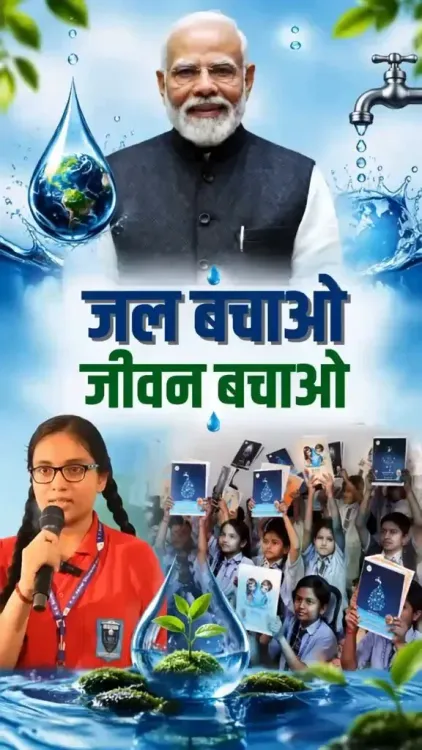
Union Jal Shakti Minister C. R. Paatil on 10 July 2026 shared a video of Class 9 student Jahnavi Singh from Lucknow's RK Senior Secondary School explaining water conservation, spotlighting the Centre's grassroots awareness drive under PM Modi's leadership.
Key Takeaways
Union Jal Shakti Minister C.
Paatil posted a video on 10 July 2026 featuring a student water conservation message.
The student, Jahnavi Singh , is a Class 9 pupil at RK Senior Secondary School, Lucknow .
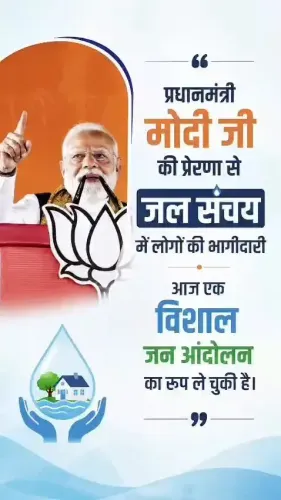
The campaign is part of a national water-saving awareness drive under Prime Minister Narendra Modi's leadership.
The Jal Shakti Abhiyan , launched in 2019 , underpins such school-level and community outreach efforts.
The Jal Jeevan Mission (2019) complements this with infrastructure delivery alongside awareness components.
School students and urban households are the primary target groups for this conservation messaging.
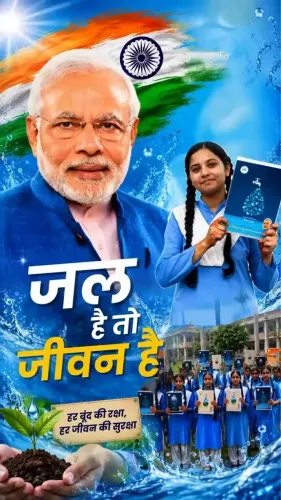
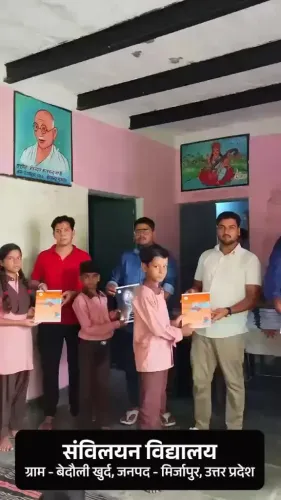
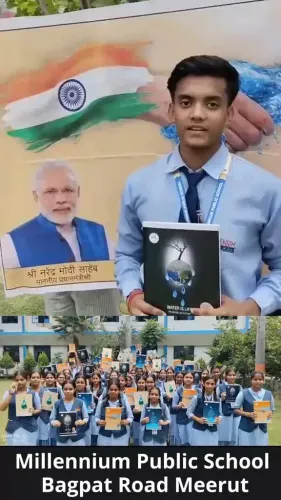
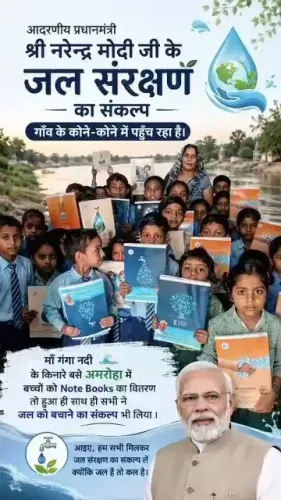
Union Jal Shakti Minister C. R. Paatil on 10 July 2026 shared a video on X featuring a Class 9 student from RK Senior Secondary School, Lucknow, who explained the importance of water conservation in simple language — amplifying the Centre's ongoing public awareness campaign on water saving under the leadership of Prime Minister Narendra Modi.
In his post, Minister Paatil wrote: 'सुनिए Lucknow की RK Senior Secondary School की कक्षा 9 की छात्रा जाह्नवी सिंह को जिसने बहुत ही आसान भाषा में बताया जल का महत्व' — ('Listen to Jahnavi Singh, a Class 9 student of RK Senior Secondary School, Lucknow, who has explained the importance of water in very simple language'). The post underscores the ministry's approach of centering grassroots voices, particularly schoolchildren, in its water conservation messaging.
Context
The video is part of a broader awareness campaign being run under Prime Minister Modi's direction to promote water-saving habits among citizens. The Jal Shakti Ministry has increasingly used social media to highlight participation from students and local communities, positioning young voices as messengers of the conservation agenda. Lucknow, the capital of Uttar Pradesh, serves as a prominent node in such outreach given its large urban student population.
Policy Backdrop
The campaign draws from the Jal Shakti Abhiyan, launched in 2019, which was designed to promote water conservation and recharge across states through community participation and information-education-communication activities. Alongside it, the Jal Jeevan Mission — also announced in 2019 — has worked to provide functional household tap connections while incorporating awareness components at the grassroots level. Successive Union Budgets since 2019 have allocated funds for both the infrastructure and the IEC pillars of these schemes.
School-level engagement has been a recurring feature of the Jal Shakti portfolio, with student water clubs and classroom campaigns forming part of state-level rollout plans. The ministry's use of social media to amplify such participation reflects a deliberate communications strategy aimed at broadening the reach of these schemes beyond policy circles.
Stakeholders and Impact
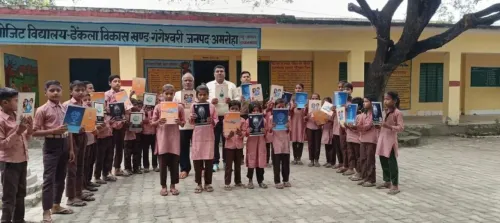
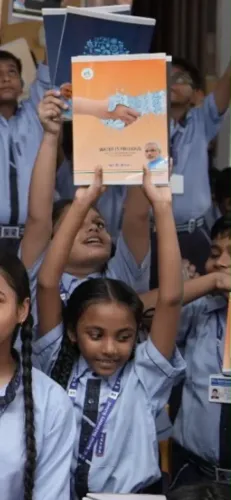
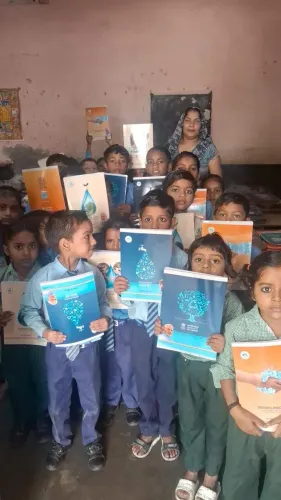
The primary audience for this campaign includes school students and urban households, who are being encouraged to adopt water-conscious behaviour in daily life. By featuring a student like Jahnavi Singh articulating conservation values, the ministry signals that the campaign is intended to be participatory rather than top-down. Such peer-to-peer messaging is considered effective in behaviour-change communication, particularly among younger demographics.
For states like Uttar Pradesh, which face significant groundwater stress in several districts, school-based awareness drives carry added significance. Urban centres including Lucknow are focal points where consumption patterns and civic awareness can have measurable impact on water use.
What's Next
Observers will watch for the state-level rollout of school water clubs and any parliamentary questions on Jal Shakti Abhiyan outcomes during the upcoming monsoon session. The ministry's continued use of student-led content on social media suggests this format will remain a fixture of its public communication strategy in the months ahead. How such awareness efforts translate into measurable conservation outcomes — particularly in water-stressed urban areas — will be the key test of this campaign's long-term impact.
Frequently Asked Questions
What is the Jal Shakti Abhiyan?
The Jal Shakti Abhiyan is a Central government water conservation campaign launched in 2019 to promote water recharge and awareness across Indian states through community and school-level participation.
Who is Jahnavi Singh in C. R. Paatil's post?
Jahnavi Singh is a Class 9 student at RK Senior Secondary School in Lucknow who was featured in a video shared by Jal Shakti Minister C. R. Paatil on 10 July 2026 for explaining the importance of water conservation in simple language.
What is the Jal Jeevan Mission?
The Jal Jeevan Mission, announced in 2019, is a Central government scheme aimed at providing functional household tap connections to every rural home in India, with an awareness and education component alongside the infrastructure work.
What is C. R. Paatil's role in the government?
C. R. Paatil is the Union Minister of Jal Shakti and a senior BJP leader who previously served as BJP Gujarat state president.
How are schools involved in water conservation campaigns in India?
Under schemes like the Jal Shakti Abhiyan, schools participate through water clubs, classroom campaigns, and student-led awareness activities, with the government amplifying such participation on social media to broaden public reach.