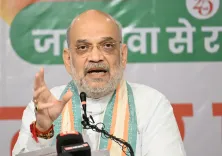
Pralhad Joshi Marks 10 Years of UJALA's LED Drive
Synopsis
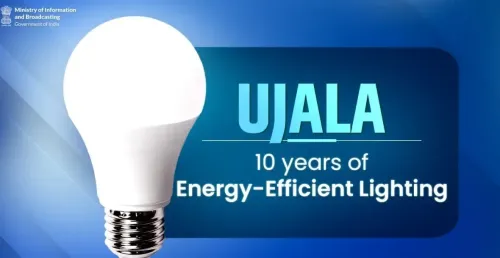
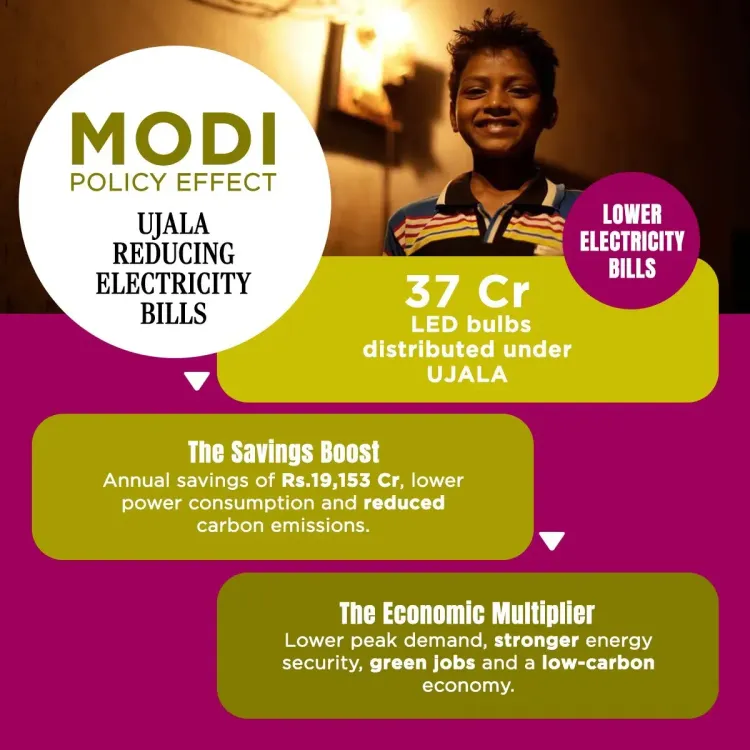
Union Minister Pralhad Joshi on 15 June 2026 marked a decade of the UJALA scheme, citing distribution of over 37 crore LED bulbs and annual savings of ₹19,153 crore for Indian households under PM Modi's leadership, linking energy efficiency to climate and middle-class welfare goals.
Key Takeaways
Union Minister Pralhad Joshi posted on 15 June 2026 marking ten years of the UJALA scheme .
The scheme has reportedly distributed over 37 crore LED bulbs to households across India.
Annual electricity savings attributed to the scheme stand at ₹19,153 crore , according to the minister's post.
UJALA was launched in May 2015 by the Ministry of Power and implemented through Energy Efficiency Services Limited (EESL) .
The post was tagged #12YearsOfSakshamMiddleClass , part of a broader BJP campaign documenting policy benefits for middle-class households.
The scheme also claims reduced carbon emissions and enhanced energy security as environmental co-benefits.
Union Consumer Affairs and New and Renewable Energy Minister Pralhad Joshi on Monday, 15 June 2026 highlighted the decade-long impact of the UJALA scheme, crediting Prime Minister Narendra Modi's leadership for the distribution of over 37 crore LED bulbs to households across India and annual electricity savings of ₹19,153 crore.
Context
Joshi's post marks ten years since the UJALA (Unnat Jyoti by Affordable LEDs for All) scheme began reshaping household energy consumption in India. The minister described the programme as 'a shining example of how people-centric policies deliver economic and environmental benefits together,' underlining reduced carbon emissions and enhanced energy security as twin gains alongside lower electricity bills for families.
The post was tagged #12YearsOfSakshamMiddleClass, situating the UJALA milestone within a broader BJP communication effort to document policy benefits for middle-class households over the Modi government's tenure since May 2014.
Policy Backdrop
The UJALA scheme was launched in May 2015 by the Ministry of Power and implemented through Energy Efficiency Services Limited (EESL), a public-sector enterprise. Its core mechanism was to make LED bulbs available to domestic consumers at subsidised rates, replacing energy-intensive incandescent bulbs at scale.
The scheme sits within a wider demand-side energy-efficiency architecture that the central government has built since 2014, which also includes the Bureau of Energy Efficiency's standards-and-labelling programme and the promotion of star-rated appliances. UJALA's design was notable for using bulk procurement by EESL to drive down per-unit LED costs dramatically, making the technology affordable for lower- and middle-income households without sustained subsidy outflows.
India's international climate commitments — including its Nationally Determined Contributions under the Paris Agreement — have made demand-side efficiency programmes such as UJALA an integral part of the country's decarbonisation toolkit alongside renewable energy expansion.
Stakeholders and Impact
The primary beneficiaries of the UJALA scheme are household consumers, particularly middle-class and lower-income families for whom electricity costs represent a significant share of monthly expenditure. By replacing conventional bulbs with LEDs — which consume roughly 75–80 per cent less energy for equivalent luminosity — the scheme was designed to produce immediate, measurable reductions in monthly power bills.
At the national grid level, the aggregated reduction in peak electricity demand has implications for power utilities and state electricity boards, easing pressure on generation capacity. Environmental gains — in the form of reduced CO₂ emissions — align with India's climate targets and bolster the country's standing in international energy-efficiency rankings.
Joshi's ministry, which holds the New and Renewable Energy portfolio, has a direct interest in the energy-efficiency narrative as it complements the government's renewable energy capacity addition targets.
What's Next
The Bureau of Energy Efficiency periodically publishes monitoring reports on verified savings from the UJALA scheme, and any decision to extend the bulk-procurement model to other appliances — such as energy-efficient fans or air-conditioners — would represent the next logical phase of the programme. With the government's #12YearsOfSakshamMiddleClass campaign framing ongoing communications, further scheme-anniversary milestones are likely to be highlighted in the weeks ahead. Analysts and consumer groups will watch whether updated, independently verified distribution and savings figures are released alongside such political messaging.
Point of View
Anchoring a tangible household benefit — lower electricity bills — to the party's broader middle-class welfare narrative ahead of what is likely an intensifying political cycle. The UJALA scheme is one of the more credible demand-side efficiency interventions in India's policy record, making it a relatively safe flagship to amplify. However, the absence of independently verified, up-to-date distribution and savings figures means the specific numbers cited remain politically asserted rather than audited. The broader pattern — using energy-efficiency milestones to simultaneously address economic relief, climate credentials, and electoral messaging — reflects a maturing integration of policy and political communication in New Delhi.
NationPress
14 Sept 2026
Frequently Asked Questions
What is the UJALA scheme and who launched it?
UJALA (Unnat Jyoti by Affordable LEDs for All) is a central government scheme launched in May 2015 by the Ministry of Power under Prime Minister Narendra Modi to distribute subsidised LED bulbs to households through Energy Efficiency Services Limited (EESL).
How many LED bulbs has the UJALA scheme distributed?
According to Union Minister Pralhad Joshi's post on 15 June 2026, the UJALA scheme has distributed over 37 crore LED bulbs across India, though this figure has not been independently verified from public audits.
How much money does UJALA save Indian households every year?
The minister cited annual savings of ₹19,153 crore for Indian households as a result of switching to LED bulbs under the UJALA scheme, attributed to lower electricity consumption compared with conventional bulbs.
What is the #12YearsOfSakshamMiddleClass hashtag about?
#12YearsOfSakshamMiddleClass is a BJP communication campaign hashtag used to highlight policy benefits delivered to India's middle class over the Modi government's tenure since May 2014, under which the UJALA scheme anniversary was posted.
What are the environmental benefits of the UJALA scheme?
The UJALA scheme is credited with reducing carbon dioxide emissions by lowering electricity consumption at the household level, supporting India's climate commitments under the Paris Agreement alongside the government's renewable energy targets.