Joshi Hails UN Climate Chief's Praise for India's Clean Energy Rise
Synopsis
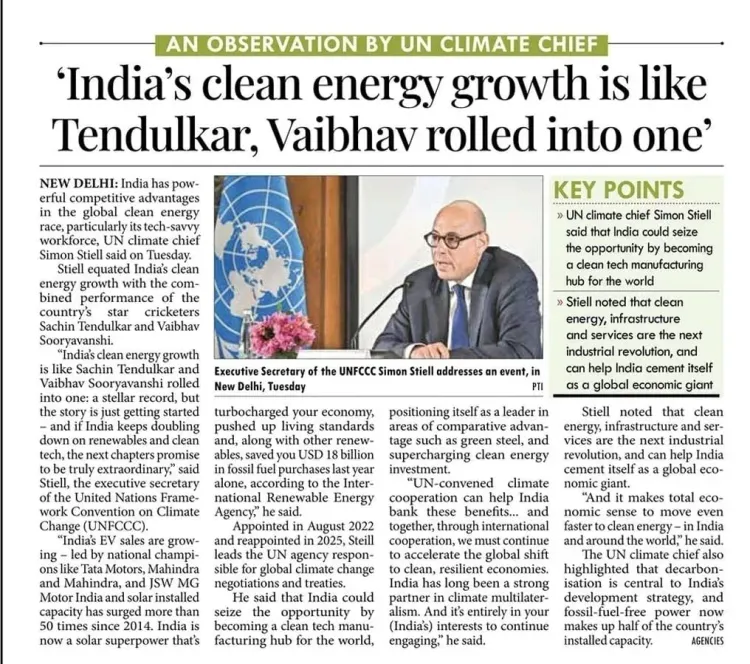
Union Minister Pralhad Joshi highlighted UN Climate Chief Simon Stiell's comparison of India's renewable energy journey to Sachin Tendulkar and Vaibhav Sooryavanshi, calling it global validation of PM Modi's vision and India's push to be a clean energy superpower.
Key Takeaways
UN Climate Chief Simon Stiell compared India's renewable energy journey to the combined brilliance of Sachin Tendulkar and Vaibhav Sooryavanshi , calling it a stellar record with more to come.
Minister Pralhad Joshi attributed the global recognition to the 'visionary leadership' of PM Narendra Modi and collective national effort.
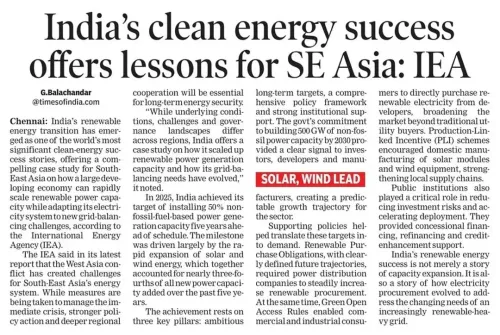
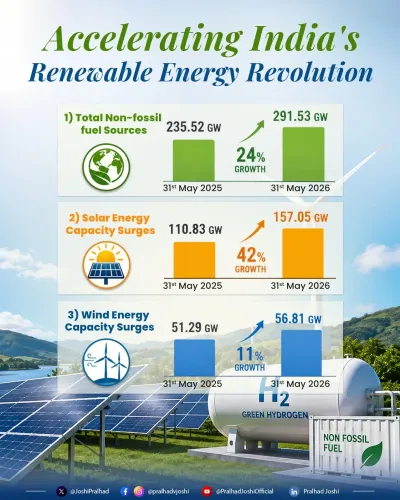
India's clean energy ambitions are anchored in the Panchamrit targets — including 500 GW non-fossil fuel capacity by 2030 — announced at COP26 in 2021 .
India has ranked among the top five countries globally in annual renewable capacity additions since 2015 .
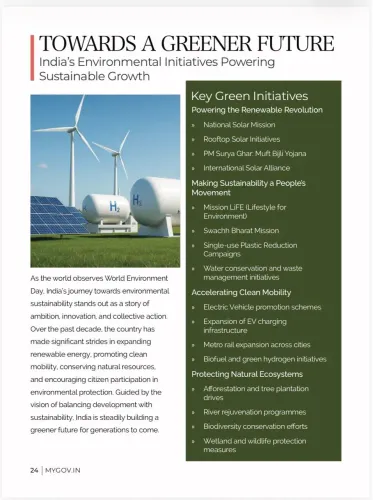
India co-founded the International Solar Alliance in 2015 and revised its National Solar Mission to target 100 GW of solar power .
Progress toward the 500 GW target and new incentives for solar manufacturing and green hydrogen will be closely watched ahead of COP31 .
Union Consumer Affairs and New and Renewable Energy Minister Pralhad Joshi on Wednesday, 22 July 2026, shared remarks by UN Climate Chief Simon Stiell comparing India's renewable energy journey to the combined batting brilliance of Sachin Tendulkar and Vaibhav Sooryavanshi — calling it a 'stellar performance with the best still to come.' Joshi framed the global recognition as a validation of Prime Minister Narendra Modi's vision and the collective efforts of India's people and businesses.
Context
Simon Stiell, Executive Secretary of the United Nations Framework Convention on Climate Change (UNFCCC), drew on one of cricket's most celebrated analogies to describe India's clean energy trajectory. The comparison — invoking Sachin Tendulkar, widely regarded as the gold standard of Indian batting, alongside rising young star Vaibhav Sooryavanshi — was meant to signal both proven achievement and enormous untapped potential. Minister Joshi quoted Stiell as saying India's renewable energy story is 'getting started,' underscoring that the global community sees more headroom ahead.
Joshi wrote that India is 'proving that sustainable growth and economic progress can go hand in hand,' a formulation that echoes the government's longstanding position that clean energy is a development enabler, not a constraint.
Policy Backdrop
India's clean energy ambitions are anchored in the Panchamrit targets announced at COP26 in Glasgow in 2021, which include achieving 500 GW of non-fossil fuel capacity by 2030. The country co-founded the International Solar Alliance in 2015 alongside France, positioning itself as a champion of affordable solar deployment across the developing world. A revised National Solar Mission set an intermediate 100 GW solar target, and India has since ranked consistently among the top five countries globally in annual renewable capacity additions.
The government has framed this expansion not as a trade-off with growth but as complementary to it — a narrative that finds increasing traction in multilateral climate forums where India simultaneously seeks recognition as a major emitter taking action and as a cost-effective deployment leader.
Stakeholders and Impact
Renewable energy developers, both domestic and international, stand to benefit from the continued policy momentum signalled by such high-profile international endorsements. Global climate negotiators and multilateral finance institutions often cite positive assessments from UNFCCC leadership when calibrating concessional finance flows to emerging economies. For India, the third-largest energy consumer in the world, the recognition reinforces its bargaining position ahead of future Conference of Parties (COP) negotiations.
Domestically, the spotlight on clean energy progress can accelerate investor confidence in sectors such as green hydrogen, solar module manufacturing, and offshore wind — all areas where the government has signalled policy support.
What's Next
Attention will now turn to progress reports on the 500 GW non-fossil capacity target as the 2030 deadline approaches, with COP31 expected to be a key milestone for India's international climate commitments. Any new domestic incentives for solar manufacturing or green hydrogen production could further sharpen India's profile as a clean energy leader. Minister Joshi's amplification of international praise suggests the government intends to keep renewable energy achievements prominent in both domestic and diplomatic messaging in the months ahead.
Point of View
Signalling that India's clean energy story is credible enough to celebrate while leaving room for greater ambition. For the BJP government, such endorsements from multilateral institutions serve a dual purpose: bolstering India's standing in climate diplomacy and providing domestic political capital ahead of state and national election cycles. Joshi's quick amplification of the remarks reflects a broader government strategy of converting international recognition into a narrative of governance competence. The real test, however, remains delivery on the 500 GW non-fossil target by 2030, where the gap between installed capacity and the goal will define India's credibility at future COP summits.
NationPress
22 Jul 2026
Frequently Asked Questions
What did the UN Climate Chief say about India's renewable energy?
UN Climate Chief Simon Stiell compared India's renewable energy journey to Sachin Tendulkar and Vaibhav Sooryavanshi rolled into one, describing it as a stellar performance with the best still to come.
What is India's 2030 renewable energy target?
India has committed to achieving 500 GW of non-fossil fuel capacity by 2030 as part of its Panchamrit climate targets announced at COP26 in Glasgow in 2021.
What did Minister Pralhad Joshi say about India's clean energy progress?
Minister Pralhad Joshi said the global recognition is a testament to PM Modi's visionary leadership and that India is proving sustainable growth and economic progress can go hand in hand.
What is the International Solar Alliance and India's role in it?
The International Solar Alliance is a multilateral body co-founded by India and France in 2015 to promote affordable solar energy deployment, particularly among developing nations.
How does India rank globally in renewable energy capacity additions?
India has consistently ranked among the top five countries in the world for annual renewable energy capacity additions since 2015, driven by central and state-level policies.