Joshi Reviews Wind, Offshore & Perovskite Solar Roadmap
Synopsis
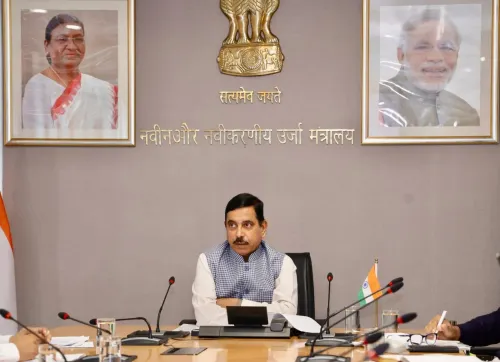
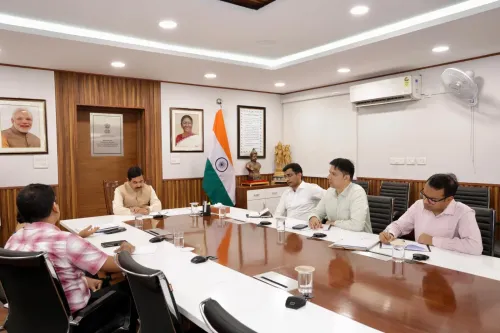
Union Minister Pralhad Joshi on 7 July 2026 chaired MNRE meetings to accelerate onshore wind through state coordination, direct preparation of a long-term offshore wind roadmap, and deliberate on scaling perovskite tandem solar cells from pilot to commercial deployment.
Key Takeaways
Minister Pralhad Joshi chaired high-level MNRE review meetings on 7 July 2026 covering wind, offshore wind, and solar technology.
Officials directed to prepare a long-term roadmap for offshore wind development , building on the National Offshore Wind Energy Policy of 2015 .
Wind energy acceleration plan to focus on stronger state coordination and faster project implementation to realise India's full wind potential.
Deliberations held on scaling perovskite tandem solar cell technology from pilot stage to large-scale commercial deployment.
Government reaffirmed commitment to supporting innovation in high-efficiency solar manufacturing to reduce import dependence.
Moves align with India's 500 GW non-fossil fuel capacity target by 2030 pledged at COP26.
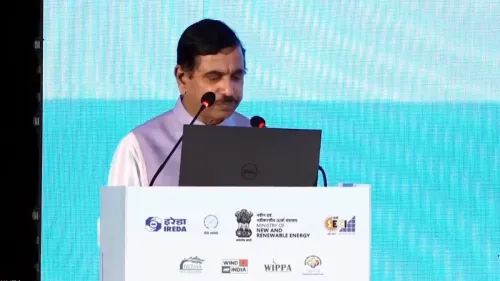
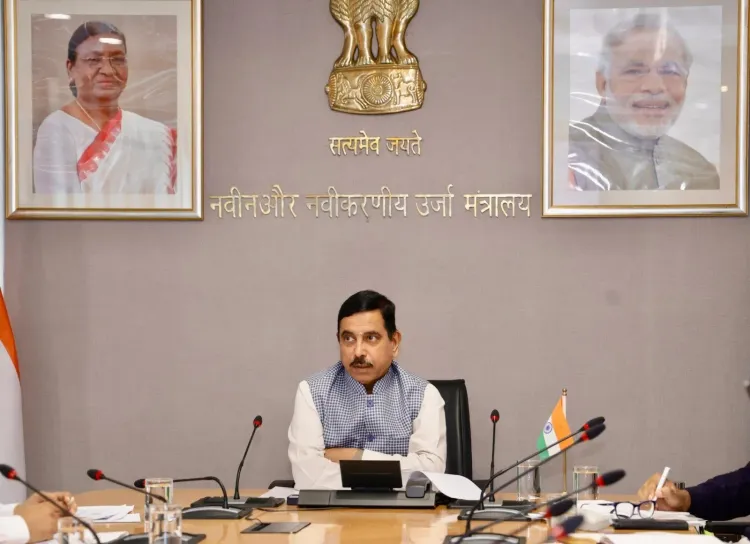
Union Consumer Affairs and New and Renewable Energy Minister Pralhad Joshi on Tuesday, 7 July 2026, chaired a series of high-level meetings with senior officials of the Ministry of New and Renewable Energy (MNRE) to assess the country's progress across multiple clean-energy frontiers — from onshore wind acceleration to offshore wind planning and next-generation perovskite solar technology.
Context
The ministerial review spanned three distinct but interconnected energy segments. On wind power, Joshi directed officials to draw up a plan for accelerating project implementation through stronger coordination with state governments, with the explicit aim of unlocking what he described as India's 'true wind potential.' He also separately directed the preparation of a dedicated long-term roadmap for offshore wind development — a segment that has seen policy attention since the National Offshore Wind Energy Policy of 2015 but has lagged in actual project execution.
On the solar front, the minister reviewed the current state of perovskite solar cell research in India and held deliberations on scaling up perovskite tandem solar cell technology from the pilot stage to large-scale commercial deployment. He reaffirmed the government's commitment to extending 'all necessary support' to accelerate innovation and strengthen India's next generation of high-efficiency solar manufacturing.
Policy Backdrop
India's renewable energy ambitions are anchored to the pledge made at COP26 in 2021 to achieve 500 GW of non-fossil fuel power capacity by 2030. While utility-scale solar and onshore wind have driven most of the installed capacity addition so far, the government has increasingly signalled a pivot toward emerging segments. The MNRE issued guidelines in 2023 for the development of 5 GW of offshore wind projects off the coasts of Gujarat and Tamil Nadu, though tendering timelines have remained a subject of close industry watch.
The push on perovskite technology fits within a broader policy objective: raising the efficiency of domestically manufactured solar modules and reducing India's dependence on imported crystalline silicon cells and wafers. Perovskite tandem cells, which stack a perovskite layer atop a conventional silicon cell, promise significantly higher conversion efficiencies than standard modules currently available at commercial scale.
Stakeholders and Impact
State governments are central to the wind energy acceleration agenda — land acquisition, grid connectivity approvals, and power purchase agreements all require active state participation. Faster coordination between New Delhi and state capitals has been a persistent bottleneck cited by wind project developers. A clearer offshore wind roadmap would also directly affect coastal states such as Gujarat and Tamil Nadu, which have the most viable seabed zones identified under existing policy.
For the solar research and manufacturing ecosystem, the ministerial signal on perovskite scale-up could translate into future incentive structures — potentially through expansions of the Production Linked Incentive (PLI) scheme for solar modules or dedicated research grants. Domestic solar research institutions and emerging deep-tech startups working on advanced photovoltaic materials stand to benefit from any formalised support framework.
What's Next
The immediate deliverables from Tuesday's meetings are internal: officials have been directed to prepare the offshore wind long-term roadmap, and the perovskite scale-up deliberations are expected to feed into future policy and budgetary decisions. Industry observers will watch for new offshore wind tender schedules in the upcoming fiscal year and any perovskite-specific provisions in the next Union Budget or PLI scheme revision.
With India's 2030 renewable capacity target now less than four years away, the pace at which offshore wind transitions from policy to procurement — and perovskite technology from laboratory to factory floor — will be a key indicator of whether the country can move beyond its current solar-dominant renewable mix toward a more diversified, high-efficiency clean energy base.
Point of View
Where execution has lagged behind policy intent for over a decade, and advanced photovoltaic materials, where commercial viability is still being established globally. By directing officials to prepare a long-term offshore wind roadmap, Joshi is effectively acknowledging that the 2023 guidelines for Gujarat and Tamil Nadu projects have not yet produced the tendering momentum the sector needs. The simultaneous emphasis on perovskite tandem cells suggests the government is positioning domestic research institutions and manufacturers for the next efficiency curve in solar — a strategically important move given India's current reliance on imported cell technology. Together, these signals point toward a more ambitious and diversified clean-energy industrial policy taking shape ahead of the 2030 capacity deadline.
NationPress
7 Jul 2026
Frequently Asked Questions
What is perovskite tandem solar cell technology and why is India focusing on it?
Perovskite tandem solar cells stack a perovskite semiconductor layer on top of a conventional silicon cell, achieving higher energy conversion efficiency than standard solar panels. India is focusing on this technology to develop high-efficiency domestic solar manufacturing and reduce dependence on imported crystalline silicon modules.
What is India's offshore wind energy policy?
India notified the National Offshore Wind Energy Policy in 2015 to enable seabed leasing and offshore project development along its coastline. In 2023, the MNRE issued guidelines for developing 5 GW of offshore wind projects off the coasts of Gujarat and Tamil Nadu.
What is India's 2030 renewable energy target?
India committed at COP26 in 2021 to achieving 500 GW of non-fossil fuel power capacity by 2030. Onshore solar and wind have driven most progress so far, with offshore wind and advanced solar technologies expected to contribute in later years.
Why is state coordination important for wind energy in India?
Land acquisition, grid connectivity, and power purchase agreements for wind projects all require active participation from state governments. Delays in state-level approvals have been a persistent bottleneck for wind project developers, making central-state coordination critical to accelerating capacity addition.
What did Pralhad Joshi direct MNRE officials to do on 7 July 2026?
Minister Pralhad Joshi directed MNRE officials to prepare a long-term roadmap for offshore wind development, accelerate onshore wind project implementation through stronger state coordination, and develop plans to scale perovskite tandem solar cell technology from the pilot stage to large-scale commercial deployment.