Scindia pitches Gwalior TMZ as India's telecom manufacturing launchpad
Synopsis
India's Communications Minister Scindia used a Bhopal investor event to reframe India's telecom ambition — not just as the world's services backbone, but as its hardware supplier. With 25 companies receiving LoIs for a 170-acre Gwalior TMZ and ₹5,500 crore already committed, the bet is big. Whether LoIs translate into operational factories will define whether this is a policy pivot or another headline number.
Key Takeaways
Union Communications Minister Jyotiraditya Scindia on 19 November 2026 called for India to become a global telecom manufacturing hub, not just a services leader.
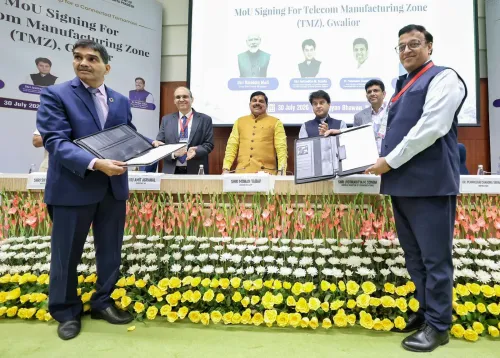
Letters of Intent (LoIs) were distributed to 25 companies for the proposed Telecom Manufacturing Zone (TMZ) in Gwalior, Madhya Pradesh .
The TMZ will cover approximately 170 acres , accommodating telecom equipment, components, optical fibre, software, and R&D facilities.
Prior outreach in New Delhi and Mumbai secured investment commitments of ₹5,500 crore with potential for nearly 20,000 jobs .
Phase-II of the TMZ project was announced, with Madhya Pradesh Chief Minister Mohan Yadav confirming state cabinet approval of the land allocation.
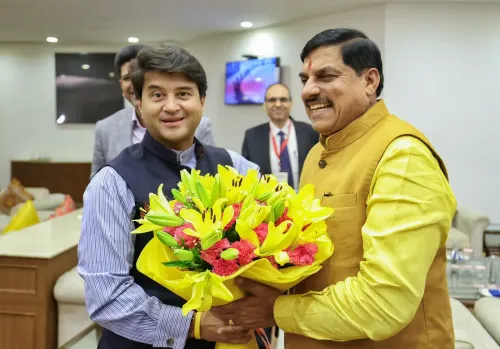
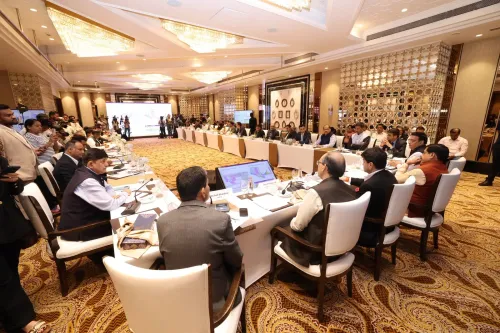
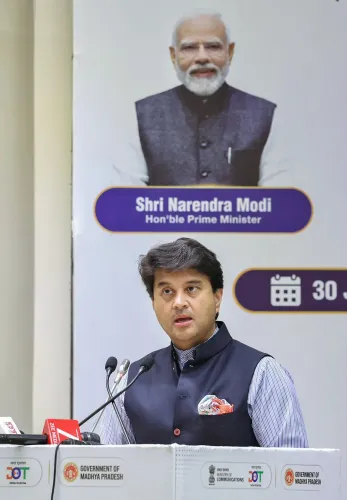
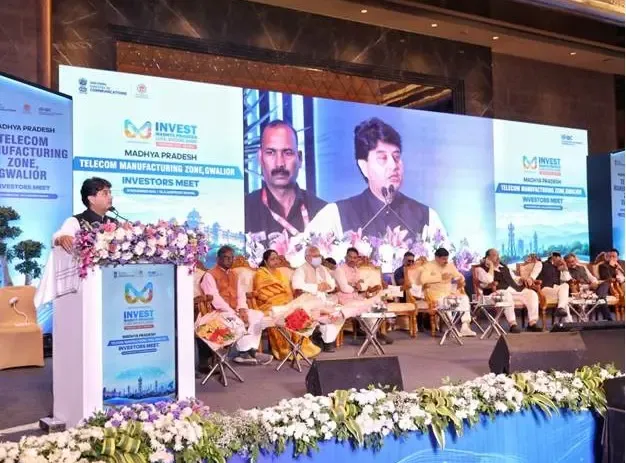
Union Communications Minister Jyotiraditya Scindia on Thursday, 19 November 2026, called on India to transition from a global telecom services leader to a dominant telecom products and manufacturing nation, addressing an investor programme in Bhopal. The minister's remarks came as Letters of Intent (LoIs) were distributed to 25 companies set to invest in the proposed Telecom Manufacturing Zone (TMZ) in Gwalior.
The Vision: From Services to Products
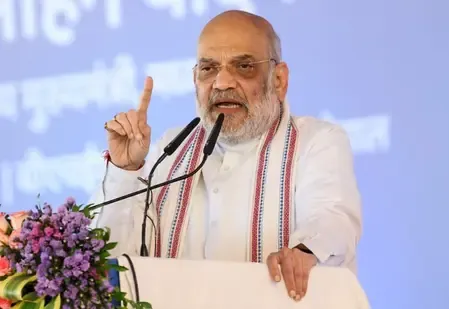
'India has established itself as a global leader in telecom services. However, the time has now come for the next paradigm shift in the telecom industry. We must move from being a services nation to becoming a product nation,' Scindia said at the event.
Invoking Prime Minister Narendra Modi's Aatmanirbhar Bharat vision, Scindia said India had made measurable progress in reducing import dependence and should now target a position where the world relies on India for telecom products and technology. 'The day is not far when the world will depend on India,' he added.
Gwalior TMZ: Scale and Scope
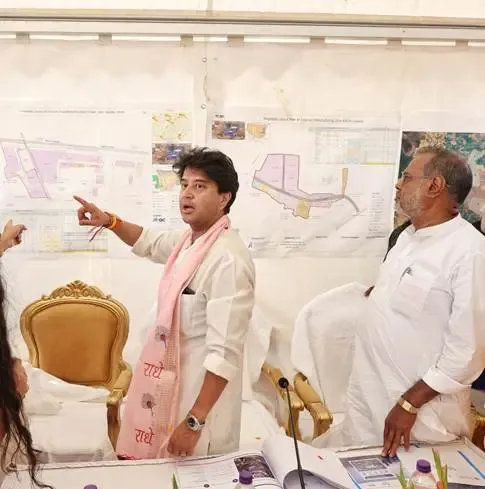
The proposed Telecom Manufacturing Zone will span approximately 170 acres in Gwalior, Madhya Pradesh, accommodating manufacturing of telecom equipment, components, optical fibre, software, and passive infrastructure. The zone will also house research, development, and innovation facilities, positioning Gwalior as an integrated telecom manufacturing hub.
The event also marked the announcement of Phase-II of the TMZ project. Madhya Pradesh Chief Minister Mohan Yadav, who addressed the gathering, confirmed that the state cabinet had approved the 170-acre land allocation, calling it a model of Centre-state cooperation in industrial development.
Investment Commitments and Job Projections
According to official figures, earlier investor outreach programmes held in New Delhi and Mumbai had already secured investment commitments worth ₹5,500 crore, with the potential to generate close to 20,000 jobs. The TMZ was organised jointly by the Department of Telecommunications (DoT) and the Madhya Pradesh government.
Fit Within Broader National Policy
The Gwalior TMZ sits squarely within the Centre's broader push to strengthen domestic telecom supply chains, reduce dependence on imported equipment, encourage indigenous product development, and ramp up exports under the Make in India and Aatmanirbhar Bharat initiatives. This comes amid intensifying global competition in telecom hardware, where China currently dominates supply chains and India has repeatedly set targets to capture a larger share of the global market.
Notably, the initiative aligns with India's accelerating 5G rollout and the government's parallel push to develop indigenous telecom stack technology, including homegrown 4G and 5G core solutions. As Phase-II gets underway, the pace of LoI conversions into operational manufacturing units will be the critical metric to watch.
Point of View
But India has been making versions of this pivot for a decade. The real question is whether the Gwalior TMZ avoids the assembly-screwdriver trap — where 'manufacturing' means importing components and doing final assembly — or catalyses genuine component-level production. The ₹5,500 crore commitment is meaningful, but 25 LoIs at an investor outreach event is not the same as 25 factories with verified output. With China commanding over 40% of global telecom hardware supply, India's window is real, but it demands execution discipline that past industrial zones have not always delivered.
NationPress
19 Nov 2026
Frequently Asked Questions
What is the Telecom Manufacturing Zone (TMZ) in Gwalior?
The Gwalior Telecom Manufacturing Zone is a proposed 170-acre integrated hub in Gwalior, Madhya Pradesh, designed to host manufacturing of telecom equipment, optical fibre, components, software, and passive infrastructure, as well as R&D facilities. It is a joint initiative of the Department of Telecommunications and the Madhya Pradesh government.
How much investment has the Gwalior TMZ attracted so far?
According to official figures, investor outreach programmes in New Delhi and Mumbai secured commitments of ₹5,500 crore, with the potential to create nearly 20,000 jobs. Twenty-five companies received Letters of Intent at the 19 November event in Bhopal.
What did Jyotiraditya Scindia say about India's telecom ambitions?
Scindia called for India to shift from being a global telecom services leader to becoming a telecom products nation on which the world depends. He said the government's role is to build the ecosystem for companies to set up manufacturing and expand operations in India.
What is Phase-II of the Gwalior TMZ?
Phase-II, announced at the Bhopal event, aims to develop Gwalior as an integrated centre for telecom manufacturing. Madhya Pradesh Chief Minister Mohan Yadav confirmed the state cabinet had approved 170 acres of land for the project.
How does the Gwalior TMZ fit into broader national policy?
The TMZ is part of the Centre's efforts to strengthen domestic telecom supply chains, reduce import dependence, develop indigenous products, and boost exports under the Make in India and Aatmanirbhar Bharat initiatives, in line with PM Modi's self-reliance vision.