Karnataka Notifies Textile Policy 4.0 With ₹4,000 Cr Outlay

Synopsis
Karnataka has formally notified its Textile & Apparel Policy 4.0 (2026–31), backed by a ₹4,000 crore outlay. The policy targets ₹20,000 crore in investments and 5 lakh jobs, extends incentives to 34 Focused Taluks, integrates silk reeling for the first time, and offers special benefits for units at the PM-MITRA Park in Kalaburagi.
Key Takeaways
Textile & Apparel Policy 4.0 (2026–31) officially notified by the Karnataka government on 30 September 2026 .
Policy carries a ₹4,000 crore outlay with targets of ₹20,000 crore in investments and 5 lakh new jobs.
34 Focused Taluks designated for additional incentives to promote industrial growth beyond Bengaluru.
Silk reeling and silk spinning included under a Karnataka textile policy's incentive framework for the first time.
Special incentives provided for eligible units at the PM-MITRA Park in Kalaburagi , a central government integrated textile hub.
Policy aligns state incentives with central schemes to boost regional industrial dispersal and global competitiveness.
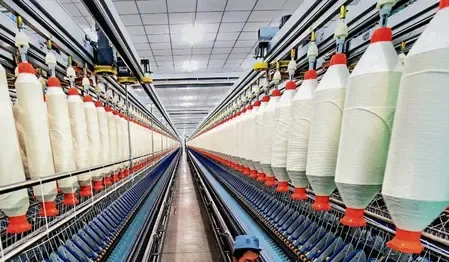
A ₹4,000 crore policy framework, five years of ambition, and a deliberate push to pull Karnataka's industrial gravity away from Bengaluru — the state government made it official on 30 September 2026 when the Chief Minister's Office of Karnataka announced the formal notification of the Textile & Apparel Policy 4.0 (2026–31), setting targets of ₹20,000 crore in new investments and 5 lakh fresh jobs over the next five years.
What Policy 4.0 Actually Promises — and to Whom
The headline numbers are large, but the architecture beneath them is specific. The policy designates 34 Focused Taluks across the state as priority zones, offering additional incentives to manufacturers who set up units outside the Bengaluru metropolitan corridor. The logic is straightforward: concentrate capital where it has not naturally flowed, and the employment multiplier does the rest.
For the first time in Karnataka's textile policy history, silk reeling and silk spinning have been formally brought within the policy's incentive umbrella. That inclusion matters because Karnataka is India's largest raw silk producer — a sector built on small, often informal units that have historically sat outside the structured incentive architecture available to larger mills and apparel exporters. Bringing them in signals an intent to modernise the entire value chain, not just its export-facing tip.
Kalaburagi, PM-MITRA, and the Northern Karnataka Bet
The policy carves out a dedicated incentive tier for eligible units at the PM-MITRA Park in Kalaburagi, the district in northern Karnataka selected as one of the central government's integrated textile manufacturing hubs. The PM-MITRA (Production & Manufacturing Textile Integrated Ready Infrastructure) scheme, announced in the 2021–22 Union Budget, was designed to create plug-and-play industrial ecosystems across seven states — reducing the friction that typically keeps investors anchored to established clusters.
Kalaburagi has historically lagged behind the state's southern districts on industrial output. Pairing a central-government infrastructure scheme with state-level fiscal incentives under Policy 4.0 is a layered bet: if both levers fire together, the park could become a genuine anchor for northern Karnataka's industrial transformation. The watch item now is how quickly the site reaches operational readiness and whether investor commitments translate into ground-level activity.
Karnataka's Textile Ambition in a National Context
State textile policies across India have increasingly been written to dovetail with central schemes — from PM-MITRA to the Production Linked Incentive for man-made fibres. Karnataka's successive iterations of its textile policy reflect that same alignment, while adding a state-specific layer: the persistent effort to disperse industrial activity beyond Bengaluru into northern and coastal districts that carry higher unemployment and lower per-capita industrial output.
Policy 4.0's five-year window runs to 2031. The targets — ₹20,000 crore in investment and 5 lakh jobs — will be tested against global textile trade conditions, domestic input costs, and the pace of infrastructure delivery at sites like Kalaburagi. Karnataka has set the frame; the next chapter belongs to investors, weavers, and the 34 taluks now formally on the industrial map.
Point of View
Traditionally informal workforce into a structured incentive regime, potentially accelerating formalisation of the sector. The five-year timeline and the scale of the targets — ₹20,000 crore and 5 lakh jobs — will serve as a live scorecard for the Siddaramaiah government's industrial credibility heading into the next election cycle. Whether the Kalaburagi PM-MITRA Park delivers on-ground infrastructure fast enough to absorb investor interest will be the single biggest determinant of whether those numbers are met.
NationPress
30 Sept 2026
Frequently Asked Questions
What is Karnataka Textile and Apparel Policy 4.0?
Karnataka Textile and Apparel Policy 4.0 is a state government framework covering 2026 to 2031, notified on 30 September 2026, with a ₹4,000 crore outlay targeting ₹20,000 crore in new investments and 5 lakh jobs in the textile and apparel sector.
What is PM-MITRA Park in Kalaburagi?
PM-MITRA (Production & Manufacturing Textile Integrated Ready Infrastructure) is a central government scheme to build integrated textile hubs with plug-and-play infrastructure. Kalaburagi in northern Karnataka is one of the selected sites, and Policy 4.0 offers special incentives to eligible units there.
Which taluks get extra incentives under Karnataka Textile Policy 4.0?
The policy designates 34 Focused Taluks across Karnataka for additional incentives, specifically to encourage textile investment in districts beyond the Bengaluru metropolitan area.
Is silk reeling covered under Karnataka's new textile policy?
Yes. For the first time, silk reeling and silk spinning have been brought under the Karnataka Textile & Apparel Policy 4.0, extending the incentive framework to these traditionally informal segments of the value chain.
How many jobs does Karnataka's Textile Policy 4.0 aim to create?
The policy targets 5 lakh new jobs in Karnataka's textile and apparel sector over the 2026–31 period, alongside attracting ₹20,000 crore in fresh investments.