Karnataka to push GST revenue share for local bodies at GST Council
Synopsis
Karnataka wants a cut of GST revenues for its local bodies — a proposal that, if accepted by the GST Council, could reshape how gram panchayats and urban wards are funded nationally. With ₹2,001 crore already disbursed and a new committee to act on the Fifth State Finance Commission's recommendations, Chief Minister Shivakumar is making decentralisation a fiscal priority, not just a constitutional talking point.
Key Takeaways
Shivakumar announced on 14 October 2026 that the state will submit a proposal to the GST Council for a GST revenue share for local bodies.
The state has released ₹1,261 crore to gram panchayats, ₹557 crore to taluk panchayats, and ₹183 crore to zilla panchayats under the Fifth State Finance Commission report.
A committee under the Rural Development Minister will review and implement the Fifth State Finance Commission's recommendations on financial devolution.
Urban local bodies will be reformed in line with the 74th Constitutional Amendment , with legal consultations via National Law School of India University .
Concerns raised over KIADB withholding 30% property tax share legally owed to gram panchayats.
The state's 'People's Plan' initiative will channel grassroots demands into the annual budget process.
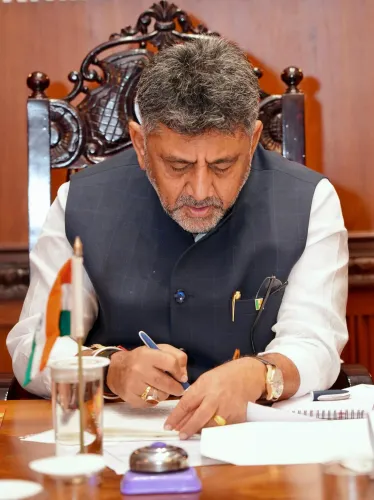
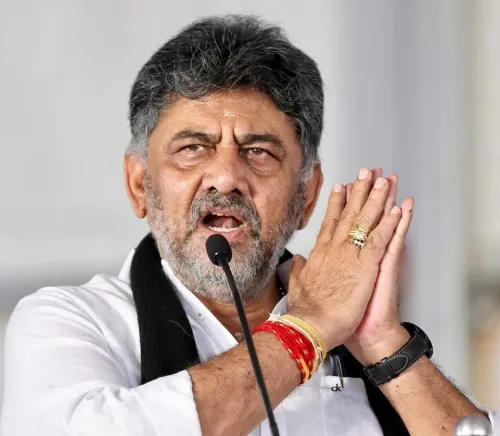
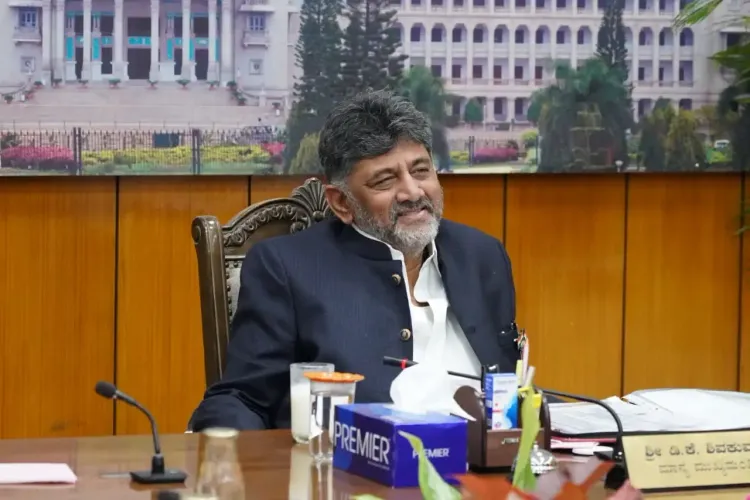
Karnataka Chief Minister D.K. Shivakumar on Wednesday, 14 October 2026, announced that the state government will submit a formal proposal to the GST Council seeking a share of Goods and Services Tax (GST) revenue for rural and urban local bodies. The move is aimed at improving the financial position of grassroots governance institutions and deepening decentralisation across Karnataka.
Key Announcements from the Meeting
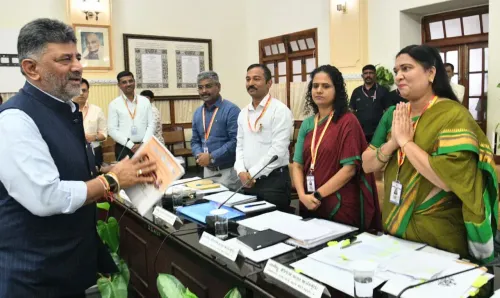
Shivakumar made the announcement after chairing a meeting of the Karnataka State Decentralisation Planning and Development Committee at his official residence, Krishna, in Bengaluru. He also indicated that a proposal would be sought from the minister concerned on establishing a Karnataka Panchayat Administrative Service, a dedicated administrative cadre for panchayat governance.
The government will constitute a committee under the chairmanship of the Rural Development Minister to examine the recommendations of the Fifth State Finance Commission on financial devolution and administrative reforms. The committee will assess implementable recommendations and submit a report.
Funds Released to Panchayats
According to Shivakumar, the state has already disbursed significant funds in line with the Fifth State Finance Commission report. ₹1,261 crore has been released to gram panchayats, ₹557 crore to taluk panchayats, and ₹183 crore to zilla panchayats. These disbursements signal the government's stated commitment to financial empowerment at the grassroots level.
Urban Local Bodies and Constitutional Mandate
The Chief Minister stressed that urban local bodies must function effectively in line with the objectives of the 74th Constitutional Amendment, which mandates devolution of powers to urban governance bodies. The government plans to consult experts from the National Law School of India University on relevant legal amendments. Shivakumar also directed urban local bodies to formulate development plans through ward meetings, mirroring the gram sabha model used in rural areas.
Grassroots Planning and Revenue Concerns
Shivakumar directed officials to expedite the demarcation of village habitation boundaries using data from the SVAMITVA scheme, with the Panchayat Raj and Revenue departments working in coordination. He also expressed concern over a reduction in gram panchayat revenue following the withdrawal of their authority to levy taxes on industries by the Karnataka Industrial Areas Development Board (KIADB). The law provides for 30 per cent of property tax collected by the authority to be shared with gram panchayats, and Shivakumar directed officials to submit a full account of collections and distributions. District, taluk, and village-level planning committees, already constituted, were directed to hold meetings every three months and submit regular reports. The state budget's 'People's Plan' initiative — designed to channel grassroots public demands into state budget planning — was also flagged for expedited implementation, with instructions to the Rural Development and Urban Development departments to issue guidelines and build supporting software.
Whether the GST Council accepts Karnataka's revenue-sharing proposal will determine how meaningfully these ambitions translate into fiscal reality for India's local bodies.
Point of View
Where Centre-state fiscal dynamics have historically left local bodies as an afterthought. The real accountability test lies closer to home: the KIADB's apparent non-compliance with the 30% property tax-sharing mandate is not a proposal to be made — it is a legal obligation to be enforced. If the state cannot secure funds already owed to gram panchayats under existing law, the credibility of its larger fiscal devolution agenda is open to question.
NationPress
14 Oct 2026
Frequently Asked Questions
What is Karnataka's GST revenue sharing proposal for local bodies?
Karnataka plans to submit a formal proposal to the GST Council requesting that a portion of GST revenues be allocated directly to rural and urban local bodies. Chief Minister D.K. Shivakumar announced this on 14 October 2026 after chairing a meeting of the Karnataka State Decentralisation Planning and Development Committee.
How much has Karnataka already released to panchayats under the Fifth State Finance Commission?
The state has disbursed ₹1,261 crore to gram panchayats, ₹557 crore to taluk panchayats, and ₹183 crore to zilla panchayats — a combined ₹2,001 crore — in line with the Fifth State Finance Commission report.
What is the Karnataka Panchayat Administrative Service?
It is a proposed dedicated administrative cadre for panchayat governance in Karnataka. Chief Minister Shivakumar indicated that a proposal would be sought from the minister concerned on establishing the service, though no timeline has been announced yet.
Why are gram panchayats losing revenue linked to KIADB?
The Karnataka Industrial Areas Development Board (KIADB) had the authority to levy taxes on industries in areas under its jurisdiction, but gram panchayats were subsequently stripped of that taxing power. The law mandates that 30% of property tax collected by KIADB be shared with gram panchayats, but CM Shivakumar expressed concern that this is not being fully implemented and directed officials to submit a complete account.
What is Karnataka's 'People's Plan' initiative?
The 'People's Plan' is a state budget initiative designed to incorporate public demands from the grassroots level into the annual state budget. The Rural Development and Urban Development departments have been directed to issue guidelines and develop supporting software to operationalise it.