Kishan Reddy Credits Modi for Ending India's Power Crisis
Synopsis
Union Coal and Mines Minister G. Kishan Reddy declared on 23 May 2026 that PM Modi's government has eliminated India's historic power crisis, contrasting pre-2014 blackouts with current electrification gains under schemes like Saubhagya and UDAY.
Key Takeaways
Kishan Reddy posted in Telugu on 23 May 2026 , crediting PM Narendra Modi with ending India's power crisis.
The minister claimed that since Modi took office, India has become a 'New India' with no electricity shortages anywhere in the country.
The Saubhagya Yojana (2017) extended electricity connections to unelectrified households as part of the government's last-mile connectivity push.
The UDAY scheme (2015) was introduced to reform financially stressed power distribution companies, a structural barrier to consistent supply.
The 24x7 Power for All initiative, launched in 2014 , set the framework for reliable electricity across all Indian states.
Independent data on peak-demand shortfalls and regional disruptions adds complexity to the claim of complete nationwide elimination of power shortages.
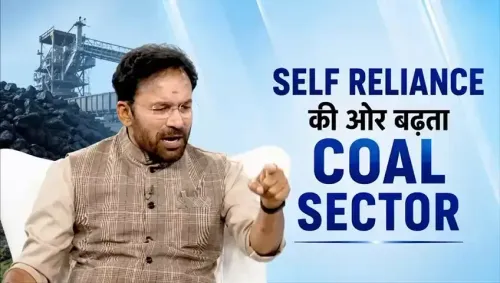
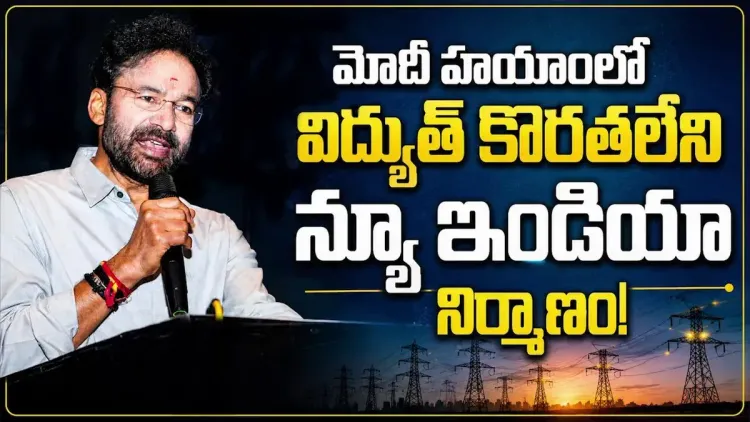
Union Coal and Mines Minister G. Kishan Reddy on Saturday, 23 May 2026, credited Prime Minister Narendra Modi with transforming India from a power-deficit nation into one where electricity shortages are no longer a defining challenge, asserting that the current government has built a 'New India' free of the power crises that once plagued the country.
Posting in Telugu on X, the minister wrote: 'ఒకప్పుడు దేశంలో విద్యుత్ కొరత ఉండేది' ('There used to be a power shortage in the country'), adding that after Modi came to power, the government overcame the power crisis and built a New India where electricity shortages exist nowhere in the country.
Context
The post arrives as the ruling Bharatiya Janata Party (BJP) continues to highlight infrastructure achievements ahead of state-level political cycles. Kishan Reddy, who also serves as BJP's Telangana state president, frequently uses social media to contrast pre-2014 governance with the current administration's record, particularly on energy and infrastructure.
His remarks specifically invoke a period before 2014 when rolling blackouts and load-shedding were common across multiple Indian states, a reality that shaped public perception of governance quality for years.
Policy Backdrop
Since 2014, the central government has pursued a multi-pronged approach to address historic power deficits. The 24x7 Power for All initiative, announced in 2014, set out to ensure reliable electricity supply across all states through coordinated capacity addition and grid strengthening.
The Pradhan Mantri Sahaj Bijli Har Ghar Yojana, or Saubhagya Yojana, launched in 2017, extended electricity connections to previously unelectrified households across rural and urban areas. Alongside this, the Ujwal DISCOM Assurance Yojana (UDAY), introduced in 2015, targeted the financial and operational turnaround of power distribution companies that had long been a structural weak point in the supply chain.
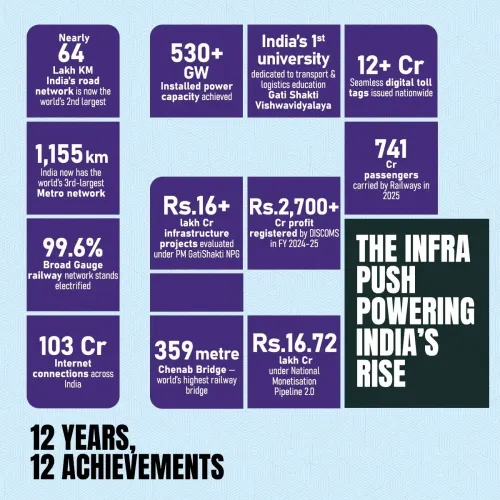
The government also pursued large-scale addition of generation capacity across thermal, hydro, and renewable sources, updating the National Electricity Policy framework to accelerate these targets.
Stakeholders and Impact
Rural households represent the most visible beneficiaries of last-mile electrification drives, with millions of homes receiving first-time electricity connections under Saubhagya and predecessor schemes. Power distribution companies (DISCOMs) have been central to the reform story, as their financial instability had historically prevented consistent supply even where generation capacity existed.
Opposition parties and independent analysts have at times noted that peak-demand shortfalls and regional, seasonal disruptions have continued to surface in specific states even as aggregate installed capacity has grown significantly — a nuance the minister's post does not address.
What's Next
The Central Electricity Authority publishes monthly data on peak demand versus supply, and any gaps in these reports will test the political narrative around complete elimination of power shortages. With Telangana remaining a key political battleground for the BJP, energy governance is expected to remain a prominent campaign theme in the state. Upcoming state-level power purchase agreements and renewable energy integration targets from the Ministry of Power will provide the next set of benchmarks against which such claims are measured.
Point of View
Using infrastructure milestones to draw a sharp contrast with the preceding era. The invocation of New India as a power-surplus state is particularly pointed in Telangana, where the party is working to consolidate its presence against a Congress state government. While the broad arc of capacity addition and rural electrification since 2014 is well-documented, the claim of zero shortages anywhere is stronger than what operational data consistently supports, leaving it open to challenge from opposition parties and energy sector analysts. The timing and language suggest this is as much a mobilisation message for Telangana voters as it is a national policy statement.
NationPress
17 Sept 2026
Frequently Asked Questions
What did G. Kishan Reddy say about India's power situation?
G. Kishan Reddy stated on 23 May 2026 that while India once faced severe electricity shortages, PM Modi's government has overcome the power crisis and built a New India where electricity shortages no longer exist anywhere in the country.
What is the Saubhagya Yojana?
Saubhagya Yojana, formally the Pradhan Mantri Sahaj Bijli Har Ghar Yojana, was launched in 2017 to provide electricity connections to all unelectrified households across rural and urban India.
What was the UDAY scheme and what did it aim to do?
The Ujwal DISCOM Assurance Yojana (UDAY), introduced in 2015, was designed to improve the financial and operational health of power distribution companies, which had long been a weak link in ensuring consistent electricity supply.
Has India completely eliminated power shortages since 2014?
The central government's schemes have significantly expanded electricity access and generation capacity since 2014, but independent assessments have noted that regional and seasonal peak-demand shortfalls have continued to occur in parts of the country.
Why is Kishan Reddy talking about power sector achievements?
As BJP's Telangana state president, Kishan Reddy regularly highlights central government achievements on infrastructure to build the party's political profile in Telangana, where energy governance is a key voter concern.