Maharashtra halts dam water for irrigation amid El Niño threat, reserves stocks till August 31
Synopsis
With Maharashtra's reservoirs at just 25% capacity and El Niño casting doubt over the monsoon, the state has taken the drastic step of cutting off dam water for agriculture entirely — protecting drinking supplies for millions, including 8.5 million in the Pune-Pimpri-Chinchwad belt, through 31 August. District-level action plans and joint enforcement squads signal this is not a routine advisory.
Key Takeaways
Maharashtra Water Resources Minister Radhakrishna Vikhe Patil ordered an immediate halt to dam water release for agricultural irrigation on Sunday night .
Total usable reservoir stock stands at just 357.5 TMC — 25 per cent of total capacity, significantly below last year's levels.
Drinking water has been reserved for all citizens until 31 August , with a dedicated quota for approximately 8.5 million residents in Pune and Pimpri-Chinchwad .
Nashik division is at 26 per cent and Marathwada at 28 per cent usable capacity; both have recorded severely deficient rainfall.
Joint squads from the Revenue , Police , and Water Resources departments will conduct raids against illegal water extraction and submit weekly reports to the ministry.
District-level independent action plans will be formulated to manage water supplies through the monsoon uncertainty.
Maharashtra Water Resources Minister Radhakrishna Vikhe Patil on Sunday night ordered an immediate halt to the release of dam water for agricultural irrigation across the state, directing that all available reservoir stocks be strictly reserved for drinking purposes until 31 August. The directive, issued in response to critically low reservoir levels and an uncertain monsoon outlook driven by the El Niño effect, marks one of the most sweeping water-rationing orders in recent memory for Maharashtra.
Current Reservoir Levels
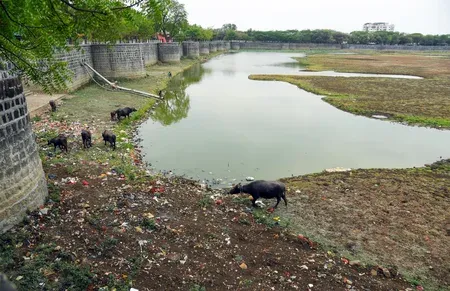
Total usable water stock across Maharashtra's reservoirs currently stands at just 357.5 TMC (Thousand Million Cubic feet), representing a mere 25 per cent of total capacity — significantly below levels recorded during the same period last year, according to the government. The shortfall is attributed to highly deficient seasonal rainfall, which has meant that expected inflows into reservoirs have not materialised.
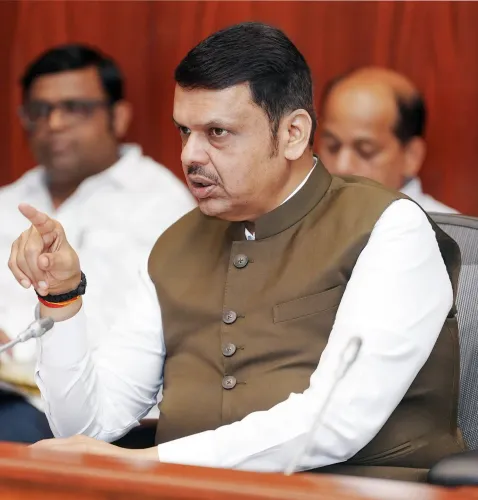
'Due to highly deficient rainfall so far this season, the expected inflows into our reservoirs have not occurred,' Minister Vikhe Patil stated. 'Given the absolute uncertainty of the monsoon, our immediate and highest priority must be securing drinking water for our citizens,' he added.
Pune, Nashik, and Marathwada: Regional Breakdown
The water scarcity situation is particularly acute in the Pune division, where live storage has plummeted sharply compared to last year. The Water Resources Department has been ordered to reserve an uninterrupted drinking water quota to sustain approximately 8.5 million residents across the Pune and Pimpri-Chinchwad metropolitan areas through 31 August.
The Nashik division is currently at 26 per cent usable water capacity, while the Marathwada division holds 28 per cent. Both regions, alongside Ahilyanagar (formerly Ahmednagar), have recorded severely deficient rainfall this season. A comprehensive review of all dams and major water bodies under the Marathwada and Krishna Valley corporations is planned to establish precise drinking water quotas based on local population requirements.
Enforcement Against Illegal Water Extraction
Recognising that scarcity conditions typically trigger a surge in unauthorised water siphoning, the state has authorised a strict enforcement campaign. Joint squads comprising officials from the Revenue Department, Police Department, and Water Resources Department will conduct regular patrols and surprise raids along canals, dams, rivers, and lakes. These task forces have been empowered to immediately confiscate illegal motor pumps, pipelines, and siphoning equipment.
The joint teams are also required to submit detailed weekly action reports on enforcement activities directly to the ministry. This comes amid concerns that without active monitoring, water reserves already under strain could be further depleted through illegal extraction.
District-Level Action Plans and What Comes Next
To address the unpredictability of the monsoon, the state government has committed to decentralised planning. 'A separate, independent action plan will be formulated for every single district,' Minister Vikhe Patil announced. These plans will focus on securing urban and rural drinking water supplies, implementing drought-mitigation measures, protecting natural water sources, and running public awareness campaigns on judicious water use.
'Every drop must be accounted for. Local administrations, municipal corporations, and water supply bodies must work in total coordination to manage our reserves until substantial fresh inflows finally arrive in our reservoirs,' the minister noted. With the monsoon outlook remaining uncertain, the state's ability to enforce these directives and replenish its reservoirs before the deadline will be closely watched.
Point of View
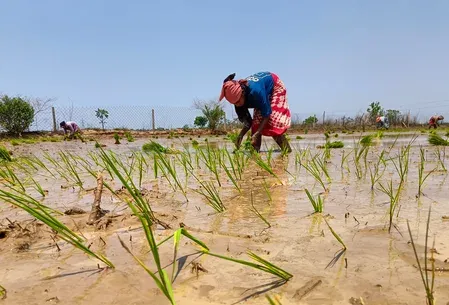
And a blanket irrigation ban, however necessary, will have cascading consequences for kharif sowing that the government has not yet addressed publicly. The enforcement mechanism — joint squads with confiscation powers — is the right instinct, but past crackdowns on illegal water extraction in Marathwada have struggled with local political resistance. The real test of this order is not its announcement but its implementation in the next six weeks, before the monsoon either rescues or deepens the crisis.
NationPress
23 Sept 2026
Frequently Asked Questions
Why has Maharashtra stopped releasing dam water for irrigation?
Maharashtra halted dam water release for irrigation because reservoir levels have fallen to just 25 per cent of total capacity due to highly deficient rainfall, worsened by the El Niño effect. The state has prioritised reserving all available stocks for drinking water until 31 August.
Which areas are most affected by the water crisis in Maharashtra?
The Pune division, Nashik division (at 26% capacity), and Marathwada division (at 28% capacity) are among the most affected, along with Ahilyanagar. The Pune and Pimpri-Chinchwad metropolitan areas, home to around 8.5 million people, have been given a protected drinking water quota.
How long will the irrigation ban last?
The ban on releasing dam water for agricultural irrigation is in effect until 31 August, by which time the government expects substantial monsoon inflows to replenish reservoirs. The situation will be reviewed based on rainfall and storage levels.
What action is Maharashtra taking against illegal water extraction?
The state has deployed joint enforcement squads comprising Revenue, Police, and Water Resources Department officials to conduct patrols and surprise raids. These teams have powers to confiscate illegal motor pumps, pipelines, and siphoning equipment, and must submit weekly action reports to the ministry.
What is El Niño and how does it affect Maharashtra's water supply?
El Niño is a climate pattern characterised by warming of Pacific Ocean surface temperatures that typically suppresses monsoon rainfall over the Indian subcontinent. For Maharashtra, this has meant significantly lower-than-expected inflows into the Krishna and Godavari river basin reservoirs, driving the current water crisis.