Mamata Banerjee: The Unpredictable Political Force of West Bengal
Synopsis
Mamata Banerjee's political journey is marked by resilience and unpredictability. Her evolution from a Congress defector to the formidable leader of Trinamool Congress has reshaped West Bengal's political landscape. As elections approach, her past strategies and alliances continue to influence the state's future.
Key Takeaways
Mamata Banerjee has a history of resilience in West Bengal politics.
Her Trinamool Congress emerged as a strong opposition against the Left Front.
She has adapted her strategies over time, including distancing from the BJP.
Upcoming elections will be crucial for her political future.
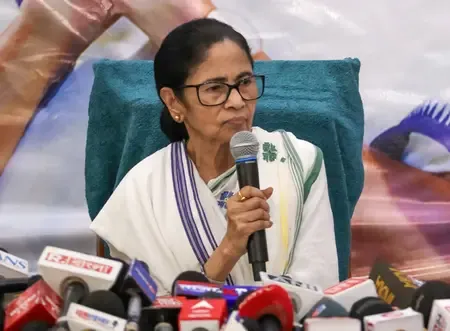
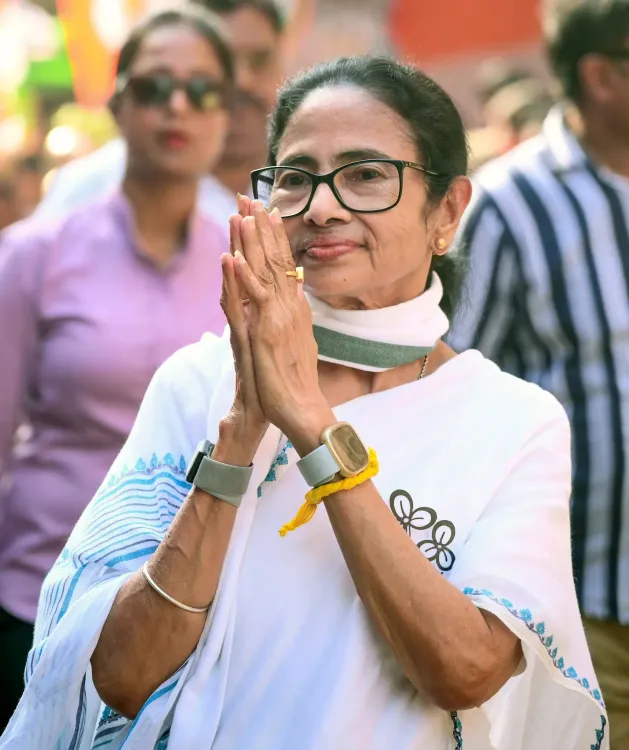
Mamata’s public image blends strength and vulnerability.
New Delhi, April 14 (NationPress) As the 2006 West Bengal Assembly elections approached, it seemed that Mamata Banerjee was poised to take control from the communists in the state, albeit without a substantial majority. However, she fell short. The voter turnout reached an impressive 84.52 percent in 2006, marking the highest in the state’s history, and the Left Front solidified its position by securing 233 out of 294 Assembly seats.
Mamata’s party, the Trinamool Congress, suffered a significant setback, losing half of the 60 seats they had previously gained in 2001. Nevertheless, she refused to back down, leveraging the Left Front government's ambitious industrialization initiatives in Singur and Nandigram as part of her strategy.
At the same time, she began distancing herself from the Bharatiya Janata Party (BJP) and rekindled ties with the Congress, the party she had originally left to establish the Trinamool Congress. In 1998, frustrated by Congress's ineffectiveness against the Left, she founded the Trinamool Congress, which became a pivotal force in mobilizing public protests and gradually weakening the Left's stronghold.
In 2011, she emerged as the adversary to the then-communist leader Buddhadeb Bhattacharjee, who was seen as a reformist figure in the state. Her protests centered around the use of agricultural land for industrial purposes, striking an emotional chord with a predominantly agrarian populace.
The upcoming 2026 elections raise questions: will they mirror the 2006 referendum or the 2011 results? The answer remains elusive until the mandate is revealed on May 4.
Mamata's focused campaign during 2006-2007 is credited with deterring larger industries from investing in West Bengal, although some small and medium enterprises did emerge. Despite this, the new Chief Minister remained undeterred, actively engaging in business summits and pursuing investment opportunities.
Furthermore, Mamata has transformed into a significant benefactor of sports and cultural events, allocating government funds for various “beneficial schemes” in health, women’s welfare, and minority communities, thereby enhancing her support base.
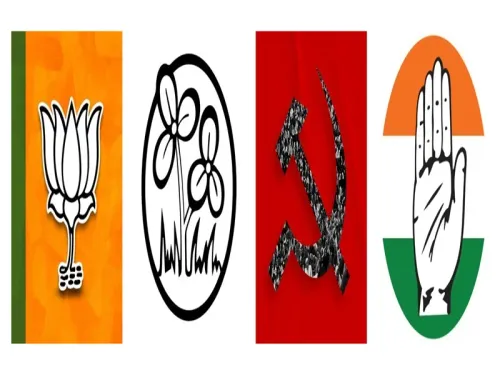
The first major setback for the Trinamool government came with the results of the 2019 Lok Sabha elections, where the BJP gained substantial ground by winning 18 out of the state’s 42 parliamentary seats—an increase of 16. The BJP also saw its vote share nearly double to approximately 41 percent compared to Trinamool’s roughly 44 percent that year.
In the 2021 Assembly elections, the BJP emerged as the main opposition, clinching 77 of the 294 seats, while both the Left and Congress found themselves without representation in the Vidhan Sabha. The BJP garnered around 38 percent of the vote share, while the Trinamool received 48 percent.
In the subsequent 2024 Lok Sabha elections, the BJP managed to secure 12 seats and 39 percent of the vote, while the Trinamool obtained 29 seats and 46 percent of the vote. For the BJP, the division of minority votes in the 2026 Assembly elections will be crucial, alongside issues such as corruption allegations against the ruling party and the overall law and order situation.
Yet, Mamata remains a shrewd political figure—strong yet vulnerable, a leader whom her followers trust and regard as caring. She continues to be an unpredictable enigma to many, having navigated alliances with both the BJP and the Congress throughout her political journey.
Recently, she has opted to run solo in elections without forming alliances, a strategy that has yielded positive outcomes thus far. She has consistently defied expectations, reinventing herself and solidifying her status as the most influential leader in West Bengal.
Her political journey began in the 1970s when she famously leaped onto Jayaprakash Narayan's car during his visit to Calcutta amidst the anti-Emergency movement. This act of defiance epitomized her political style, which has since become her trademark. She has faced challenges head-on, campaigning even with injuries, as evidenced by her recent appearances in a foot cast.
Point of View
She has continually adapted her approach, establishing herself as a central figure in West Bengal politics. Her ability to navigate complex political landscapes has made her a formidable opponent, and her future strategies will be pivotal in upcoming elections.
NationPress
20 Sept 2026
Frequently Asked Questions
What was Mamata Banerjee's role in the 2006 elections?
In the 2006 West Bengal Assembly elections, Mamata Banerjee aimed to challenge the communist stronghold but ultimately fell short, with her party losing half of its previous seats.
How did Mamata Banerjee impact West Bengal's political landscape?
Mamata transformed from a Congress member to a key player in opposition against the Left Front, founding the Trinamool Congress and mobilizing significant public support.
What challenges did Mamata face in her political career?
Throughout her career, Mamata has faced setbacks such as losing seats in elections and opposition from powerful rivals, yet she continues to adapt and thrive.
What strategies has Mamata employed to gain support?
Mamata has focused on grassroots mobilization, beneficial schemes for health and minorities, and sports patronage to strengthen her support base.
What are the implications of the 2026 elections for Mamata Banerjee?
The 2026 elections will test Mamata’s strategies and alliances, particularly in light of increased competition from the BJP and other parties.