Nadda Hails DNB, FNB as Symbols of Medical Excellence
Synopsis
Union Health Minister J. P. Nadda on 23 May 2026 publicly commended doctors pursuing DNB and FNB qualifications, calling them symbols of excellence and affirming NBEMS as a credible brand in Indian healthcare — signalling continued government backing for the board-based postgraduate medical training route.
Key Takeaways
Nadda , Union Health Minister, publicly praised DNB and FNB qualifications on 23 May 2026 , calling them 'symbols of quality, skill, trust, and excellence.' NBEMS (National Board of Examinations in Medical Sciences) was described by Nadda as having built a 'strong brand' representing professional competence and credibility in healthcare.
The DNB is a three-year postgraduate qualification equivalent to MD/MS ; the FNB is a two-year super-specialty qualification, both regulated under NMC norms.
NBEMS was established in 1975 and operates as an autonomous body under the Ministry of Health and Family Welfare .
India uses the NBEMS route alongside university programmes to address specialist shortages, especially through private hospital training centres.
Policy watchers expect possible updates to NMC equivalence guidelines and expansion of accredited NBEMS institutions in the near term.
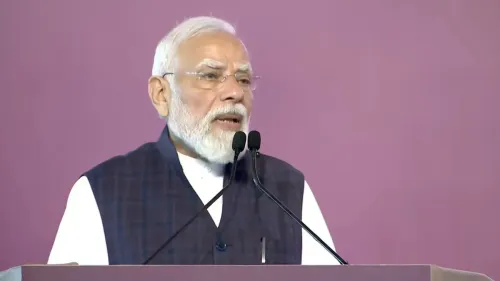
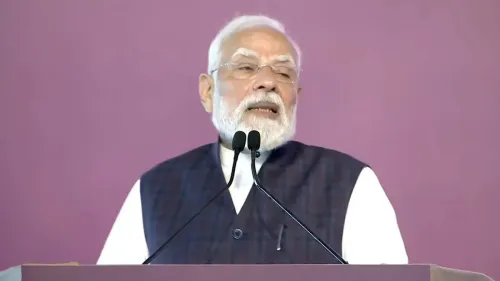
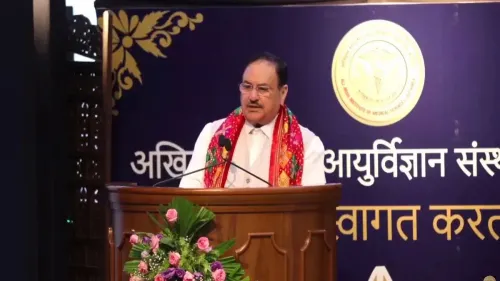
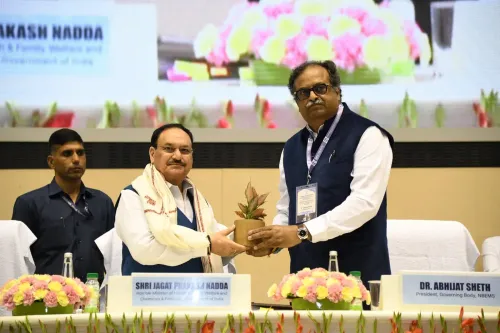
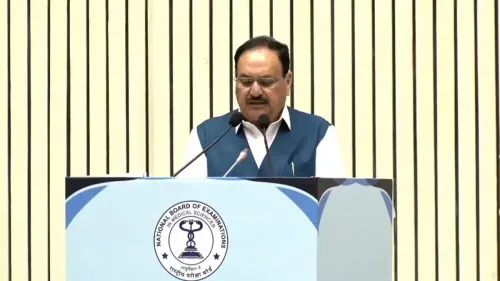
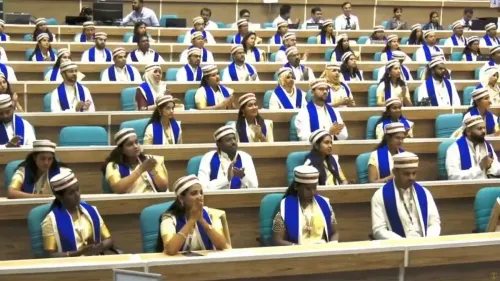
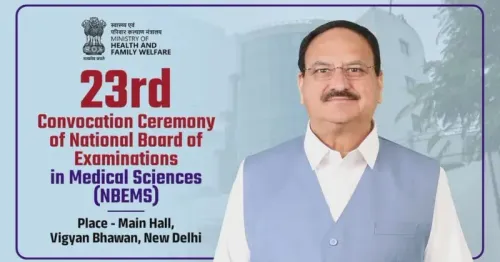
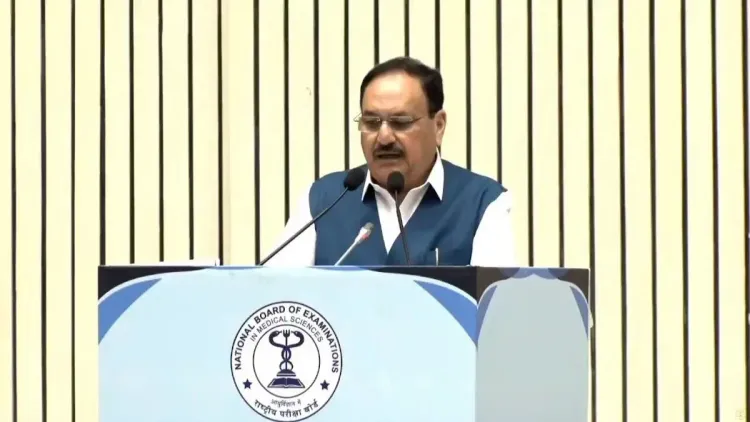
Union Health Minister J. P. Nadda on Saturday, 23 May 2026 lauded doctors pursuing the Doctor of National Board (DNB) and Fellow of National Board (FNB) courses, describing these qualifications as 'symbols of quality, skill, trust, and excellence' and affirming the credibility of the National Board of Examinations in Medical Sciences (NBEMS) as a pillar of professional competence in Indian healthcare.
Context
In his post, Nadda addressed doctors enrolled in NBEMS-administered courses, stating: 'I am pleased to note that you are pursuing Doctor of the National Board and Fellow of the National Board courses. These qualifications are symbols of quality, skill, trust, and excellence.' He further noted that NBEMS has 'built a strong brand that represents professional competence, understanding, and credibility in healthcare.' The statement comes as India continues to grapple with a significant shortage of specialist doctors, making postgraduate medical training capacity a pressing national priority.
Policy Backdrop
The National Board of Examinations was established in 1975 by the Government of India to conduct high-standard postgraduate medical examinations outside the traditional university system. The DNB is a three-year postgraduate qualification formally recognised as equivalent to the conventional MD/MS degrees, while the FNB is a two-year super-specialty qualification offered in select disciplines. Both qualifications are governed under National Medical Commission (NMC) regulations, which have progressively aligned NBEMS standards with those of university-based medical programmes.
India has strategically expanded postgraduate medical training through NBEMS alongside the university route as a policy lever to address specialist shortages, particularly in underserved regions and private hospital settings. The emphasis on standardised exit examinations and competency-based assessment underpins this approach, reducing dependence on government medical colleges as the sole pathway for specialist training.
Stakeholders and Impact
The primary beneficiaries of the DNB and FNB ecosystem are postgraduate doctors training in accredited private and public hospitals, medical educators, and ultimately patients who gain access to a wider pool of qualified specialists. Private hospitals, which serve as the backbone of NBEMS-accredited training centres, also have a direct stake in the programme's credibility and expansion. Nadda's public endorsement reinforces the government's confidence in the NBEMS brand at a time when questions of equivalence and institutional recognition remain live concerns for many DNB and FNB graduates navigating state-level recruitment processes.
For the broader healthcare workforce, recognition at the highest political level signals continued policy support for NBEMS-administered routes, potentially encouraging more candidates to opt for these qualifications and prompting states to align their recruitment norms accordingly.
What's Next
Observers will watch for any follow-up policy action, including possible updates to NMC guidelines on the equivalence of DNB and FNB seats with university postgraduate seats, and announcements on expanding the number of accredited institutions. Nadda's statement, while ceremonial in tone, may also precede formal government communications on increasing NBEMS training capacity as part of India's wider push to scale up its specialist healthcare workforce ahead of the next cycle of medical education reforms.
Point of View
The Health Minister reinforces a long-standing policy preference for standardised, competency-based assessment over the traditional university model. This matters because DNB graduates have historically faced uneven recognition in state government recruitment, and a high-profile endorsement could accelerate harmonisation of hiring norms. The statement fits a broader arc in which the NMC era has sought to standardise medical education outcomes, and any follow-up policy action on equivalence or seat expansion would be a concrete test of that intent.
NationPress
7 Oct 2026
Frequently Asked Questions
What is the Doctor of National Board (DNB) qualification in India?
The DNB is a three-year postgraduate medical qualification awarded by NBEMS and recognised as equivalent to the MD/MS degrees conferred by universities under National Medical Commission regulations. It is offered across accredited private and public hospitals in India.
What is the Fellow of National Board (FNB) course?
The FNB is a two-year super-specialty qualification administered by NBEMS in select disciplines, designed for doctors who have already completed a postgraduate degree and wish to pursue advanced specialisation.
What is NBEMS and who controls it?
NBEMS (National Board of Examinations in Medical Sciences) is an autonomous body under the Ministry of Health and Family Welfare , established in 1975 to conduct standardised postgraduate medical examinations in India.
Is DNB equivalent to MD or MS in India?
Yes. The DNB is formally recognised as equivalent to MD/MS under NMC regulations, though state-level recruitment equivalence has historically varied and remains an area of ongoing policy attention.
Why did J. P. Nadda praise DNB and FNB courses?
J. P. Nadda , as Union Health Minister, addressed doctors pursuing DNB and FNB programmes on 23 May 2026 , affirming government support for NBEMS qualifications as credible, high-quality pathways for specialist medical training in India.