Health Minister Nadda hails NBEMS launch of 11 new courses
Synopsis
Union Health Minister J. P. Nadda on May 23, 2026, praised NBEMS for launching 11 new medical courses and the One Nation One Subscription initiative, aimed at strengthening specialist care and expanding research access across affiliated medical colleges in India.
Key Takeaways
NBEMS launched 11 new postgraduate and postdoctoral medical courses on May 23, 2026 .
The One Nation One Subscription (ONOS) initiative was introduced to provide unified access to scientific journals for NBEMS-affiliated medical colleges.
Union Health Minister J.
Nadda publicly congratulated NBEMS and described the step as 'welcome' and beneficial to society.
The rollout will be implemented across medical colleges already running NBEMS courses , using an existing institutional base.
The initiative aligns with the National Medical Commission Act of 2019 framework for competency-based postgraduate medical education.
Medical students, specialist trainees, and faculty — particularly outside major cities — are the primary beneficiaries of both measures.
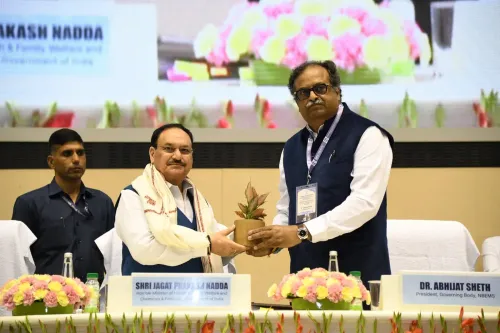
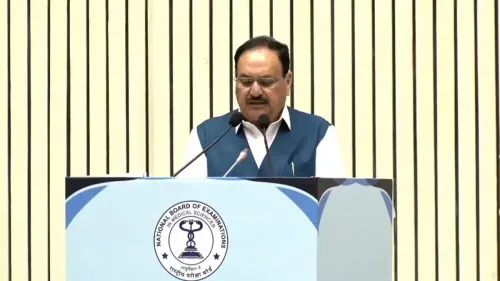
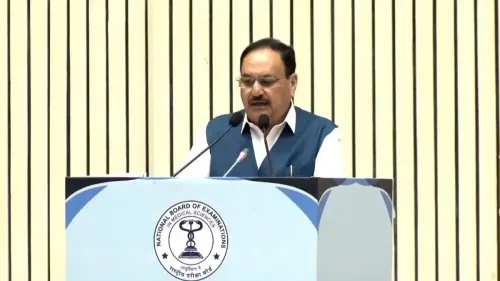
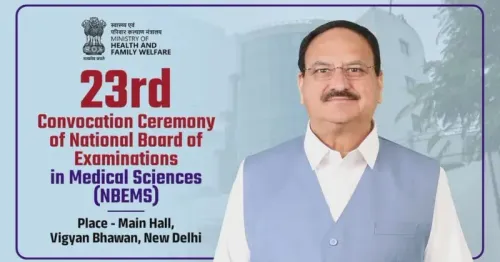
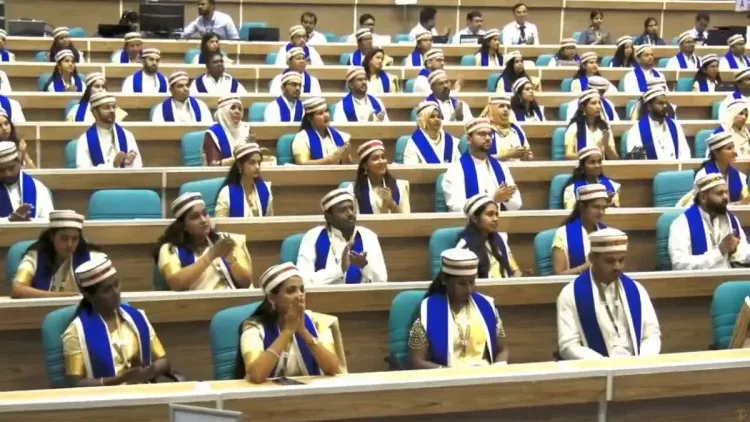
Union Health Minister J. P. Nadda on Saturday, May 23, 2026, congratulated the National Board of Examinations in Medical Sciences (NBEMS) after the autonomous body launched 11 new postgraduate and postdoctoral medical courses, a move the minister said would 'significantly strengthen patient care and benefit society at large.' The announcement also introduced One Nation One Subscription (ONOS), a unified national access initiative for scientific journals and research databases, to be rolled out across medical colleges running NBEMS-affiliated programmes.
Context
NBEMS, an autonomous body under the Ministry of Health and Family Welfare, is responsible for standardising postgraduate medical examinations and training across India. The organisation was originally established in 1975 to expand specialist medical education beyond conventional university frameworks and has since evolved into the primary national body for postgraduate medical credentialling.
Nadda described the dual initiative — the new courses and ONOS — as a 'unique' and 'welcome step,' signalling ministerial backing for swift implementation. The courses are intended for medical colleges already running NBEMS-affiliated programmes, making the rollout administratively targeted rather than requiring fresh institutional empanelment.
Policy Backdrop
The launch builds on the framework established by the National Medical Commission Act of 2019, which replaced the erstwhile Medical Council of India and placed competency-based medical education at the centre of postgraduate training reform. That legislative shift created space for bodies like NBEMS to design new speciality tracks aligned with evolving clinical needs.
ONOS has its origins in cabinet-level deliberations on bridging India's research-access gap. The initiative mirrors the logic of centralised subscription models used in publicly funded academic systems globally, allowing institutions — particularly those outside metro centres — to access peer-reviewed international journals without bearing individual subscription costs. For medical colleges, this translates into faculty and students gaining access to the latest clinical evidence and treatment protocols.
Stakeholders and Impact
The primary beneficiaries are medical postgraduates, specialist trainees, and faculty at NBEMS-affiliated colleges across the country. India has faced a persistent shortfall in specialist doctors relative to its population, and expanding postgraduate seats and course diversity is a recognised lever for addressing that gap over the medium term.
For medical colleges, ONOS reduces a significant recurring cost burden while improving the research environment. Healthcare professionals in smaller cities and towns, who often lack institutional access to premium journals, stand to gain the most from a national subscription umbrella. The phased rollout model Nadda referenced suggests the ministry intends to monitor integration before a broader expansion.
What's Next
Formal notifications from the Health Ministry and NBEMS are expected to detail the specific disciplines covered by the 11 new courses, eligibility norms, and the timeline for ONOS integration into the college ecosystem. Accredited colleges will likely receive implementation guidelines ahead of the next academic intake cycle.
The twin announcements position NBEMS as an active instrument of India's specialist-care scale-up agenda. Whether the rollout meets the minister's stated ambition of broad societal benefit will depend on the speed and uniformity of implementation across government and private medical institutions alike.
Point of View
Even as the broader National Medical Commission reform framework beds in. Pairing course expansion with ONOS is strategically significant: it addresses both the supply of trained specialists and the quality of their evidence base simultaneously. For J. P. Nadda, publicly endorsing the move reinforces his ministry's reform credentials ahead of what will likely be a closely watched implementation cycle. The real test lies in whether accreditation pipelines and faculty capacity at smaller colleges can absorb the new courses without diluting standards.
NationPress
7 Oct 2026
Frequently Asked Questions
What are the 11 new courses launched by NBEMS?
NBEMS launched 11 new postgraduate and postdoctoral medical courses on May 23, 2026, intended to expand specialist training capacity across affiliated medical colleges. The specific disciplines covered by these courses are expected to be detailed in formal notifications from NBEMS and the Health Ministry.
What is One Nation One Subscription (ONOS) for medical colleges?
One Nation One Subscription (ONOS) is a government initiative that provides unified national access to scientific journals and research databases for medical colleges running NBEMS-affiliated programmes, removing the need for individual institutional subscriptions.
Who is NBEMS and what does it do?
NBEMS, the National Board of Examinations in Medical Sciences, is an autonomous body under India's Ministry of Health and Family Welfare. Established in 1975, it standardises and conducts postgraduate and postdoctoral medical examinations and sets training standards across the country.
Which medical colleges will benefit from the NBEMS new courses and ONOS?
Medical colleges already running NBEMS-affiliated courses are the primary beneficiaries. The rollout is targeted at this existing base before any broader expansion, according to Health Minister J. P. Nadda's statement.
What did JP Nadda say about the NBEMS course launch?
J. P. Nadda congratulated NBEMS and called the initiative a 'welcome step,' stating that the 11 new courses would 'significantly strengthen patient care and benefit society at large,' and that ONOS would be implemented across NBEMS-affiliated medical colleges.