Nadda credits Modi for India's new 'pro-incumbency' political culture
Synopsis
BJP national president J. P. Nadda says the last decade has seen 'pro-incumbency' replace anti-incumbency as the defining trend in Indian politics, crediting PM Narendra Modi with a new political culture that has empowered common citizens and delivered repeated electoral mandates for the BJP.
Key Takeaways
Nadda posted on 24 June 2026 citing the rise of 'pro-incumbency' as a new concept in Indian politics over the last 10 years .
He credited Prime Minister Narendra Modi with developing a political culture that empowers ordinary citizens.
The BJP secured consecutive central-government terms in 2014 and 2019 , bucking India's historic anti-incumbency pattern.
State governments in Gujarat and Uttar Pradesh also won back-to-back terms between 2014 and 2022 .
Analysts link the shift to direct-benefit transfers, welfare expansion, and visible infrastructure delivery under BJP -led administrations.
The framing is expected to shape BJP campaign messaging ahead of state polls through 2027 and the 2029 Lok Sabha elections.
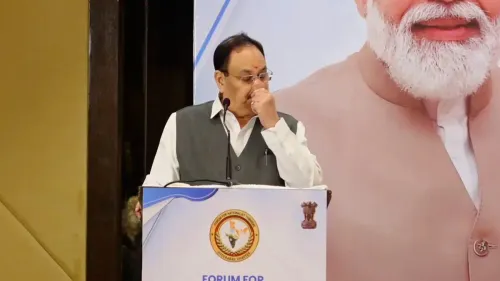
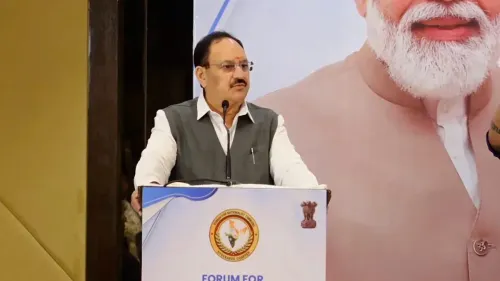
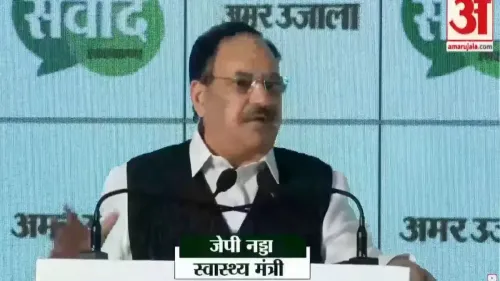
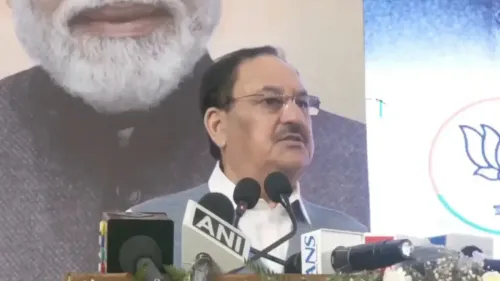
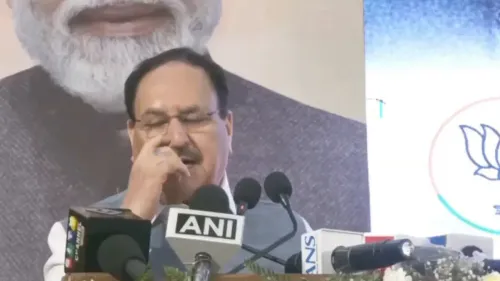
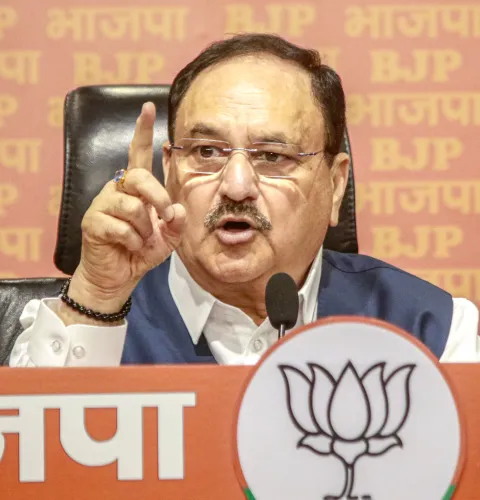
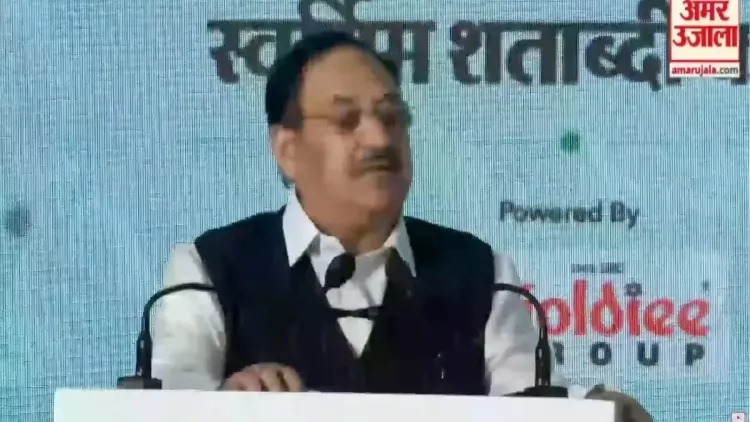
Union Health Minister and BJP national president J. P. Nadda on Wednesday, 24 June 2026, said that a new word — 'pro-incumbency' — has emerged in Indian politics over the last decade, crediting Prime Minister Narendra Modi with developing a political culture that has empowered ordinary citizens and reversed the long-standing trend of governments being voted out after a single term.
Context
Posting in Hindi on X, Nadda wrote: 'पिछले 10 वर्षों में भारतीय राजनीति में एक नया शब्द उभरा है, 'प्रो-इन्कम्बेंसी'' — 'In the last 10 years, a new word has emerged in Indian politics: pro-incumbency.' He argued that while political narratives were earlier built solely around 'anti-incumbency,' the public has now demonstrated confidence in returning governments to power for a second and even a third time.
Nadda directly attributed this shift to Prime Minister Modi, stating that he had developed a new political culture that has 'सामान्य नागरिक को सशक्त बनाया' — 'empowered the common citizen.'
Policy Backdrop
Indian electoral history has long been marked by strong anti-incumbency waves that routinely swept out sitting governments after one term. That pattern began to shift after 2014, when the BJP-led government first came to power under Modi, ending nearly three decades without a single-party majority at the centre.
The BJP was re-elected at the centre in 2019 with an expanded majority. Several state governments backed by the party, including those in Gujarat and Uttar Pradesh, also secured consecutive terms during the period between 2014 and 2022. Analysts have noted that expanded welfare delivery, direct-benefit transfers, and large-scale infrastructure investment created tangible stakes for voters, contributing to repeated mandates.
Stakeholders and Impact
Nadda's remarks are directed at the broadest possible constituency: Indian voters and common citizens who, he argues, are the authors of this political realignment. By framing the shift as a bottom-up change driven by public trust rather than a top-down political strategy, the statement positions the BJP's electoral record as a validation of governance quality rather than electoral management.
The post, which accompanies a video, is likely to be amplified across BJP platforms as the party looks ahead to a series of state assembly elections scheduled through 2027 and the next Lok Sabha polls due in 2029.
What's Next
With several state elections on the horizon, the 'pro-incumbency' framing is expected to become a recurring theme in BJP's campaign messaging. The party will seek to consolidate the narrative that voters are rewarding delivery-focused governance with repeat mandates, a contrast it will sharply draw against opposition arguments of anti-incumbency fatigue. Results from upcoming state polls will serve as the first real test of whether this narrative holds beyond its current strongholds.
Point of View
The party is constructing a meta-narrative that pre-empts anti-incumbency arguments in future election cycles. The timing — well ahead of state polls through 2027 — suggests this is a calibrated message to cadre and voters alike. Whether the framing survives contact with ground-level grievances in competitive states will be the real test of its political durability.
NationPress
23 Sept 2026
Frequently Asked Questions
What is 'pro-incumbency' in Indian politics?
'Pro-incumbency' refers to the trend of voters choosing to re-elect sitting governments, reversing the traditional pattern in India where ruling parties were routinely voted out after one term. J. P. Nadda used the term on 24 June 2026 to describe a shift he says has taken hold over the last decade.
Why did J. P. Nadda credit PM Modi for the pro-incumbency trend?
Nadda credited PM Narendra Modi with developing a new political culture that empowered common citizens, arguing that welfare delivery, direct-benefit transfers, and infrastructure projects gave voters concrete reasons to return the BJP to power at the centre and in several states.
How many times has the BJP won consecutive terms since 2014?
The BJP-led government won the Lok Sabha elections in both 2014 and 2019, with a larger majority in 2019. Several BJP state governments, including those in Gujarat and Uttar Pradesh, also secured consecutive terms between 2014 and 2022.
What is the difference between anti-incumbency and pro-incumbency?
Anti-incumbency describes voter dissatisfaction with a ruling government that leads to its defeat, a historically dominant pattern in Indian elections. Pro-incumbency, as used by Nadda, describes the opposite: voters actively choosing to return a government to power because of satisfaction with its performance.
What elections are coming up that make Nadda's statement relevant?
A series of state assembly elections are scheduled through 2027, followed by the next Lok Sabha general elections due in 2029. The BJP is expected to use the pro-incumbency narrative as a central campaign theme in these contests.