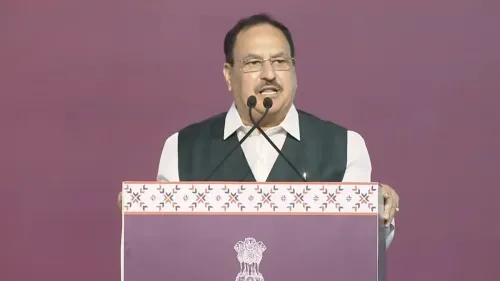
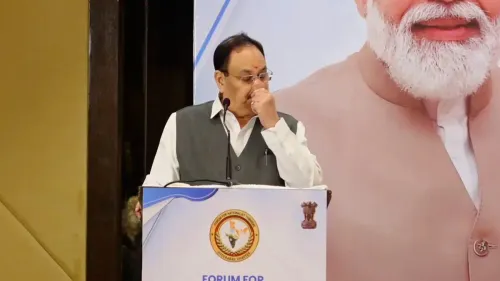
Nadda credits Modi govt for transforming India's global health image
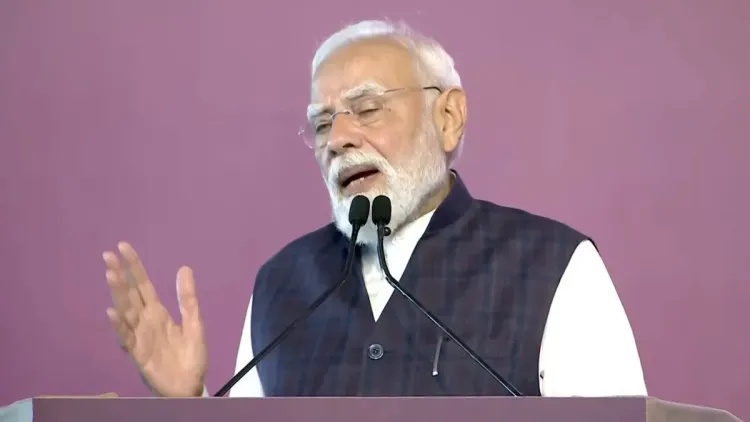
Synopsis
Union Health Minister J. P. Nadda shared Prime Minister Modi's assertion that 12 years of BJP governance have transformed India from a global health anxiety zone into a self-reliant health power — and that better, cheaper healthcare for citizens lies ahead.
Key Takeaways
Union Health Minister J.
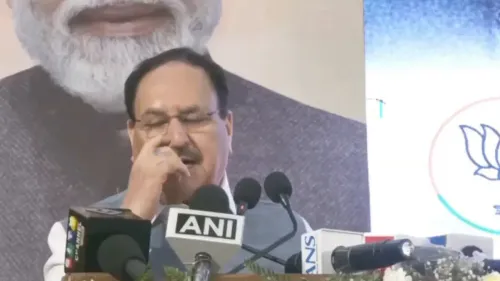
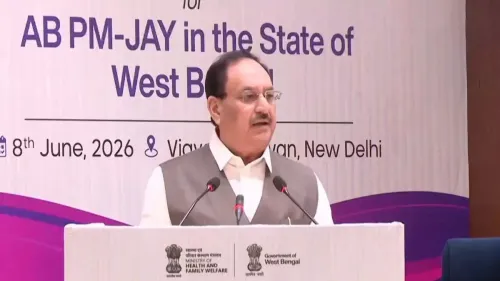
Nadda on July 17, 2026 shared a quote from PM Narendra Modi on India's health sector transformation.
Modi credited 12 years of governance with changing both India's healthcare capacity and the world's perception of it.
The COVID-19 pandemic is cited as the pivotal moment when India shifted from being a global concern to a global supplier of vaccines and medicines.
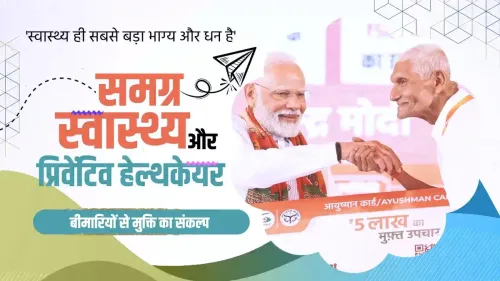
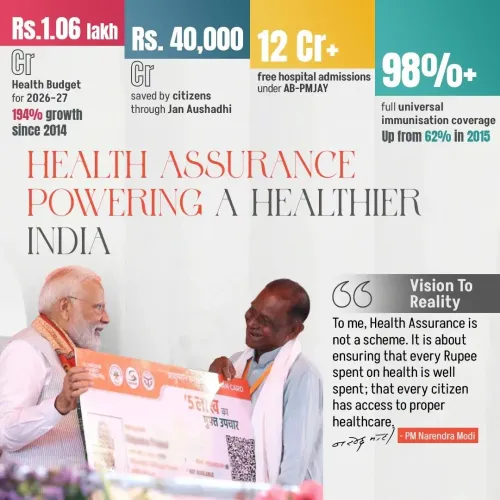
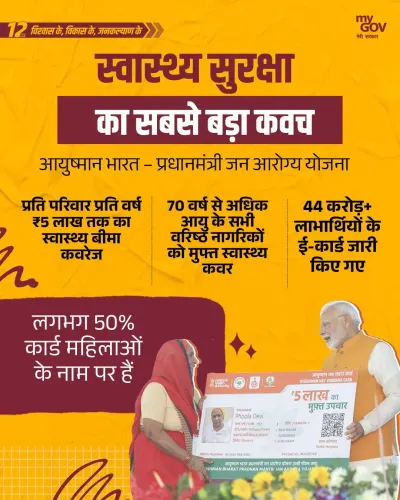
Ayushman Bharat , launched in 2018 , provides up to Rs 5 lakh cashless coverage to over 10 crore vulnerable families.
India's Vaccine Maitri initiative supplied COVID-19 vaccines to more than 100 countries , redefining India's global health role.
Modi's remarks promise better healthcare at lower prices for Indian citizens going forward.
Union Health Minister J. P. Nadda on Friday, July 17, 2026, shared remarks attributed to Prime Minister Narendra Modi highlighting a fundamental shift in how the world perceives India's healthcare capacity — from a source of global anxiety during crises to a confident, self-reliant health power over the past 12 years.
Context
Nadda quoted the Prime Minister as saying: 'एक समय था भारत के हेल्थ सेक्टर पर पूरी दुनिया चिंता जताती थी' ('There was a time when the entire world expressed concern about India's health sector'). The statement draws a direct contrast between the anxiety that once surrounded India's health preparedness and the confidence the country has built over the last decade-plus. The COVID-19 pandemic is cited as the clearest illustration of this transformation — a period when India, once seen as uniquely vulnerable, emerged as a critical supplier of vaccines and medical goods to the world.
Modi's words, as shared by Nadda, promise that 'people of our country will get better healthcare facilities, and at lower prices' — a pledge that speaks directly to the affordability concerns that have long defined public health discourse in India.
Policy Backdrop
The remarks align with a decade-long policy arc that began in earnest after 2014. The National Health Policy 2017 set an ambition to raise public health spending to 2.5 per cent of GDP and strengthen primary care infrastructure across the country. A year later, the flagship Ayushman Bharat Pradhan Mantri Jan Arogya Yojana was launched, offering cashless health coverage of up to Rs 5 lakh per family per year to more than 10 crore economically vulnerable families.
During the pandemic, India's Vaccine Maitri initiative supplied COVID-19 vaccines to over 100 countries, dramatically altering external assessments of India's manufacturing and logistical capacity. This positioned India not merely as a country managing a domestic health crisis, but as a net contributor to global health security. The broader Atmanirbhar Bharat push has since sought to reduce import dependence in critical health inputs, from active pharmaceutical ingredients to medical devices.
Stakeholders and Impact
The primary beneficiaries of the policies invoked in these remarks are low-income Indian families — the demographic most exposed to catastrophic out-of-pocket health expenditure. Schemes like Ayushman Bharat were designed specifically to insulate this group from financial ruin caused by hospitalisation. At a global level, India's pharmaceutical and vaccine manufacturing base has made it a strategic partner for developing nations seeking affordable medicines.
For the BJP, the health sector narrative carries significant political weight. Framing 12 years of governance as a period that changed both India's capability and the world's perception is a consolidation of the party's core development argument ahead of any future electoral cycle. Nadda, as both Union Health Minister and BJP national president, is uniquely positioned to bridge the policy and political dimensions of this messaging.
What's Next
The forward markers to watch are the next Union Health Budget allocations and progress reports on the National Digital Health Mission, which aims to create interoperable digital health records for every Indian citizen. Whether the affordability gains cited in the Prime Minister's remarks translate into measurable reductions in out-of-pocket expenditure will be the empirical test of this narrative. Parliamentary scrutiny of health spending as a share of GDP will also determine whether the 2.5 per cent target set in 2017 is finally within reach.
Point of View
Emotionally resonant before-and-after narrative. By invoking the COVID-19 pandemic — a period of genuine global anxiety about India — the messaging converts a moment of vulnerability into proof of resilience, a rhetorical move that is difficult to contest. The dual role Nadda holds, as health minister and BJP president, means this statement simultaneously defends government policy and serves as party messaging. The forward-looking promise of 'better care at lower prices' signals that health affordability will remain a central BJP plank, likely intensifying pressure on the government to show measurable progress on out-of-pocket expenditure reduction.
NationPress
17 Jul 2026
Frequently Asked Questions
What did JP Nadda say about India's health sector on July 17 2026?
Nadda shared remarks by PM Narendra Modi stating that India's health sector has been transformed over the past 12 years, shifting global perception from concern to confidence, and promising better and more affordable healthcare for citizens.
What is Ayushman Bharat and who does it cover?
Ayushman Bharat Pradhan Mantri Jan Arogya Yojana, launched in 2018, provides cashless health insurance of up to Rs 5 lakh per family per year to over 10 crore economically vulnerable Indian families for secondary and tertiary hospital care.
How did India's role change during the COVID-19 pandemic?
During the COVID-19 pandemic, India transitioned from being seen as a country at high health risk to a major global supplier of vaccines, exporting doses to over 100 countries through the Vaccine Maitri initiative.
What is India's target for public health spending as a share of GDP?
The National Health Policy 2017 set a target to raise India's public health expenditure to 2.5 per cent of GDP, alongside strengthening primary care infrastructure across the country.
What is the National Digital Health Mission?
The National Digital Health Mission is a government programme aimed at creating interoperable digital health records for every Indian citizen, intended to improve healthcare delivery and continuity of care.