Nadda Highlights Ayushman Bharat's Role in Universal Health Coverage
Synopsis
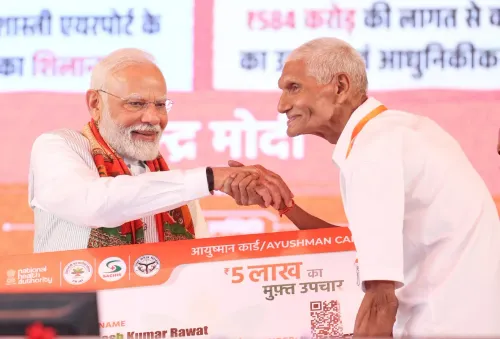
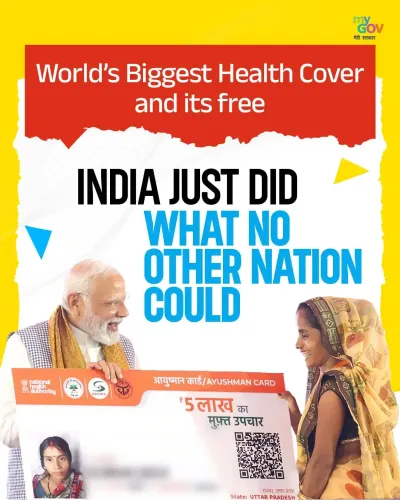
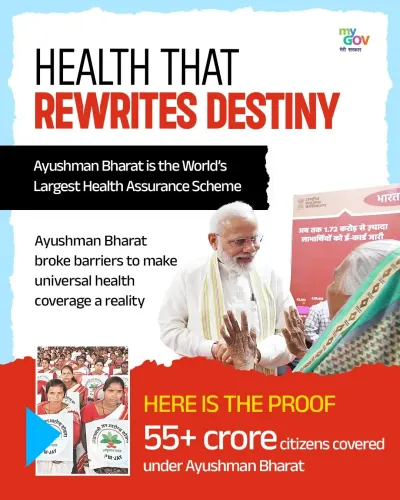
Union Health Minister J. P. Nadda has highlighted Ayushman Bharat–PM-JAY as the world's largest government-funded health insurance scheme, tracing its origin to PM Modi's post-2015 World Health Assembly directive to 'think big' and underscoring its ₹5 lakh annual cover for 62 crore Indians.
Key Takeaways
Nadda publicly reaffirmed Ayushman Bharat–PM-JAY as central to India's Universal Health Coverage commitment on 9 July 2026 .
PM-JAY provides up to ₹5 lakh annual health insurance cover for hospitalisation expenses.
The scheme is described as covering 62 crore people, making it the world's largest government-funded health insurance programme.
Nadda linked the scheme's genesis to the 2015 World Health Assembly and PM Modi's directive to 'think big.' Ayushman Bharat was formally launched on 23 September 2018 , building on earlier schemes such as the Rashtriya Swasthya Bima Yojana of 2008.
The National Health Authority oversees implementation, with state agencies as co-partners in delivery.
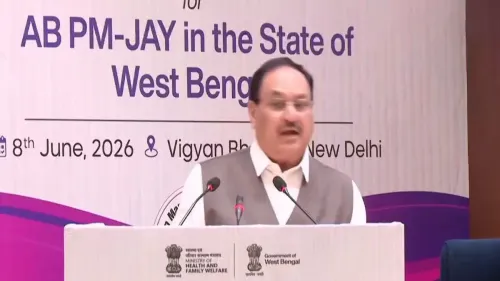
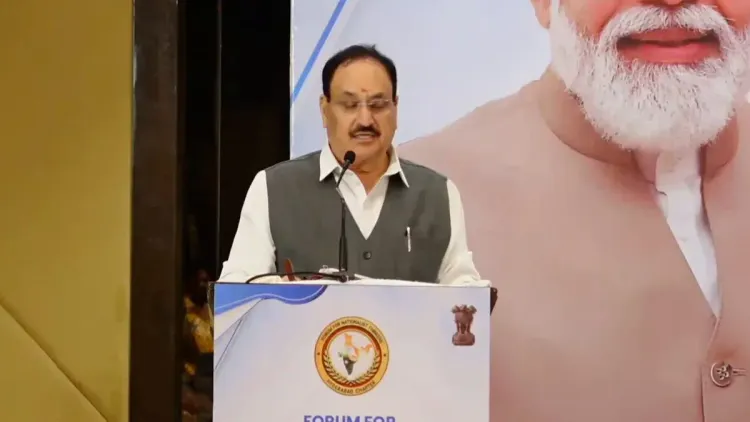
Union Health Minister J. P. Nadda on Thursday, 9 July 2026 invoked Prime Minister Narendra Modi's directive to 'think big' as the founding impulse behind Ayushman Bharat–PM-JAY, calling the scheme a demonstration of India's commitment to Universal Health Coverage and describing it as the world's largest government-funded health insurance programme, providing ₹5 lakh annual coverage to 62 crore people.
Context
In his post, Nadda traced the programme's origin to the 2015 World Health Assembly, where global consensus on universal health coverage was formalised. He credited PM Modi's vision with translating that international commitment into domestic policy 'within just nine months,' culminating in the launch of Ayushman Bharat–Pradhan Mantri Jan Arogya Yojana (PM-JAY). The minister described the scheme as proof that India could convert a global health goal into a large-scale, on-ground programme at speed.
Policy Backdrop
India's push toward government-funded health insurance predates PM-JAY. The Rashtriya Swasthya Bima Yojana (RSBY), launched in 2008, provided limited hospitalisation cover to below-poverty-line families, but remained fragmented across states. The National Health Policy 2017 explicitly set universal health coverage as a national goal, laying the legislative and administrative groundwork for a successor scheme. Ayushman Bharat was announced in the Union Budget of February 2018 and formally launched on 23 September 2018, consolidating earlier efforts under a single, centrally sponsored architecture. The programme has two arms: Health and Wellness Centres for primary care, and PM-JAY for secondary and tertiary hospitalisation insurance.
The scheme's design aligns with Sustainable Development Goal target 3.8 on universal health coverage and mirrors the broader pattern of large entitlement programmes — in housing, sanitation, and food security — that the central government has rolled out since 2014, combining direct-benefit mechanisms with private-sector hospital empanelment for service delivery.
Stakeholders and Impact
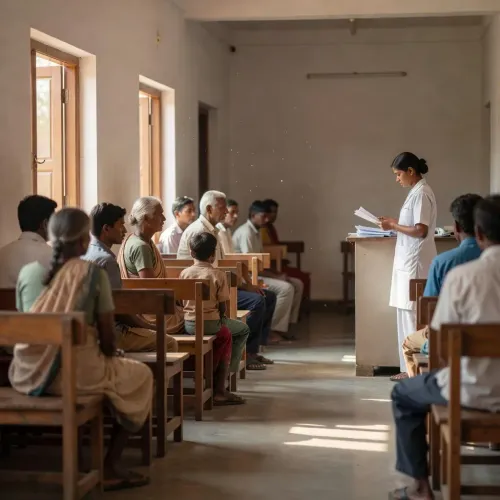
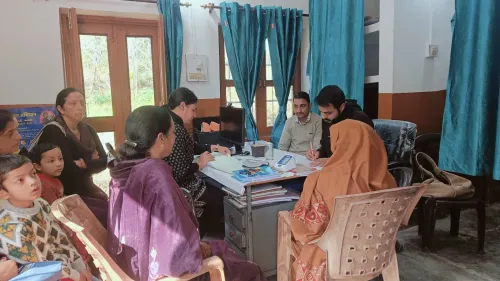
The primary beneficiaries of PM-JAY are low-income households that would otherwise face catastrophic out-of-pocket expenditure for hospitalisation. State health agencies are co-implementers, and the National Health Authority (NHA) functions as the nodal body overseeing empanelment of hospitals and claims settlement. The scheme's scale — covering a population larger than that of most countries — has drawn international attention as a model for low- and middle-income nations pursuing similar coverage goals. Nadda's framing of PM-JAY as the 'world's largest government-funded health insurance programme' positions India's approach as a benchmark in global health governance discussions.
What's Next
Analysts and parliamentary committees are expected to closely watch state-level utilisation data, which varies significantly across India's diverse health infrastructure landscape. A key question heading into the next Union Budget cycle is whether the ₹5 lakh annual cover limit — unchanged since the scheme's launch — will be revised upward to account for medical inflation. The NHA's annual report is also likely to draw scrutiny in parliamentary proceedings, with opposition members questioning coverage gaps and empanelment quality. Nadda's public emphasis on the scheme's global standing suggests the government intends to keep Ayushman Bharat–PM-JAY at the centre of its health and welfare narrative ahead of future electoral cycles.
Point of View
Reinforcing the narrative that India punches above its weight on global health metrics. By anchoring the scheme's origin in the 2015 World Health Assembly and PM Modi's personal directive, he frames PM-JAY not merely as a domestic policy but as India's answer to a global mandate — a framing useful both in international forums and domestic electoral messaging. The timing, mid-2026, suggests the government is refreshing its welfare communication cycle ahead of upcoming state elections and budget discussions. The unresolved question of whether the ₹5 lakh cover limit will be revised remains the most consequential policy variable the minister has left conspicuously unaddressed.
NationPress
9 Jul 2026
Frequently Asked Questions
What is Ayushman Bharat PM-JAY and who benefits from it?
Ayushman Bharat–PM-JAY is India's government-funded health insurance scheme that provides up to ₹5 lakh per year for secondary and tertiary hospitalisation to low-income families. It is designed to cover approximately 62 crore people, making it the world's largest such programme.
When was Ayushman Bharat launched and who launched it?
Ayushman Bharat was formally launched on 23 September 2018 by Prime Minister Narendra Modi. It was announced in the Union Budget of February 2018 and built on earlier schemes including the Rashtriya Swasthya Bima Yojana of 2008.
What did J. P. Nadda say about Ayushman Bharat in July 2026?
Union Health Minister J. P. Nadda stated on 9 July 2026 that Ayushman Bharat reflects India's commitment to Universal Health Coverage, crediting PM Modi's post-2015 World Health Assembly vision with enabling the scheme's rapid launch and its coverage of 62 crore people.
How does PM-JAY relate to Universal Health Coverage?
PM-JAY is India's primary instrument for achieving Universal Health Coverage under SDG target 3.8. It replaces out-of-pocket hospitalisation costs for eligible low-income families with government-backed insurance, aligned with goals adopted at the 2015 World Health Assembly.
Will the ₹5 lakh cover limit under PM-JAY be increased?
As of July 2026, the ₹5 lakh annual cover limit has not been officially revised. Analysts are watching the next Union Budget cycle for any announcement of an increase, given rising medical inflation since the scheme's 2018 launch.