Indian Navy to simulate 26/11-style Taj Hotel attack in Kolkata on Nov 18-19
Synopsis
The Indian Navy is recreating the 26/11 Taj Hotel attack — this time in Kolkata — as part of its largest-ever coastal security drill. Exercise Sea Vigil 2026 on November 18-19 will deploy 21 agencies, the NSG, and Marine Commandos across India's full 11,098-km coastline, with a second drill deep in the Sundarbans. It is the most ambitious edition yet of a biennial exercise born directly from the failures exposed by the 2008 Mumbai attacks.
Key Takeaways
The Indian Navy will simulate a 26/11-style attack at the Taj Bengal Hotel, Kolkata on 18-19 November 2026 .
Kolkata Police and the NSG will conduct live counter-terrorism operations in response to the simulated strike.
A second drill will be held in the Sundarbans , involving the BSF and Marine Commandos (Marcos) .
6 Ministries and 21 organisations and agencies will participate, covering India's full 11,098-km coastline and 2.4 million sq km EEZ .
This is the fifth edition of Exercise Sea Vigil, described by officials as being on an 'unprecedented scale'.
The Indian Navy has been the lead agency for maritime security since the 2008 Mumbai attacks .
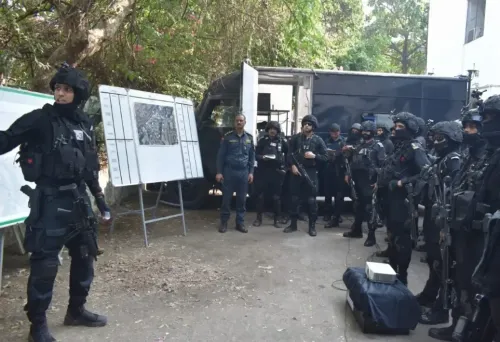
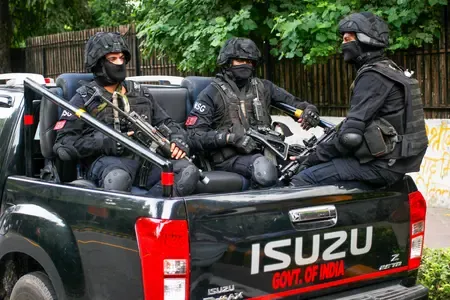
The Indian Navy will recreate the 2008 Mumbai Taj Mahal Hotel terrorist attack at the Taj Bengal Hotel in Kolkata during Exercise Sea Vigil 2026, scheduled for 18-19 November, officials confirmed on Monday. The simulated strike will be followed by live counter-terrorism operations jointly conducted by the Kolkata Police and the National Security Guard (NSG).
What Exercise Sea Vigil 2026 Involves
Commodore Ajay Yadav, West Bengal Naval Officer-In-Charge (NOIC), confirmed the details during a briefing on Monday. The fifth edition of the biennial exercise will unfold across India's entire 11,098-km coastline and an Exclusive Economic Zone (EEZ) covering 2.4 million square kilometres — the largest scale in the exercise's history.
A second major drill will be conducted in the Sundarbans, with participation from the Border Security Force (BSF) and the Navy's elite Marine Commandos (Marcos). In total, six Ministries and 21 organisations and agencies will operate alongside the Navy, including the Army, Air Force, Coast Guard, Marine Police, Subsidiary Intelligence Branch, Central Industrial Security Force (CISF), Customs, and the Fisheries Department.
Why Kolkata and the Sundarbans Are in Focus
West Bengal holds strategic significance for coastal security planners. The Sundarbans — the world's largest mangrove forest and delta — presents acute surveillance challenges owing to its dense, waterlogged terrain. The region's geographic complexity makes it a potential vulnerability that security forces must continually test their response protocols against.
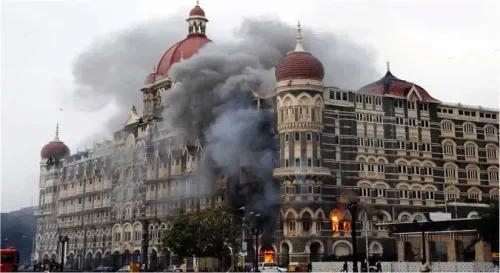
Notably, the exercise recreates a scenario directly modelled on the 26/11 Mumbai attacks of November 2008, when seaborne terrorists struck multiple targets including the iconic Taj Mahal Palace Hotel. That attack prompted the Centre to designate the Indian Navy as the lead agency for maritime security — a mandate that Exercise Sea Vigil operationalises at scale.
Scale and Scope: What Has Changed Since 2024
'With each edition, we take the exercise up one notch. The whole idea is to carry out a holistic appraisal of how well our security agencies are prepared to handle a sea-borne attack by terrorists. This year, Exercise Sea Vigil will be held on an unprecedented scale,' Commodore Yadav said.
During the 2024 edition, simulated dud Improvised Explosive Devices (IEDs) were planted within and outside the Victoria Memorial campus in Kolkata, and 'armed' infiltrators entered coastal facilities. A waterborne strike was also simulated against defence shipbuilder Garden Reach Shipbuilders and Engineers Ltd. The 2026 edition builds on that template with higher complexity and broader inter-agency participation.
Security agencies are structured into Red teams (attackers) and Blue teams (defenders), testing real-time response coordination across vital assets including ports, oil rigs, vulnerable areas, vulnerable points, and cable landing stations.
Community Outreach and Awareness Drive
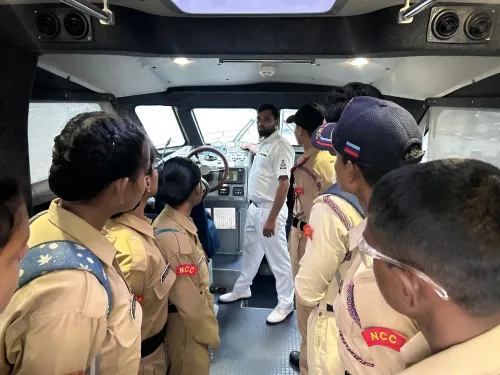
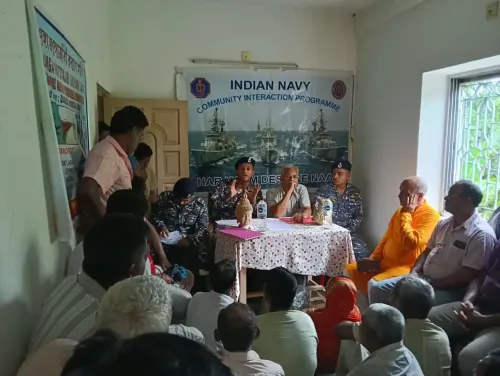
Beyond tactical drills, the exercise carries a public awareness mandate. Outreach programmes have already been organised for fisherfolk, NCC cadets, and Bharat Scouts and Guides. Commodore Yadav noted that raising maritime security awareness among coastal communities — particularly fisher communities and students — is an integral objective of the exercise.
Validating SOPs Across the Security Architecture
Exercise Sea Vigil serves as a live stress-test for Standard Operating Procedures (SOPs) and inter-agency coordination mechanisms, including intelligence sharing across Central and state security forces. The exercise evaluates preparedness at all levels of government against emerging maritime threats. With the 2026 edition expanding scope further, the results will inform both operational planning and policy adjustments ahead of the next biennial cycle.
Point of View
Not a historical one. The growing scale of each edition is encouraging, but the real measure is whether inter-agency coordination gaps, identified repeatedly in past drills, are being systematically closed rather than just rehearsed. The Sundarbans component is particularly telling: it acknowledges a persistent surveillance blind spot that adversaries have long been aware of. Ambition in scale must be matched by rigour in after-action review — otherwise this risks becoming an elaborate demonstration rather than a genuine preparedness audit.
NationPress
17 Nov 2026
Frequently Asked Questions
What is Exercise Sea Vigil 2026?
Exercise Sea Vigil 2026 is a biennial Indian Navy-led coastal security drill scheduled for 18-19 November 2026, spanning India's entire 11,098-km coastline and 2.4 million sq km Exclusive Economic Zone. Now in its fifth edition, it involves six Ministries and 21 agencies testing inter-agency coordination against maritime terror threats.
Why is the Indian Navy simulating the 2008 Taj Hotel attack in Kolkata?
The simulation recreates the seaborne terror assault on the Taj Mahal Palace Hotel during the 26/11 Mumbai attacks to test how security agencies would respond to a similar scenario today. The Indian Navy has been the lead maritime security agency since those 2008 attacks, and replicating high-impact scenarios helps validate current counter-terrorism SOPs.
Which agencies are participating in Exercise Sea Vigil 2026?
Alongside the Indian Navy, participants include the Army, Air Force, Coast Guard, NSG, Kolkata Police, Marine Police, BSF, Marine Commandos (Marcos), CISF, Subsidiary Intelligence Branch, Customs, and the Fisheries Department — a total of 21 organisations under six Ministries.
What makes the Sundarbans drill significant?
The Sundarbans — the world's largest mangrove forest and delta — is notoriously difficult to monitor, making it a potential entry route for seaborne threats. The drill there, involving BSF and Marcos, is designed to stress-test surveillance and response capabilities in one of India's most geographically complex coastal zones.
How has Exercise Sea Vigil evolved since it began?
Each edition has expanded in scale and complexity. The 2024 edition involved simulated IED plantings at the Victoria Memorial and a mock waterborne strike on Garden Reach Shipbuilders in Kolkata. The 2026 edition adds a 26/11-style hotel assault simulation and a Sundarbans drill, with officials describing it as the largest in the exercise's history.