NHRC issues notice to Delhi govt over app cab and auto overcharging
Synopsis
India's top human rights body has stepped into Delhi's app-cab and auto fare dispute — a signal that arbitrary surge pricing is no longer just a consumer grievance but a rights violation. With notices to both the Delhi government and the Union Consumer Affairs Ministry, the NHRC is pushing for a nationwide framework that binds every aggregator to state-fixed fare ceilings.
Key Takeaways
The NHRC has issued a notice to the Delhi government over allegations that app-based cabs and autos are charging fares above Transport Department -notified rates.
NHRC member Priyank Kanoongo stated that overcharging above prescribed rates violates citizens' rights, regardless of whether the service is app-based.
The Delhi government must submit a factual inquiry report to the Commission within two weeks .
A separate notice is being sent to the Union Ministry for Consumer Affairs to enforce state-fixed fare compliance across all app-based transport services.
In May , Delhi's taxi, truck, and auto drivers held a three-day strike over stagnant fares and rising fuel costs, called off after government assurances.
The NHRC has warned of stringent measures if the government's response is found unsatisfactory.
The National Human Rights Commission (NHRC) has issued a notice to the Delhi government over allegations that app-based cab and auto-rickshaw aggregators are charging fares significantly higher than rates notified by the state's Transport Department. The Commission has directed the Delhi government to investigate the complaints and submit a factual report within two weeks.
What the NHRC Has Flagged
The NHRC has sought clarity on whether app-based aggregators are complying with the government-notified fare structure and whether commuters are being subjected to unjustified overcharging. The Commission is also sending a separate notice to the Union Ministry for Consumer Affairs, urging that all app-based transport services be bound by fare rates fixed by the relevant state or regional authority.
NHRC member Priyank Kanoongo said the Commission received a complaint that app-based auto and cab services — widely used by ordinary citizens — are charging fares above the prescribed rates. 'We received a complaint that app-based auto and cab services, which are commonly used by citizens, are charging fares higher than the prescribed rates,' he said.
The Rights Argument
Kanoongo stressed that in every state, taxi and auto-rickshaw fares are fixed by the Transport Department on a per-kilometre basis, and no aggregator — regardless of its technology model — can legally charge above that ceiling. 'Now if any app-based service is charging more than the prescribed rate, then it is definitely against the rights of citizens. When the government has fixed certain rates, just by being an app-based service they cannot charge more,' he said.
He added that the Commission is 'hopeful for a positive report otherwise we will have to take stringent measures' — signalling that regulatory escalation remains on the table if the Delhi government's response is unsatisfactory.
Background: Driver Strikes and Fare Disputes
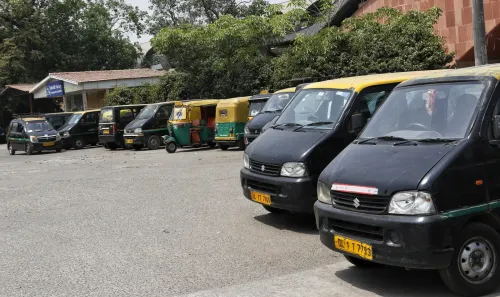
The notice comes against the backdrop of sustained tension in Delhi's transport sector. In May, truck, taxi, and auto-rickshaw drivers in the national capital staged a three-day strike demanding a revision in fares and relief from rising fuel costs. Drivers said that despite working nearly 12 hours a day, stagnant fares and rising prices of diesel, petrol, and CNG had left them financially strained. The strike was called off on the third day after the Delhi government offered assurances following discussions with the protesting unions.
The NHRC's intervention now adds a human rights dimension to what has largely been framed as a consumer and labour dispute — raising the stakes for both the aggregators and the state administration.
What Happens Next
The Delhi government must submit its inquiry report to the NHRC within two weeks. Simultaneously, the Union Ministry for Consumer Affairs will receive a notice asking for a framework that mandates app-based services nationwide to adhere to state-fixed fare structures. Depending on the responses received, the Commission has indicated it may pursue further action.
Point of View
The Commission is pushing for a national fix, not just a Delhi-specific patch. The real question is whether the Delhi government's two-week report will reflect genuine enforcement action or produce the kind of assurance-heavy, outcome-light response that has followed past transport disputes. The May strike ended on government promises that have yet to visibly translate into fare compliance on the ground.
NationPress
9 Aug 2026
Frequently Asked Questions
Why has the NHRC issued a notice to the Delhi government over app cabs and autos?
The NHRC issued the notice after receiving complaints that app-based cab and auto-rickshaw services in Delhi are charging fares significantly higher than the rates notified by the state's Transport Department. The Commission views such overcharging as a violation of citizens' rights and has asked the Delhi government to investigate and report within two weeks.
What has NHRC member Priyank Kanoongo said about the overcharging allegations?
Kanoongo stated that fare rates for taxis and autos are fixed by the Transport Department on a per-kilometre basis in every state, and no app-based service can legally charge above that ceiling. He said overcharging 'is definitely against the rights of citizens' and warned of stringent measures if the government's response is unsatisfactory.
Which other authority has the NHRC notified over this issue?
The NHRC is also sending a notice to the Union Ministry for Consumer Affairs, asking that all app-based transport services across India be required to charge only the fares fixed by the relevant state or regional authority.
What is the two-week deadline about?
The Delhi government has been directed to conduct an inquiry into the overcharging allegations and submit a factual report to the NHRC within two weeks of receiving the notice. The report must address whether aggregators are complying with notified fare structures.
What was the May strike by Delhi drivers about?
In May, truck, taxi, and auto-rickshaw drivers in Delhi held a three-day strike demanding a fare revision and relief from rising diesel, petrol, and CNG prices. Drivers said stagnant fares and long working hours of nearly 12 hours a day had left them financially strained. The strike ended after the Delhi government offered assurances in discussions with the unions.