NTWB board meets to boost trader welfare, ease GST and MSME burden
Synopsis
India's National Traders' Welfare Board met on 25 September to tackle long-pending trader grievances — from GST refund delays and CIBIL reforms to a proposed centralised loan portal with 30-day timelines. The push to expand ONDC and DigiDukaan to district level signals a tangible shift in how the government wants to bring small traders into the digital economy.
Key Takeaways
The NTWB met on 25 September 2026 to review trader welfare, GST issues, digital empowerment and export promotion.
Key GST agenda included refund delays , ITC anomalies , amnesty schemes and resolution of pending appeals.
A centralised loan portal with 30-day disbursement timelines and reforms to the CIBIL score mechanism were proposed.
ONDC and DigiDukaan expansion to the district level discussed for broader digital commerce access.
Jan Vishwas Act rationalises 40,000 compliances ; State Traders' Welfare Boards set up in MP, Punjab, UP and Tamil Nadu .
Board to form thematic committees and working groups for sector-specific policy recommendations.
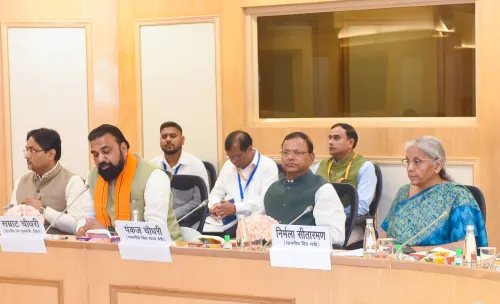
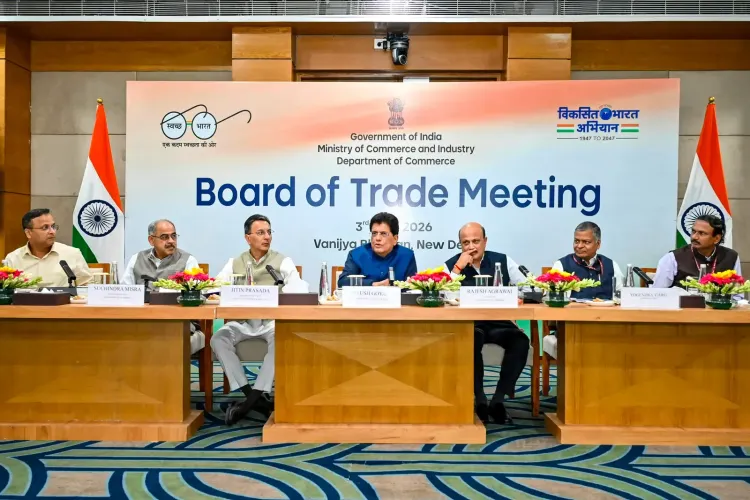
The National Traders' Welfare Board (NTWB) convened a review meeting on Friday, 25 September 2026, taking up a broad agenda spanning GST rationalisation, MSME finance access, digital empowerment and export promotion, the Commerce Ministry said. The session underscored the government's push to reduce compliance friction for traders, retailers, manufacturers, exporters and service providers across India.
GST and Finance: Key Grievances on the Table
Board members deliberated on several longstanding GST-related pain points, including refund delays, lengthy audits, ITC anomalies, amnesty schemes and the resolution of pending appeals. The discussions also touched on broader rationalisation of the GST framework — a recurring demand from trader bodies nationwide.
On the financing front, members proposed a centralised loan portal with 30-day disbursement timelines to address credit access bottlenecks. Reforms in the CIBIL score mechanism, inclusion of traders in MSME facilitation committees, and the establishment of dedicated traders' grievance helplines were among the structural changes discussed.
Trader Welfare Measures Reviewed
The Board examined issues including timely payments to government contractors, safeguards against technical penalties, and relaxation in loan repayment obligations during lean business periods. Enhanced Centre-State coordination was flagged as critical to implementing these welfare measures uniformly across states.
NTWB Chairman Sunil J. Singhi highlighted the government's reform track record, pointing to the 'Jan Vishwas Act', which rationalises 40,000 compliances, alongside Ease of Doing Business measures. He also noted the establishment of State Traders' Welfare Boards in Madhya Pradesh, Punjab, Uttar Pradesh and Tamil Nadu as evidence of expanding institutional reach.
Digital Empowerment and Women Entrepreneurship
On the digital front, the Board deliberated on expanding ONDC and the 'DigiDukaan' platform to the district level, which could significantly widen digital commerce access for small traders. Members also discussed Women Entrepreneurship Facilitation Desks under NITI Aayog, POSH cells for grievance redressal, and strengthening cyber fraud redressal mechanisms — reflecting growing concerns over digital vulnerabilities among small business owners.
Yuvraj Ravindra Patil, Director at the Department for Promotion of Industry and Internal Trade (DPIIT), stressed the importance of wider dissemination of DPIIT's interactive video conference sessions to ensure Board initiatives reach traders at the grassroots level.
Export Push and Institutional Reforms
According to the official statement, 'special emphasis was laid on enhancing export participation by traders and MSMEs, increasing awareness regarding export opportunities, strengthening institutional support mechanisms and promoting India's emergence as a globally competitive trading nation.'
The Board also discussed forming thematic committees and focused working groups to examine sector-specific challenges and submit structured policy recommendations — a move aimed at giving the NTWB sharper policy teeth beyond advisory discussions.
With the NTWB now looking to operationalise several of these proposals through follow-up working groups, the coming weeks will test whether the deliberations translate into concrete, time-bound policy action for India's vast trading community.
Point of View
MSME credit gaps and digital inclusion have featured in trader-welfare discussions for years. What is harder to assess is whether this session moves beyond deliberation: the proposal for a centralised 30-day loan portal and thematic working groups could be meaningful if backed by implementation timelines, but the pattern of advisory bodies generating recommendations that stall at the ministry level is well established. The DigiDukaan district-level push is the most operationally concrete idea on the table; if executed, it could genuinely shift small-trader access to digital commerce. The real accountability test will come when the working groups deliver — or fail to deliver — their structured recommendations.
NationPress
25 Sept 2026
Frequently Asked Questions
What is the National Traders' Welfare Board (NTWB)?
The NTWB is a statutory body under the Commerce Ministry that represents the interests of traders, retailers, manufacturers, exporters and service providers. It advises the government on policy reforms related to trader welfare, ease of doing business and MSME support.
What GST issues did the NTWB discuss on 25 September 2026?
The Board took up GST rationalisation, refund delays, lengthy audits, amnesty schemes, ITC anomalies and the resolution of pending appeals — longstanding concerns raised by trader bodies across India.
What is the proposed centralised loan portal for traders?
The Board discussed a proposal to create a centralised loan portal that would ensure credit disbursement to traders within a 30-day timeline, alongside reforms to the CIBIL score mechanism to ease access to formal finance for small businesses.
What is the Jan Vishwas Act and how does it help traders?
The Jan Vishwas Act rationalises 40,000 compliances, reducing the regulatory burden on traders and small businesses. NTWB Chairman Sunil J. Singhi cited it as a key government commitment to easing the cost of doing business for the trading community.
Which states have set up State Traders' Welfare Boards so far?
State Traders' Welfare Boards have been established in Madhya Pradesh, Punjab, Uttar Pradesh and Tamil Nadu, according to NTWB Chairman Sunil J. Singhi, as part of efforts to strengthen Centre-State coordination on trader welfare.