Is Pakistan's Textile Sector Facing a Government Bailout?
Synopsis
Pakistan's textile industry, vital for its economy and employment, is nearing a crisis. With factory closures and layoffs increasing, urgent government intervention is needed. This situation not only threatens exports but also poses a significant risk to the nation’s economic stability. Discover how the textile sector's challenges could impact the country's future.
Key Takeaways
Urgent government intervention is needed to stabilize the textile sector.
The textile industry is crucial for employment and exports .
Pakistan's exports have dropped significantly over recent months.
Cost structure issues have made Pakistan's textiles uncompetitive .
Policy credibility is essential for long-term exporter confidence .
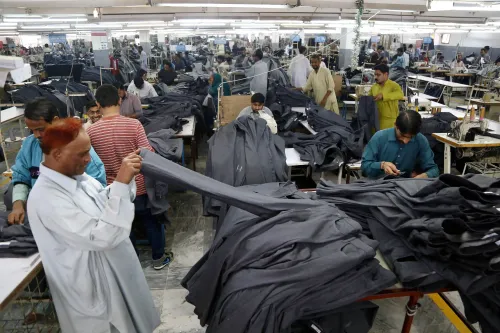
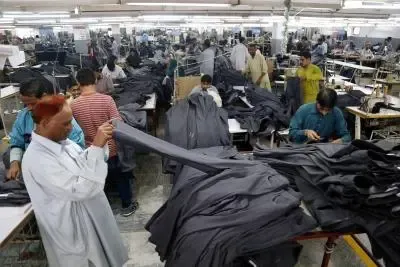
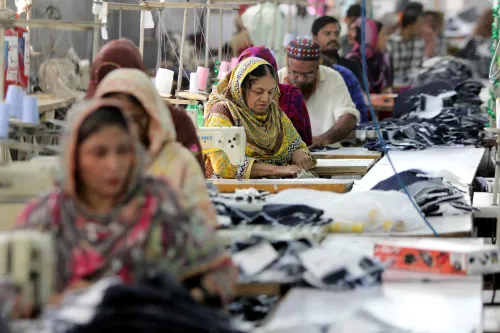
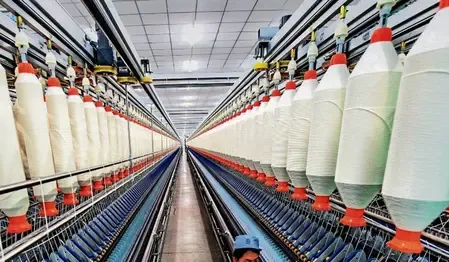
New Delhi, Jan 4 (NationPress) The textile industry in Pakistan, a crucial pillar of the nation’s exports and industrial workforce, is teetering on the edge of failure as numerous workers face layoffs and factories are forced to close.
In a letter addressed to Prime Minister Shehbaz Sharif, the Pakistan Textile Council has implored the government to declare an “Export Emergency” in order to halt the swift decline in competitiveness that now jeopardizes exports, employment, and macroeconomic stability, as reported by Pakistan’s Business Recorder.
“This warning could not be more urgent or concerning. In November 2025, Pakistan’s exports fell by over 14 percent year-on-year, marking the fourth consecutive month of decline. For the first five months of FY26, exports dropped to $12.8 billion from $13.7 billion the previous year, while imports surged past $28 billion. The resulting trade deficit—nearly $15.5 billion in just five months—highlights a precarious imbalance. In November alone, a deficit of $2.86 billion was recorded, which is 33 percent higher than the same month last year,” the report stated.
The crisis is attributed to the uncompetitive cost structure of Pakistan’s textile sector. Factors such as energy pricing disparities, inconsistent taxation, delayed refunds, and unpredictable policy signals have conspired to reduce profit margins to untenable levels. Competing textile exporters in Bangladesh, Vietnam, India, and even Sri Lanka benefit from lower energy rates, stable tax frameworks, and targeted export incentives, according to the report.
The textile sector accounts for over 60 percent of Pakistan’s total exports and provides employment to millions, both directly and indirectly. A single percentage point decrease in textile exports has a cascading effect—diminishing foreign exchange earnings, weakening the rupee, increasing inflationary pressures, and amplifying fiscal stress. Therefore, the slowdown in exports is not merely a sectoral concern; it poses a significant risk to the nation’s economy, as per the report.
The report also emphasizes the necessity for credible policy. Exporters engage in long-term investments—machinery, skills, market access—and cannot function amidst persistent regulatory uncertainty. Frequent modifications to duties, tariffs, and incentives erode confidence and drive buyers towards more dependable suppliers. Once lost, export markets are challenging to recover.
The report asserts that Pakistan’s recent economic stabilization measures, primarily influenced by IMF conditions, have prioritized demand reduction and fiscal austerity to stabilize the economy. However, an economy comprising over 240 million individuals cannot stabilize itself into prosperity. Exports are not a luxury; they are the sole sustainable pathway out of recurrent crises,” it added.
Point of View
It is crucial to recognize that the challenges facing Pakistan's textile sector are reflective of broader economic vulnerabilities. The government must prioritize strategic interventions that not only stabilize the textile industry but also bolster overall economic resilience. The nation’s future hinges on its ability to adapt and innovate in these challenging times.
NationPress
20 Sept 2026
Frequently Asked Questions
What is causing the crisis in Pakistan's textile sector?
The crisis is primarily caused by an uncompetitive cost structure, energy pricing disparities, inconsistent taxation, and regulatory uncertainty, reducing profit margins significantly.
How significant is the textile sector to Pakistan's economy?
The textile sector contributes over 60% to Pakistan's total exports and employs millions, making it a crucial component of the national economy.
What measures are being called for to address this crisis?
The Pakistan Textile Council has urged the government to declare an 'Export Emergency' to combat the rapid decline in competitiveness and protect jobs and exports.
What is the current state of Pakistan's exports?
Pakistan's exports have declined by over 14% year-on-year as of November 2025, marking the fourth consecutive month of contraction.
Why is policy credibility important for exporters?
Policy credibility is vital because exporters make long-term investments. Regulatory uncertainty can drive buyers to more stable suppliers, making it hard to regain lost markets.