Pak PM's Baloch dialogue offer: desperation as military crackdown fails
Synopsis
Pakistan PM Shehbaz Sharif's call for a 'grand dialogue' with Baloch rebels is being read less as a peace initiative and more as an admission of failure — Balochistan and Khyber Pakhtunkhwa account for 96% of Pakistan's violence fatalities in Q2 2026, and last month's toll was triple the previous month's. Decades of military operations have deepened resentment, not ended it.
Key Takeaways
Balochistan and Khyber Pakhtunkhwa accounted for 96% of Pakistan's violence-linked fatalities in Q2 2026 , with Balochistan alone recording 265 deaths .
Pakistan PM Shehbaz Sharif this month called for a 'grand dialogue' with Baloch insurgents — a notable shift from Islamabad's traditional military-first approach.
Last month's violence toll in Balochistan was reportedly triple the previous month's, underscoring the escalating crisis.
The $65 billion CPEC project and offers to the US and China to mine Baloch lands are widely perceived by locals as threats rather than development.
Interior Minister Mohsin Naqvi stated in July that 'the state's writ will be enforced at all costs' — a stance critics say contradicts the dialogue offer.
The Balochistan Liberation Army (BLA) is designated a terrorist group by the US , though Washington blocked a UN sanctions push citing no direct Al Qaeda or ISIS links.
Pakistan Prime Minister Shehbaz Sharif's call for a 'grand dialogue' with Baloch insurgents this month marks a significant — if belated — departure from Islamabad's decades-long reliance on military force to suppress the restive province's separatist movement. Analysts and observers argue the overture is less a goodwill gesture than an acknowledgement that sustained military repression has failed to contain the uprising in Balochistan.
Scale of Violence Exposes the Limits of Force
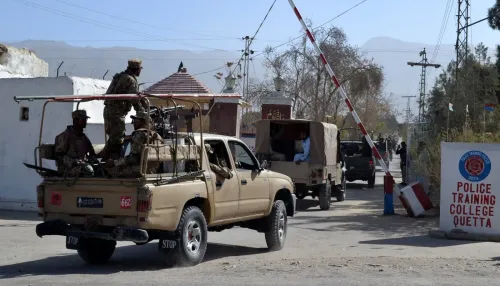
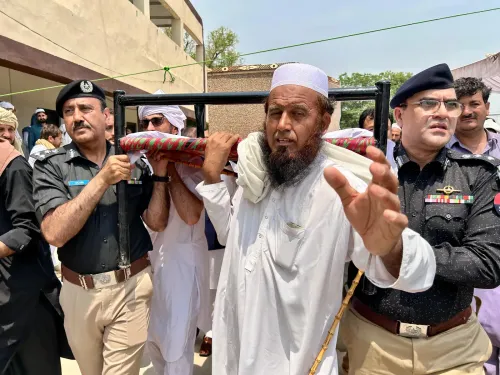
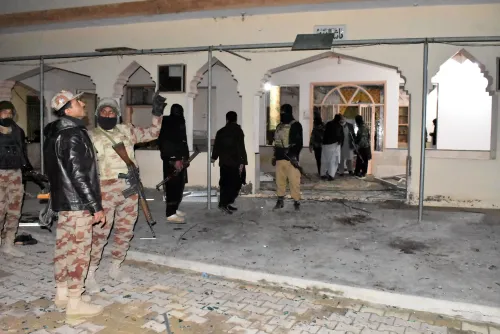
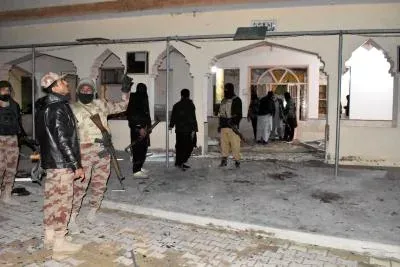
Balochistan and Khyber Pakhtunkhwa together accounted for 96 per cent of violence-linked fatalities across Pakistan in the second quarter of 2026, according to Pakistani media reports. Balochistan alone recorded 265 fatalities during that period. Last month's toll was reportedly triple the previous month's figures — a sharp escalation that has underscored the urgency of a political resolution that Islamabad has long deferred.
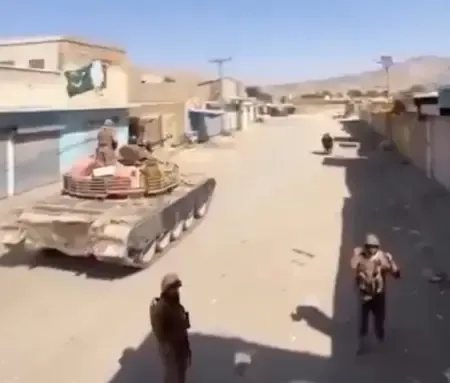
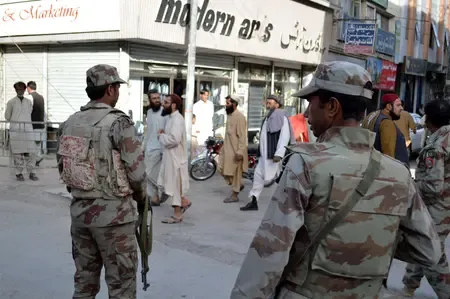
For decades, successive Pakistani governments deployed the army alongside paramilitary units to suppress dissent in the province. Critics argue this militarised approach has not eliminated insurgency; instead, it has entrenched cycles of retaliation and deepened resentment among ordinary Baloch citizens.
The Resource Question at the Heart of the Conflict
At the root of Balochistan's unrest lies a stark economic contradiction. The province is rich in natural gas, coal, copper, and gold, yet its people remain among the poorest in Pakistan. Successive governments in Islamabad have extracted these resources to support federal revenues, with negligible returns to local communities.
Sharif's recent acknowledgement that 'mineral wealth belongs to the Baloch people' has been noted as significant. However, observers caution that decades of dispossession have generated deep mistrust that words alone are unlikely to bridge. Pakistan's overtures to global powers — including the United States and China — to invest in mining the region are widely perceived by local communities as an additional threat rather than an opportunity.
CPEC, BLA, and the International Dimension
The $65 billion China-Pakistan Economic Corridor (CPEC) — a 3,000-km network of highways, railways, pipelines, and energy projects linking Gwadar Port in Pakistan to China's northwestern Xinjiang region — is seen by many Baloch as intensifying militarisation, threatening local identity, and failing to deliver tangible benefits to ordinary residents.
The United States officially designates the Balochistan Liberation Army (BLA) as a terrorist organisation. However, Washington blocked a China-Pakistan attempt to formalise this designation under UN sanctions, citing the absence of direct operational links to Al Qaeda or the Islamic State (ISIS/ISIL).
Political Marginalisation and Islamabad's Coercion Doctrine
Balochistan's political marginalisation is compounded by its inhabitants' limited representation in national decision-making. Local leaders have consistently complained that policies are imposed from Islamabad without consultation, reinforcing perceptions of what critics describe as colonial-style governance.
Pakistan's Interior Minister Mohsin Naqvi's statement in July that 'the state's writ will be enforced at all costs' reflects the enduring primacy of coercion in Islamabad's Balochistan doctrine. Critics argue such posturing has alienated ordinary citizens and fuelled insurgent recruitment rather than diminishing it.
A Moment of Reckoning — and What Comes Next
Sharif's dialogue offer is, at minimum, an implicit admission that repression has reached its limits. Whether Islamabad follows through with genuine political autonomy, equitable resource-sharing, and meaningful representation — or whether the 'grand dialogue' becomes another managed diversion — will determine the province's trajectory.
Pakistan faces a defining choice: continue treating Balochistan as a security problem to be managed through force, or recognise it as a political question of identity, rights, and dignity that demands structural redress. The international community, regional powers, and the Baloch people themselves will be watching closely to see which path Islamabad chooses.
Point of View
Governed by a centre they did not meaningfully elect. The CPEC dimension adds a layer that domestic dialogue cannot easily address — Beijing's strategic interests in Gwadar are not subject to Baloch negotiation. What mainstream coverage underweights is that the dialogue offer, absent a genuine framework for autonomy and resource equity, risks becoming another pressure-release valve rather than a structural fix. Pakistan has been here before, and the Baloch have long memories.
NationPress
9 Oct 2026
Frequently Asked Questions
Why is Pakistan offering dialogue with Baloch insurgents now?
Pakistan PM Shehbaz Sharif's 'grand dialogue' offer in August 2026 comes as violence in Balochistan has sharply escalated, with last month's fatality toll reportedly triple the previous month's. Analysts argue the offer reflects the failure of decades of military operations to contain the uprising rather than a genuine policy shift.
How severe is the violence in Balochistan in 2026?
Balochistan recorded 265 violence-linked fatalities in the second quarter of 2026, according to Pakistani media reports. Together with Khyber Pakhtunkhwa, the two provinces accounted for 96% of all violence-related deaths across Pakistan in that period.
What is the Balochistan Liberation Army (BLA)?
The BLA is the primary Baloch separatist armed group, officially designated a terrorist organisation by the United States. A China-Pakistan attempt to formalise this designation under UN sanctions was blocked by Washington, which cited the absence of direct operational ties to Al Qaeda or ISIS.
How does CPEC factor into the Balochistan conflict?
The $65 billion China-Pakistan Economic Corridor, a 3,000-km infrastructure network linking Gwadar Port to China's Xinjiang region, is widely perceived by Baloch communities as intensifying militarisation and threatening local identity, while delivering few tangible benefits to ordinary residents.
What are the core Baloch grievances against Islamabad?
Balochistan's grievances centre on the extraction of its substantial natural resources — gas, coal, copper, and gold — with negligible returns to local communities, limited political representation in national decision-making, and what critics describe as colonial-style governance imposed from Islamabad without local consultation.