Chinese forces along India's northern borders reduced significantly after Indian Army's 10-brigade deployment: MoD report
Synopsis
India's Ministry of Defence annual report 2025-26 reveals that China's PLA significantly scaled back its deployment along the northern borders after India moved 10 self-sustaining combined arms brigades to the LAC — a rare public confirmation that India's forward military posture produced a measurable strategic effect.
Key Takeaways
The Ministry of Defence annual report 2025-26 confirms a significant reduction in PLA forces along India's northern borders in 2025 .
India deployed 10 Combined Arms Brigade-sized formations — each comprising roughly 3,000 soldiers with infantry, armour, artillery, and air defence — along the LAC and traditional training areas.
The 33rd and 34th WMCC meetings were held in March and July 2025 ; Special Representatives talks resumed in December 2024 and August 2025 .
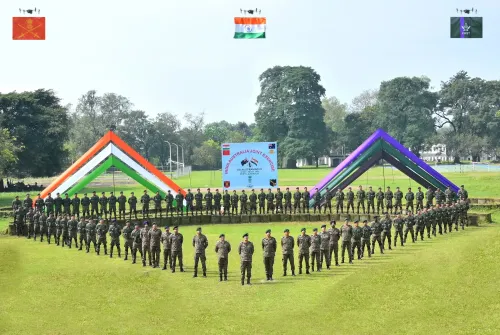
The 23rd Corps Commander Level Meet — the senior-highest military dialogue — was held in eastern Ladakh on 25-26 October 2025 .
In Jammu and Kashmir , the security situation stabilised following DGsMO talks on 10 and 12 May 2025 post- Operation Sindoor , though the MoD flagged continued unpredictability along the LoC .
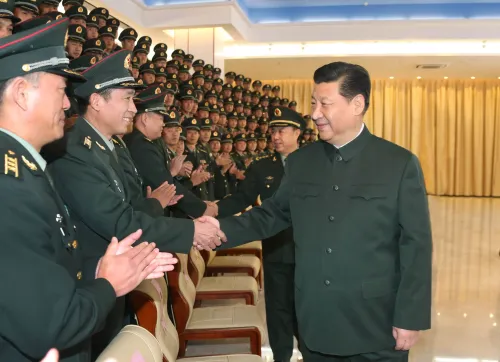
The report was released as Chinese President Xi Jinping concluded his participation in the 18th BRICS Summit in New Delhi .
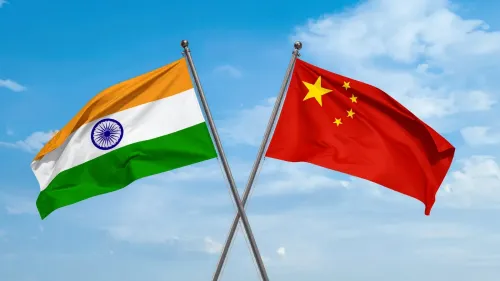
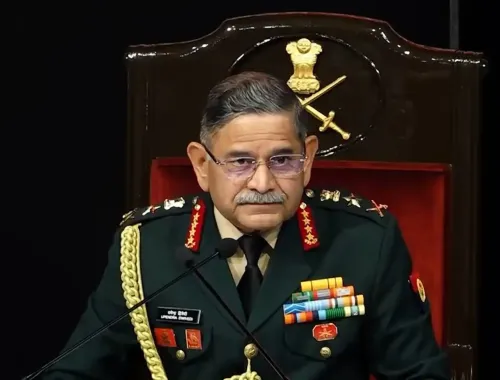
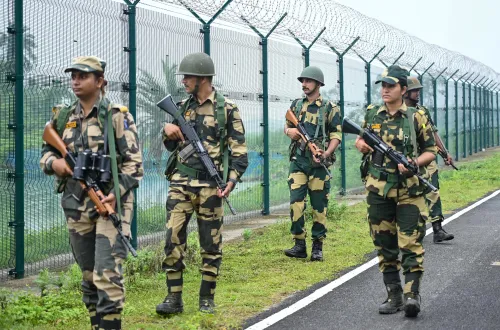
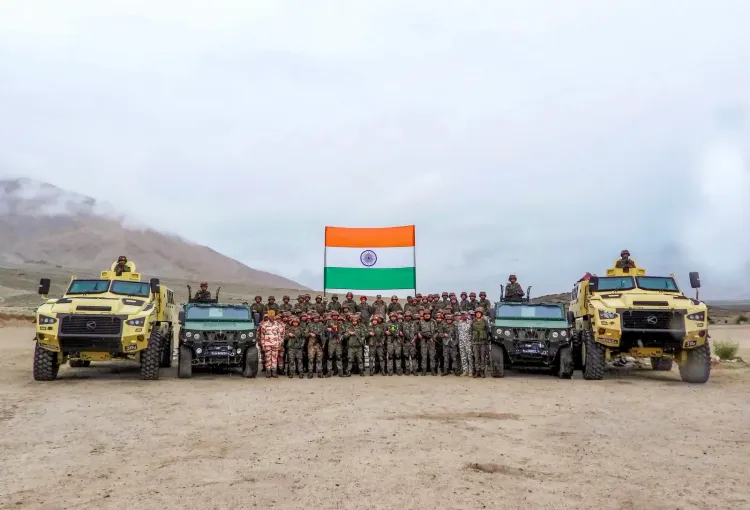
The deployment of People's Liberation Army (PLA) forces along India's northern borders witnessed a significant reduction in 2025, following India's strategic move of 10 Combined Arms Brigade-sized formations to areas along the Line of Actual Control (LAC) and traditional training areas, according to the Ministry of Defence's annual report for 2025-26.
India's Robust Military Posture Along the LAC
The annual report confirmed that each of the 10 brigade-sized forces deployed by the Indian Army is of the combined arms type — self-sustaining units comprising infantry, armour, artillery, and air defence components operating under a unified command structure. This configuration enables each formation to undertake independent operations and respond effectively to varied battlefield contingencies.
A brigade typically comprises approximately 3,000 soldiers along with supporting units, making India's total forward deployment a substantial military commitment along the northern frontier.
'The deployment of IA (Indian Army) in all sectors along the LAC is robust, well poised and prepared to deal with any emerging contingency,' the annual report stated, underlining the army's readiness along the frontier.
Diplomatic Channels Backing Military Stability
The Ministry of Defence noted that the army continued to secure the northern borders while parallel interactions between India and China at the political, diplomatic, and military levels contributed to positive developments and greater stability along the frontier.
The report highlighted renewed engagement through the 33rd and 34th rounds of Working Mechanism for Consultation and Coordination (WMCC) meetings held in March and July 2025 respectively. Additionally, Special Representatives (SR) talks — aimed at addressing the India-China boundary question — resumed with two rounds held in December 2024 and August 2025.
Bilateral relations also received a significant push following Prime Minister Narendra Modi's visit to China for the Shanghai Cooperation Organisation (SCO) Summit in Tianjin in August 2025.
Senior Military Dialogue and Ground-Level Contacts
The constructive engagement between the two sides was further reflected at the military level during the 23rd Corps Commander Level Meet — described as the senior-highest military commander-level meeting — held in eastern Ladakh on 25-26 October 2025. The report noted that Border Personnel Meetings continue with the PLA across all sectors 'in a cordial and friendly environment to resolve issues of concern.'
Notably, the annual report was released as Chinese President Xi Jinping returned to China following his participation in the 18th BRICS Summit held in New Delhi, where leaders of member nations discussed a range of global and regional issues — a timing that underscores the current diplomatic momentum between the two countries.
Jammu and Kashmir: Situation Under Control Post-Operation Sindoor
On the security situation in Jammu and Kashmir, the Ministry of Defence stated that the overall situation remained firmly under control due to the sustained and relentless efforts of the army. The report also highlighted significant changes in the security environment along the Line of Control (LoC) during Operation Sindoor.
The situation stabilised substantially following talks between the Directors General of Military Operations (DGsMO) of India and Pakistan on 10 May and 12 May 2025. However, the Ministry cautioned that despite this stabilisation, the security environment along the LoC remained unpredictable, requiring continued vigilance and sustained preparedness.
The findings, published at a moment of active India-China diplomatic engagement, signal that India's forward military deployment has yielded measurable results — though analysts and defence observers are likely to watch closely whether the PLA reduction is sustained or seasonal.
Point of View
And combined arms brigades positioned in 'traditional training areas' can be reconstituted quickly. The simultaneous diplomatic engagement — WMCC rounds, SR talks, and the PM's SCO visit — suggests India is pursuing a twin-track strategy of military credibility and dialogue, which has precedent but also limits: the 2020-21 standoff showed that incremental diplomatic progress can coexist with ground-level friction. The real test will be whether the PLA reduction holds through 2026 and whether the SR talks produce a durable boundary framework, not just a de-escalation arrangement.
NationPress
14 Sept 2026
Frequently Asked Questions
What does the Ministry of Defence annual report 2025-26 say about Chinese forces along India's northern border?
The report confirms that the deployment of PLA forces along India's northern borders witnessed a significant reduction in 2025, attributing it in part to India's own deployment of 10 Combined Arms Brigade-sized formations along the LAC and traditional training areas. The Indian Army's posture is described as 'robust, well poised and prepared to deal with any emerging contingency.'
What are Combined Arms Brigades and why did India deploy them?
Combined Arms Brigades are self-sustaining military units that integrate infantry, armour, artillery, and air defence under a single command, enabling independent operations across different battlefield scenarios. India deployed 10 such brigade-sized formations along the LAC to strengthen its defensive posture and respond to any contingency along the northern frontier.
What diplomatic steps have India and China taken to manage the border situation?
In 2025, India and China held the 33rd and 34th rounds of the Working Mechanism for Consultation and Coordination (WMCC) in March and July respectively, and resumed Special Representatives talks in December 2024 and August 2025. PM Modi's visit to China for the SCO Summit in Tianjin in August 2025 also reinforced bilateral engagement.
What is the current security situation in Jammu and Kashmir according to the MoD report?
The Ministry of Defence states the overall situation in Jammu and Kashmir remains firmly under control. Following Operation Sindoor, the security environment stabilised significantly after DGMO-level talks between India and Pakistan on 10 and 12 May 2025, though the MoD cautioned that the LoC situation remains unpredictable and requires continued vigilance.
When was the 23rd Corps Commander Level Meet held and what was its significance?
The 23rd Corps Commander Level Meet — described as the senior-highest military commander-level dialogue between India and China — was held in eastern Ladakh on 25-26 October 2025. It reflects the constructive military engagement channel that both sides have maintained alongside diplomatic talks.