PM Modi Marks 12 Years of Antyodaya-Led Welfare Reforms
Synopsis
Prime Minister Narendra Modi marked 12 years of BJP governance on June 8, 2026, reaffirming that Antyodaya — the upliftment of the poorest — has driven every major welfare transformation, from Jan Dhan and Ujjwala to Ayushman Bharat, under his administration.
Key Takeaways
PM Modi cited 12 years of governance as a period defined by welfare transformation anchored in the Antyodaya philosophy.
The Antyodaya concept was originally propounded by Deendayal Upadhyaya in the 1960s as part of integral humanism and adopted by the BJP as a governing principle.
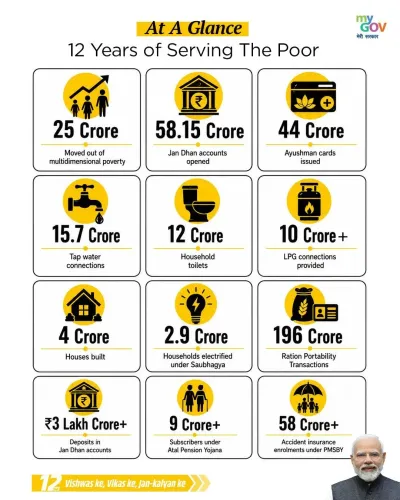
Key schemes under this framework include Pradhan Mantri Jan Dhan Yojana (2014), Pradhan Mantri Ujjwala Yojana (2016), and Ayushman Bharat (2018), targeting banking, clean energy, and health for the poor.
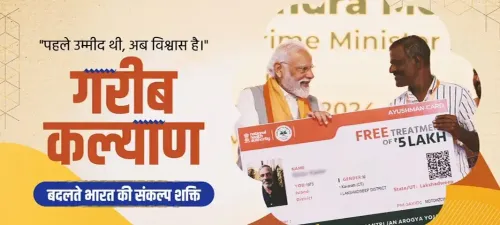
Ayushman Bharat offers health coverage of up to Rs 5 lakh per family to economically vulnerable households.
The Direct Benefit Transfer mechanism was scaled up post-2014 to reduce leakages and improve last-mile delivery across welfare schemes.
Independent evaluators continue to flag exclusion errors and scheme saturation gaps as areas requiring ongoing scrutiny.
Prime Minister Narendra Modi on Monday, June 8, 2026, reflected on 12 years of governance, stating that the welfare of the poor and downtrodden has been at the core of every transformation India has witnessed during this period, and reaffirming that the philosophy of Antyodaya — upliftment of the last person in the queue — continues to guide the government's development agenda.
Context
In his post, PM Modi wrote: 'Over the last 12 years, India has witnessed many transformations and at the core of these changes is the welfare of the poor and downtrodden. We have always been inspired by Antyodaya and our effort has always been to ensure that the benefits of development reach those who were' — the post, as published, ends mid-sentence, but the intent is unmistakable: directing policy gains toward the most marginalised.
The reference to 12 years marks the span since the Bharatiya Janata Party came to power in May 2014, a period during which the government has consistently framed social policy around the Antyodaya principle rather than trickle-down or universal-benefit approaches.
Policy Backdrop
The Antyodaya philosophy was first articulated by Deendayal Upadhyaya, the RSS ideologue and intellectual architect of integral humanism, in the 1960s. It holds that the measure of a nation's progress is the condition of its poorest citizen. The BJP has adopted it as a governing principle since 2014.
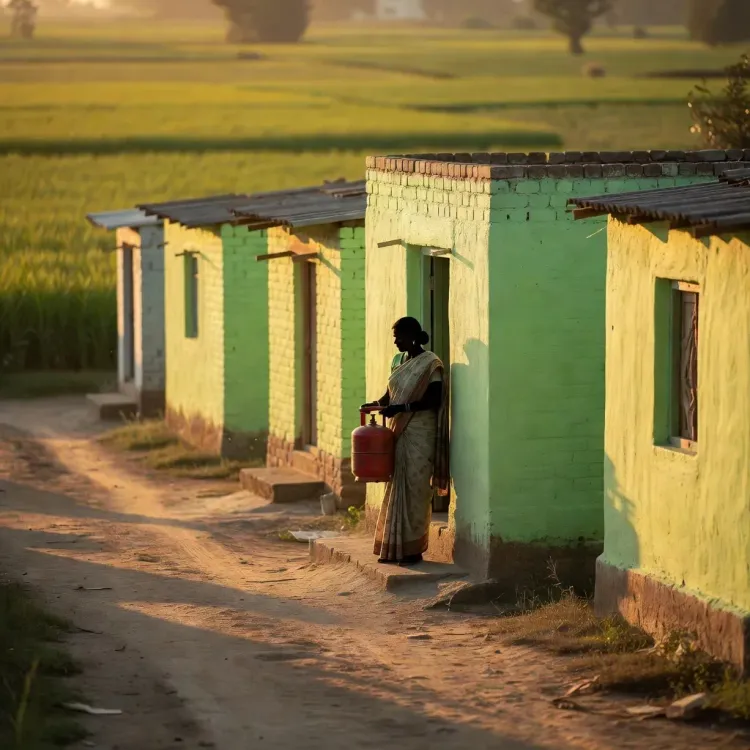
Flagship schemes launched under this framework include Pradhan Mantri Jan Dhan Yojana (August 2014), which brought banking services and direct benefit transfers to previously unbanked households; Pradhan Mantri Ujjwala Yojana (2016), which provided LPG connections to women from below-poverty-line families; and Ayushman Bharat (2018), which offers health insurance of up to Rs 5 lakh per family for secondary and tertiary care to economically vulnerable households.
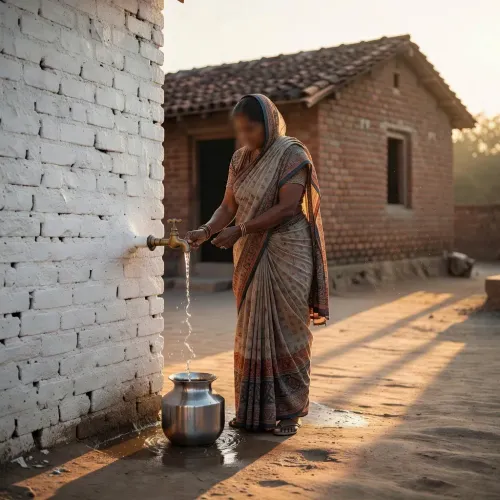
The Swachh Bharat Mission, launched in October 2014, and the scaling up of the Direct Benefit Transfer mechanism to plug leakages in welfare delivery have also been central to this approach, targeting rural and urban poor with technology-enabled, last-mile delivery.
Stakeholders and Impact
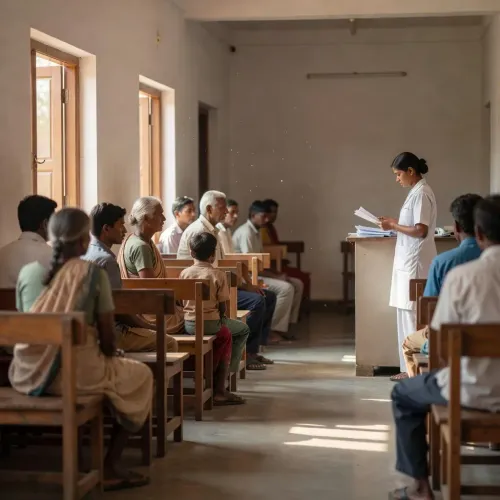
The primary beneficiaries of this welfare architecture are poor households, rural women, and marginalised communities — precisely the constituencies the Antyodaya model places at the centre of policy design. Schemes like Ujjwala and Jan Dhan have been credited with bringing millions of women into the formal financial and energy economy for the first time.
Critics and independent evaluators have, however, flagged concerns around exclusion errors — eligible beneficiaries who do not receive entitlements — and the pace of scheme saturation in certain states, issues that remain live in parliamentary debates on social-sector budget allocations.
What's Next
The post arrives at a politically significant moment, as the government approaches the completion of 12 years in office and budget discussions on social-sector allocations gain momentum. Independent evaluations of scheme coverage and any course corrections in delivery mechanisms are likely to draw heightened scrutiny from opposition parties and civil society in the months ahead. The Antyodaya framing signals that welfare-first messaging will remain central to the BJP's political and policy communication going forward.
Point of View
Tying 12 years of policy output to the Antyodaya lineage of Deendayal Upadhyaya and reinforcing the BJP's claim that its welfare model is philosophically distinct from earlier Congress-era entitlement programmes. The framing — 'benefits of development reaching those at the bottom' — is a recurring motif that serves both governance communication and electoral positioning, particularly with rural and lower-income voter blocs. Coming at a moment when social-sector budget debates are live, the message also pre-empts opposition criticism by anchoring the government's record in a moral and ideological vocabulary rather than purely statistical claims. The durability of this framing across 12 years suggests it will remain the BJP's primary welfare narrative heading into any future electoral cycle.
NationPress
23 Sept 2026
Frequently Asked Questions
What is Antyodaya and why does PM Modi keep referring to it?
Antyodaya means 'rise of the last person' and was first articulated by RSS ideologue Deendayal Upadhyaya in the 1960s. The BJP has adopted it as the guiding principle for welfare policy, meaning schemes are designed to reach the poorest and most marginalised citizens first rather than relying on trickle-down benefits.
What are the main welfare schemes launched by the Modi government in 12 years?
Key schemes include Pradhan Mantri Jan Dhan Yojana (financial inclusion, 2014), Pradhan Mantri Ujjwala Yojana (LPG for BPL women, 2016), Ayushman Bharat (health insurance up to Rs 5 lakh, 2018), and Swachh Bharat Mission (sanitation, 2014), all explicitly targeting poor and marginalised households.
What is Pradhan Mantri Jan Dhan Yojana?
Pradhan Mantri Jan Dhan Yojana is a financial inclusion scheme launched in August 2014 that provides bank accounts, insurance, and access to credit for previously unbanked poor households, enabling direct benefit transfers from government schemes.
How much health coverage does Ayushman Bharat provide?
Ayushman Bharat provides health insurance of up to Rs 5 lakh per family per year to economically vulnerable households, covering secondary and tertiary hospitalisation costs at empanelled public and private hospitals.
What criticism has the Modi government's welfare model faced?
Independent evaluators and opposition parties have raised concerns about exclusion errors — eligible beneficiaries who do not receive entitlements — and uneven scheme saturation across states, issues that regularly surface in parliamentary debates on social-sector budget allocations.