PM Modi Highlights Water Conservation Efforts on Mann Ki Baat
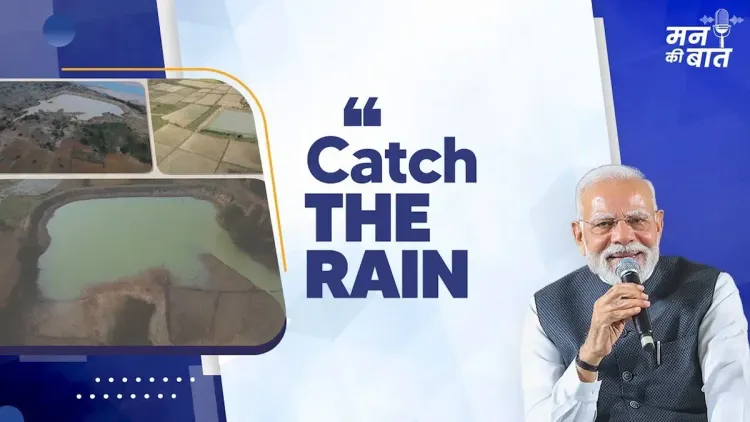
Synopsis
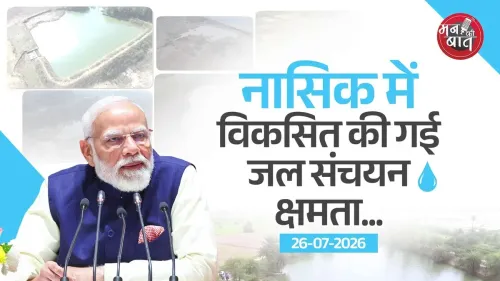
Prime Minister Narendra Modi, on Mann Ki Baat dated 26 July 2026, highlighted the Catch the Rain campaign's goal of effective water conservation and praised efforts in Madhya Pradesh, Maharashtra, Andhra Pradesh, Chhattisgarh and Odisha, reinforcing India's decentralised water security push.
Key Takeaways
PM Modi discussed the Catch the Rain campaign on Mann Ki Baat on 26 July 2026 .
Five states were specifically recognised: Madhya Pradesh , Maharashtra , Andhra Pradesh , Chhattisgarh , and Odisha .
The Catch the Rain initiative was launched in 2021 as a pre-monsoon rainwater harvesting campaign under the Jal Shakti Abhiyan .
The Jal Shakti Abhiyan , started in 2019 , covers 1,592 water-stressed blocks across India.
The Atal Bhujal Yojana (2020) supports groundwater management in seven states, several of which were named in the post.
Farmers, rural communities and state irrigation departments are the primary beneficiaries of these conservation drives.
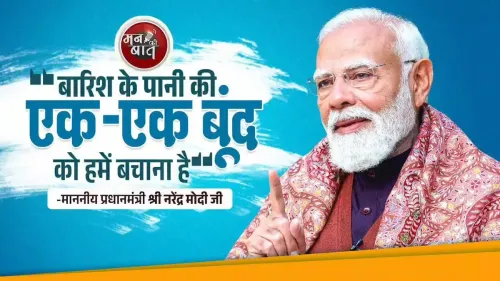
Prime Minister Narendra Modi, during his monthly radio address Mann Ki Baat on Sunday, 26 July 2026, spotlighted the Catch the Rain campaign, underscoring its core message of effective water conservation and recognising efforts from five states across India.
Context
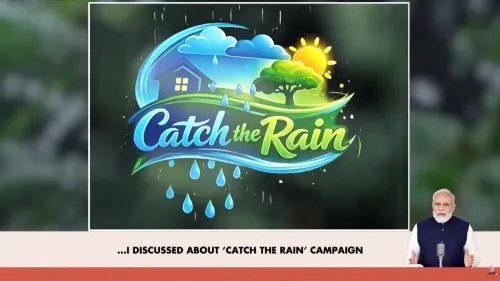
In his address, PM Modi highlighted water conservation work carried out in Madhya Pradesh, Maharashtra, Andhra Pradesh, Chhattisgarh, and Odisha. The Catch the Rain campaign, he noted, carries 'a simple message — to conserve water effectively.' The mention of these five states signals recognition of ground-level implementation during the ongoing monsoon season.
Mann Ki Baat has regularly served as a platform for the Prime Minister to draw public attention to citizen-led and state-led initiatives, encouraging other regions to replicate successful models of low-cost water harvesting.
Policy Backdrop
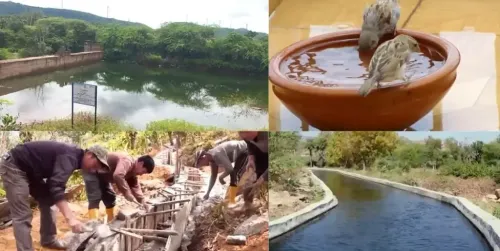
The Catch the Rain initiative was formally launched in 2021 as an annual pre-monsoon campaign under the broader Jal Shakti Abhiyan, which itself was introduced in 2019 to intensively target 1,592 water-stressed blocks across the country. The campaign promotes the creation of rainwater harvesting structures — check dams, recharge wells, and percolation tanks — before and during the monsoon to maximise groundwater replenishment.
Complementing these efforts, the Atal Bhujal Yojana, rolled out in 2020, focuses on improving groundwater management across seven states, several of which overlap with the states named in today's post. Together, these schemes form a layered central framework for water security.
Stakeholders and Impact
Madhya Pradesh has been recognised for large-scale watershed management and tank restoration, while Maharashtra has pursued extensive check-dam and percolation tank programmes targeting drought-prone districts. Andhra Pradesh, Chhattisgarh, and Odisha add geographic breadth to the campaign's reach, spanning peninsular and central India.
The primary beneficiaries are farmers, rural communities, and state irrigation departments that depend on stable groundwater levels for agriculture and drinking water. By publicly naming states that are performing well, the Centre creates a reputational incentive for others to accelerate their own conservation drives.
What's Next
Attention will now turn to state-level progress reports on structures built under the 2026 Catch the Rain drive and whether the forthcoming monsoon preparedness reviews translate into fresh funding allocations. The government's decade-long push toward decentralised water conservation — linking central scheme design with state execution and community participation — is expected to remain a policy priority as groundwater depletion and erratic monsoons continue to threaten agricultural stability across India.
Point of View
Community-anchored response to water stress at a time when erratic monsoons remain a recurring political and agricultural concern. Sustaining this momentum into budgetary allocations will be the real test of policy intent.
NationPress
26 Jul 2026
Frequently Asked Questions
What is the Catch the Rain campaign?
The Catch the Rain campaign is a nationwide rainwater harvesting initiative launched in 2021 under the Jal Shakti Abhiyan, urging citizens and states to build water conservation structures such as check dams and recharge wells before and during the monsoon season.
What did PM Modi say about water conservation on Mann Ki Baat?
On 26 July 2026, PM Modi highlighted the Catch the Rain campaign on Mann Ki Baat, calling water conservation 'simple' in message, and specifically recognised efforts in Madhya Pradesh, Maharashtra, Andhra Pradesh, Chhattisgarh and Odisha.
Which states were highlighted by PM Modi for water conservation?
PM Modi named Madhya Pradesh, Maharashtra, Andhra Pradesh, Chhattisgarh and Odisha for their water conservation efforts under the Catch the Rain campaign during his Mann Ki Baat address.
What is the Jal Shakti Abhiyan?
The Jal Shakti Abhiyan is a Central government water conservation mission launched in 2019, covering 1,592 water-stressed blocks across India, focused on intensive conservation drives and rainwater harvesting.
What is Mann Ki Baat?
Mann Ki Baat is a monthly radio programme hosted by Prime Minister Narendra Modi where he discusses governance initiatives, public issues and citizen achievements with the country.