PM Modi: India a Food-Surplus Nation, Aiding Global Food Security
Synopsis
Prime Minister Narendra Modi on 21 May 2026 declared that India is not only a food-surplus nation but is actively contributing to global food security, framing the issue as a humanitarian responsibility. His remarks draw on India's Green Revolution legacy and the National Food Security Act, signalling potential deepening of international food diplomacy.
Key Takeaways
PM Narendra Modi on 21 May 2026 stated that India is a food-surplus nation contributing to global food security.
He framed food security not as a policy matter alone but as 'a responsibility towards humanity.' The Green Revolution of the 1960s enabled India to achieve food self-sufficiency by the 1970s , laying the foundation for the current surplus.
The National Food Security Act (2013) provides subsidised food grains to approximately 67% of India's population.
The Food Corporation of India , set up in 1965 , manages procurement and distribution underpinning both domestic welfare and international food diplomacy.
India's food-security positioning aligns with its stated roles in the G20 and FAO frameworks.
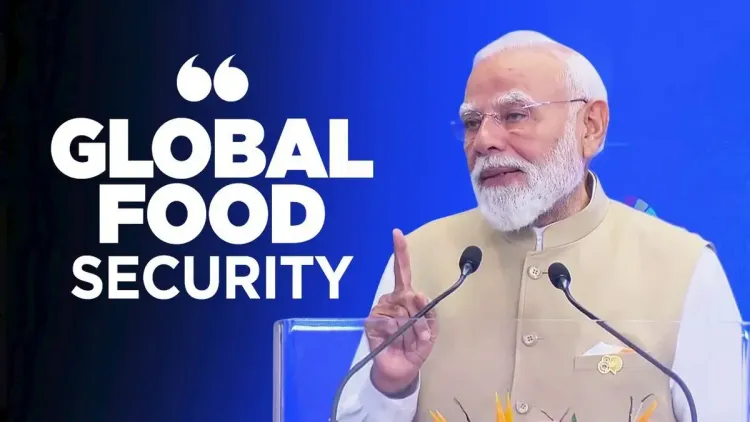
Prime Minister Narendra Modi on Thursday, 21 May 2026 reaffirmed that India has emerged as a food-surplus nation and is making significant contributions to global food security, framing the issue not merely as a policy matter but as a humanitarian responsibility.
In a post on X, the Prime Minister wrote in Hindi: 'भारत Food-Surplus Nation होने के साथ-साथ वैश्विक Food Security में भी महत्वपूर्ण योगदान दे रहा है। हमारे लिए Food Security केवल एक Policy Matter नहीं, बल्कि यह मानवता के प्रति हमारी जिम्मेदारी भी है।' — translated: 'India, while being a food-surplus nation, is also making an important contribution to global food security. For us, food security is not merely a policy matter, but also our responsibility towards humanity.'
Context
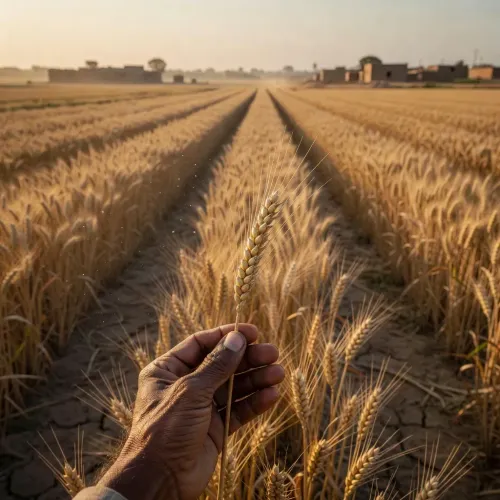
The statement underscores a significant shift in India's agricultural standing over the past several decades. From a nation that once faced severe food shortages, India has transformed into one of the world's leading producers and exporters of food grains, a journey rooted in the Green Revolution of the mid-1960s.
The Green Revolution, introduced in the 1960s, brought high-yielding crop varieties and modern farming techniques that enabled India to achieve self-sufficiency in food production by the 1970s. That foundation has since been built upon by successive governments, expanding both output and distribution infrastructure.
Policy Backdrop
At the domestic level, the National Food Security Act (NFSA), enacted in 2013, gave legal entitlement to subsidised food grains to approximately 67% of India's population. The Act strengthened the Public Distribution System and was designed to address hunger and malnutrition at scale.
The Food Corporation of India (FCI), established in 1965, remains the backbone of grain procurement and distribution, managing vast buffer stocks that support both domestic welfare schemes and the government's capacity to respond to external food crises. PM Modi's remarks signal an intent to leverage this domestic surplus for broader international impact.
Stakeholders and Impact
Indian farmers stand at the centre of this narrative, as their sustained productivity over decades has enabled the country to move from scarcity to surplus. The government's framing positions agricultural communities as contributors not just to national welfare but to global humanitarian goals.
On the international stage, India has used food diplomacy as a tool of South-South cooperation, supplying grain and food aid to nations facing shortages. This approach aligns with positions India has articulated in multilateral forums such as the G20 and the Food and Agriculture Organisation (FAO), where food security has been a recurring agenda item.
What's Next
The emphasis on food security as a 'responsibility towards humanity' suggests India may be positioning itself for deeper engagement in global food aid frameworks and agricultural cooperation agreements. Observers will watch for new export policy decisions, bilateral food-security partnerships, or announcements tied to multilateral platforms in the coming months.
With agricultural export policies under periodic review, PM Modi's statement sets a tone that domestic food surplus will increasingly be viewed through the lens of international obligation — a framing that could shape both trade decisions and diplomatic outreach in the near term.
Point of View
Reinforcing the broader 'Vishwaguru' narrative the ruling dispensation has cultivated. The invocation of surplus and global contribution also serves to consolidate the political credit claimed for agricultural transformation, linking it to the BJP's governance record. At a multilateral level, the statement is likely calibrated for forums such as the G20 and FAO, where India has sought leadership roles on food and development issues. Taken together, the post advances both a domestic legacy argument and an international-positioning strategy in a single sentence.
NationPress
7 Oct 2026
Frequently Asked Questions
Is India a food-surplus country?
Yes, India is currently a food-surplus nation. Following the Green Revolution of the 1960s, India achieved food self-sufficiency by the 1970s and has since built substantial grain reserves managed by the Food Corporation of India.
What did PM Modi say about food security on 21 May 2026?
PM Modi stated that India, while being a food-surplus nation, is also contributing significantly to global food security, and that for India food security is not merely a policy matter but a responsibility towards humanity.
What is the National Food Security Act?
The National Food Security Act, enacted in 2013, provides a legal entitlement to subsidised food grains to approximately 67% of India's population, strengthening the Public Distribution System to address hunger and malnutrition.
How does India contribute to global food security?
India contributes to global food security through food aid, agricultural exports, and South-South cooperation. The country has supplied grain to nations facing shortages and has advocated food security measures in multilateral forums such as the G20 and FAO.
What is the Food Corporation of India?
The Food Corporation of India (FCI) was established in 1965 to manage the procurement, storage, and distribution of food grains under government welfare schemes, maintaining buffer stocks that support both domestic food security and international food diplomacy.