India's solar capacity hits 162 GW in 2026, up from 2.8 GW in 2014: Arunachal Dy CM
Synopsis
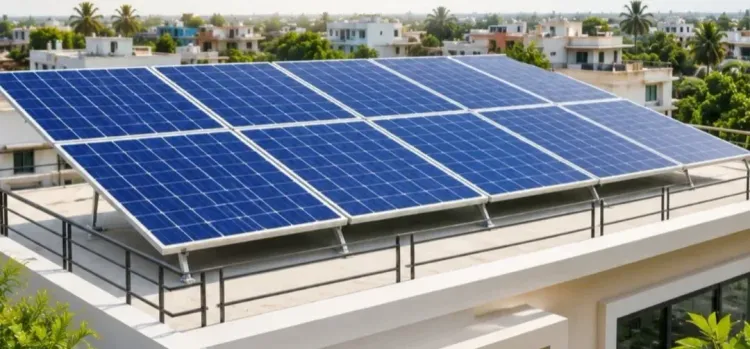
India's solar installed capacity has grown nearly 58-fold in 12 years — from 2.8 GW to 162 GW — with 50 lakh households now on rooftop solar and a 5,000 MW floating solar scheme freshly approved. The scale of the buildout is real; the next test is whether manufacturing depth and grid integration can keep pace.
Key Takeaways
India's solar capacity grew from 2.8 GW in 2014 to 162 GW in 2026 — a nearly 58-fold increase.
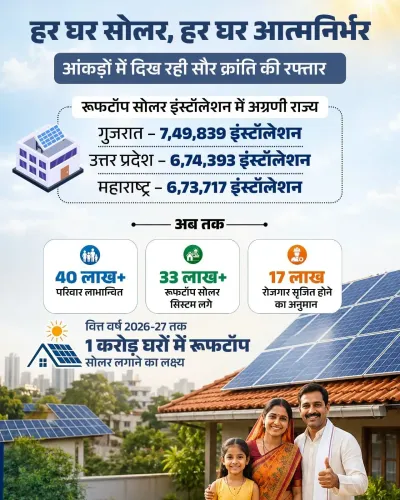
50 lakh households have adopted rooftop solar under the PM Surya Ghar: Muft Bijli Yojana , launched on 13 February 2024 .
Central subsidies of ₹36,000 to ₹78,000 per household are available, with collateral-free loans at around 7% interest for systems up to 3 kW .
The newly approved Pradhan Mantri Surya Sarovar Yojana (PM-SSY) targets 5,000 MW of floating solar capacity with integrated energy storage.
Arunachal Pradesh Deputy Chief Minister Chowna Mein highlighted the milestones in posts on his X handle on 4 August .
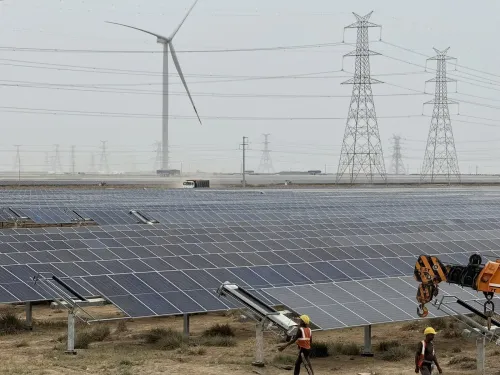
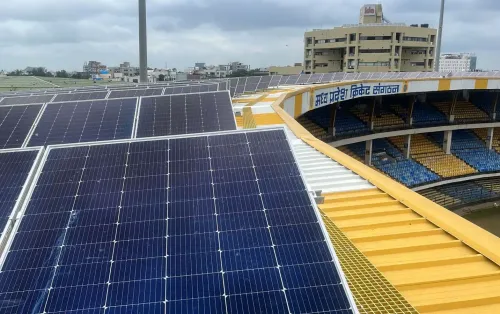
India's installed solar power generation capacity has surged from 2.8 GW in 2014 to 162 GW in 2026, marking one of the fastest renewable energy scale-ups in the world, Arunachal Pradesh Deputy Chief Minister Chowna Mein said on Tuesday, 4 August. Mein, who holds the Power and Non-Conventional Energy Resources portfolios, made the remarks in a series of posts on his X handle, crediting the expansion to policy momentum under Prime Minister Narendra Modi.
Scale of the Solar Expansion
The near 58-fold increase in solar capacity over 12 years positions India among the top solar-generating nations globally. Mein noted that the growth spans utility-scale generation, domestic manufacturing, and household adoption — indicating a structural shift rather than a single-segment push. He said the sector is now playing a 'crucial role in strengthening India's energy security and economic development.'
PM Surya Ghar: Muft Bijli Yojana and Rooftop Adoption
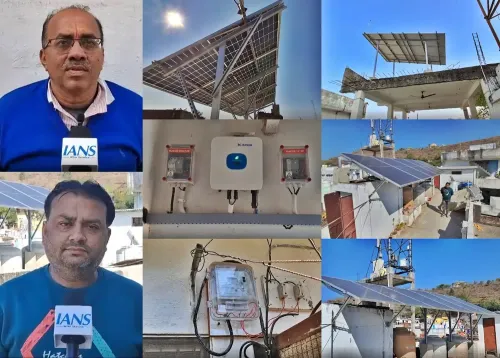
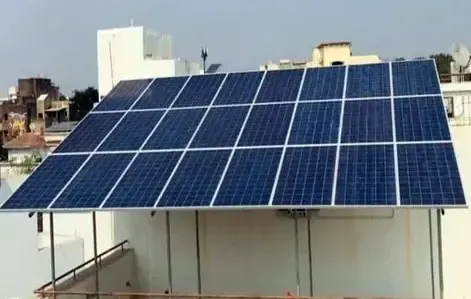
A key driver of household-level adoption has been the PM Surya Ghar: Muft Bijli Yojana (PMSGMBY), launched by Prime Minister Modi on 13 February 2024. The scheme, implemented by the Ministry of New and Renewable Energy, has enrolled 50 lakh households in rooftop solar systems so far. Under the programme, the Central government provides a subsidy ranging from ₹36,000 to ₹78,000 per household, depending on average monthly electricity consumption and the appropriate plant capacity.
Beneficiaries are also eligible for collateral-free loans at approximately 7% interest for rooftop solar systems of up to 3 kW. Households can further monetise surplus generation by selling electricity back to Distribution Companies (DISCOMs) through the net-metering mechanism — reducing bills while generating supplementary income.
Floating Solar: The Next Phase
India's solar push has now entered a new phase with the approval of the Pradhan Mantri Surya Sarovar Yojana (PM-SSY), which targets 5,000 MW of floating solar capacity integrated with energy storage systems. Mein described this as evidence that India's solar growth has 'entered a new phase' — moving beyond land-based installations to water-surface deployments that also conserve reservoir water through reduced evaporation.
Broader Climate and Economic Goals
'With rapid growth in capacity, manufacturing and adoption, solar power is accelerating India's clean energy transition. The sector is strengthening energy security, supporting economic growth, advancing climate goals and reinforcing India's leadership in renewable energy,' Mein said in his post. Officials said the combined impact of these initiatives is promoting sustainable development while enhancing household energy independence. This comes amid India's broader commitment to achieving 500 GW of non-fossil fuel capacity by 2030 under its updated climate pledges.
Point of View
But capacity alone does not tell the full story — grid absorption, storage depth, and domestic manufacturing content matter equally. India's solar module manufacturing has grown, yet significant import dependence on cells and wafers persists. The PM Surya Ghar scheme's 50 lakh household number is impressive in scale, but the quality of installations, DISCOM willingness to honour net-metering, and subsidy disbursement timelines remain patchy across states. The floating solar push via PM-SSY is forward-looking, but 5,000 MW of water-surface deployment with storage integration is technically complex — execution credibility will be established only at commissioning, not at approval.
NationPress
4 Aug 2026
Frequently Asked Questions
What is India's current installed solar power capacity?
India's installed solar power capacity stood at 162 GW as of 2026, up from just 2.8 GW in 2014, according to Arunachal Pradesh Deputy Chief Minister Chowna Mein. This represents a nearly 58-fold increase over 12 years.
What is the PM Surya Ghar: Muft Bijli Yojana scheme?
The PM Surya Ghar: Muft Bijli Yojana is a Central government scheme launched on 13 February 2024 to promote rooftop solar adoption among households. It offers subsidies of ₹36,000 to ₹78,000 per household and collateral-free loans at around 7% interest for systems up to 3 kW, with 50 lakh households enrolled so far.
What is the Pradhan Mantri Surya Sarovar Yojana?
The Pradhan Mantri Surya Sarovar Yojana (PM-SSY) is a newly approved scheme aimed at developing 5,000 MW of floating solar capacity integrated with energy storage systems. It represents the next phase of India's solar expansion, moving beyond land-based installations.
How can households benefit financially from rooftop solar under PM Surya Ghar?
Households enrolled under PM Surya Ghar receive a government subsidy of ₹36,000 to ₹78,000, access to low-interest loans at approximately 7%, and the ability to sell surplus electricity to DISCOMs via net-metering — reducing electricity bills and generating supplementary income.
Why is India's solar growth significant globally?
India's near 58-fold expansion in solar capacity between 2014 and 2026 ranks it among the world's fastest renewable energy scale-ups. Combined with its 500 GW non-fossil fuel target by 2030, the growth positions India as a major player in global climate commitments.