PM Modi Highlights KCC and 'Seed to Market' Push on 12 Years of Kisan Samridhi
Synopsis
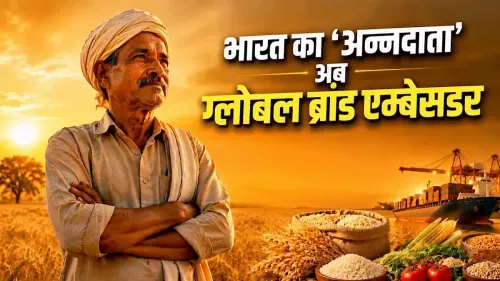
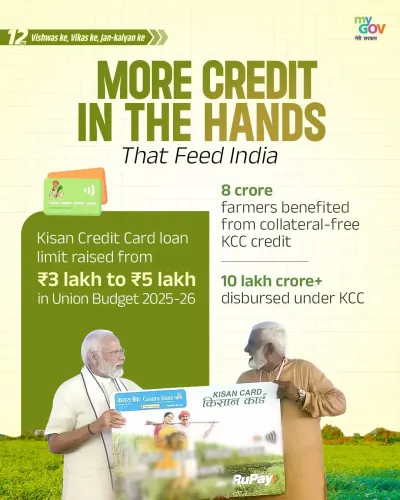
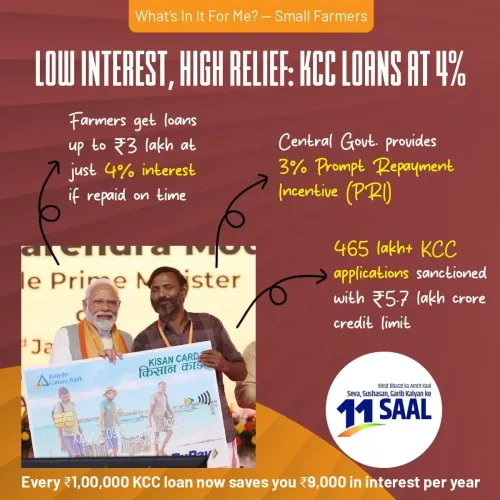
Prime Minister Narendra Modi marked 12 Years of Kisan Samridhi by highlighting the Kisan Credit Card scheme's role in delivering low-interest credit to farmers, livestock keepers, and fishermen, and praised the 'Beej se Bazaar Tak' initiative for helping farmers secure fair prices for their produce.
Key Takeaways
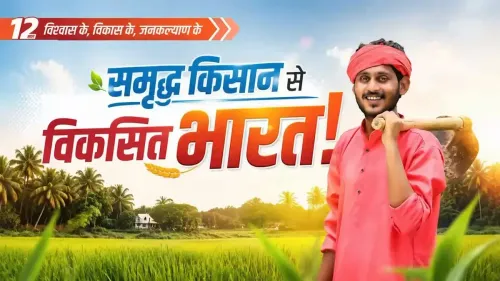
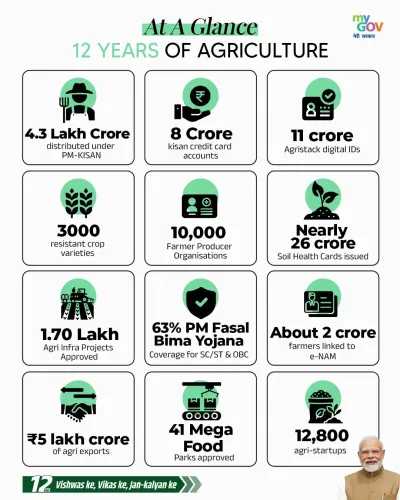
PM Modi on June 11, 2026 posted in Hindi marking #12YearsOfKisanSamriddhi , spotlighting two flagship agricultural welfare instruments.
The Kisan Credit Card (KCC) scheme, originally launched in 1998 by NABARD , provides short-term crop loans and term credit at subsidised interest rates.
In 2018-19 , the KCC was extended to cover animal husbandry and fisheries sectors, broadening its beneficiary base beyond crop farmers.
The 'Beej se Bazaar Tak' (seed to market) initiative aims to ensure fair price realisation for farmers across the full agricultural value chain.
Both measures form part of the Doubling Farmers' Income strategy announced in 2016 , focused on credit access and market-linkage reform.
NABARD monitors KCC utilisation and interest subvention disbursement; state-level market-platform rollouts in upcoming seasons will be key indicators of progress.
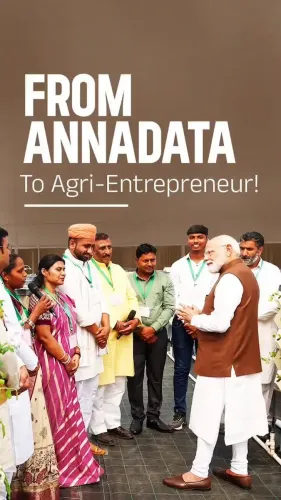
Prime Minister Narendra Modi on Thursday, June 11, 2026, highlighted the role of the Kisan Credit Card (KCC) scheme in providing low-interest credit to farmers, livestock keepers, and fishermen, and underscored the government's 'seed to market' initiative as a key driver of fair price realisation for agricultural produce.
Posting in Hindi on the occasion of the #12YearsOfKisanSamriddhi hashtag, the Prime Minister stated that the KCC is proving highly useful — 'बहुत काम आ रहा है' (very useful) — in making credit easily available at low interest rates for farming and other needs. He added that the 'Beej se Bazaar Tak' (seed to market) initiative is also proving very effective in ensuring fair prices for farmers' crops.
Context
The post marks twelve years of what the ruling Bharatiya Janata Party has branded as 'Kisan Samridhi' — farmer prosperity — under its governance. The occasion has been used to spotlight flagship agricultural welfare instruments, with the KCC and market-linkage reforms cited as centrepieces of that agenda.
The KCC was originally launched in 1998 by NABARD to ensure timely, adequate, and cost-effective credit to farmers, replacing the earlier system of multiple loan products with a single, flexible credit line. It operates through commercial banks, regional rural banks, and cooperative banks.
Policy Backdrop
The scheme was significantly expanded in 2018-19 to cover the animal husbandry and fisheries sectors, extending subsidised credit access beyond crop farmers to a broader base of rural livelihoods. Interest subvention by the central government keeps effective lending rates low for borrowers who repay on time.
The Doubling Farmers' Income initiative, announced in 2016, gave formal policy impetus to market reforms and value-chain integration. Parallel investments in electronic national agriculture markets and direct farmer-consumer linkages have sought to reduce the role of intermediaries and improve price realisation at the farm gate. The 'Beej se Bazaar Tak' framing encapsulates this end-to-end approach, from seed procurement to final sale.
NABARD remains the apex institution overseeing KCC issuance, credit flow monitoring, and interest subvention disbursement to lending banks. Successive governments have treated expansion of institutional agricultural credit as a bulwark against farmer dependence on informal moneylenders at exploitative rates.
Stakeholders and Impact
The KCC's beneficiary base spans crop farmers, animal husbandry practitioners, and fishermen — three of India's largest rural occupational groups. Access to formal credit at subsidised rates reduces input costs and, in theory, improves net farm income.
Market-linkage programmes directly affect price realisation: when farmers can access broader or more transparent markets, the share of the consumer price that reaches the producer tends to rise. Both pillars — credit access and market reform — are aimed at the same structural goal of raising rural household incomes.
What's Next
NABARD's annual reports on KCC outstanding amounts and utilisation rates will be watched as a measure of how deeply the scheme has penetrated among eligible beneficiaries. State-level rollout of market-linkage platforms in the upcoming rabi and kharif seasons will test whether the 'seed to market' promise translates into measurable gains for farmers on the ground. The government's continued emphasis on this anniversary framing suggests further policy announcements in the agricultural credit and market-access space are likely in the months ahead.
Point of View
Using the #12YearsOfKisanSamriddhi milestone to reinforce the BJP's farmer-welfare narrative ahead of what is likely a politically active agricultural season. By pairing institutional credit (KCC) with market reform ('Beej se Bazaar Tak'), Modi signals that the government views both supply-side and demand-side interventions as necessary — a position consistent with the Doubling Farmers' Income framework. The extension of KCC to animal husbandry and fisheries is a notable policy evolution that broadens the political constituency for this messaging beyond traditional crop farmers. Whether the on-ground outcomes match the rhetoric will hinge on NABARD data and state-level implementation, both of which will face scrutiny in the coming crop seasons.
NationPress
20 Sept 2026
Frequently Asked Questions
What is the Kisan Credit Card scheme and who can apply?
The Kisan Credit Card (KCC) is a credit delivery scheme launched in 1998 by NABARD that provides farmers, animal husbandry practitioners, and fishermen with flexible, short-term loans at subsidised interest rates through banks. Eligible applicants include crop farmers, livestock keepers, and fishermen who can approach commercial banks, regional rural banks, or cooperative banks.
What does 'Beej se Bazaar Tak' mean?
'Beej se Bazaar Tak' translates to 'from seed to market' and refers to the government's initiative to support farmers across the entire agricultural value chain — from procuring seeds to selling produce — with the goal of ensuring fair price realisation at the farm gate.
When was the Kisan Credit Card extended to animal husbandry and fisheries?
The KCC scheme was extended to cover animal husbandry and fisheries sectors in 2018-19, allowing livestock keepers and fishermen to access the same subsidised credit facility previously available only to crop farmers.
What is the Doubling Farmers' Income initiative?
The Doubling Farmers' Income initiative was announced in 2016 with the objective of raising rural household incomes by focusing on market reforms, value-chain integration, and expanded institutional credit access, reducing farmer dependence on informal moneylenders.
What is #12YearsOfKisanSamriddhi?
#12YearsOfKisanSamriddhi is a hashtag used by the BJP and PM Modi to mark twelve years of what the party describes as farmer-prosperity policies under its governance, used here to highlight schemes like the KCC and market-linkage initiatives.